
A guide to the Terai, Central India, the Western Ghats, the Himalayas and beyond.
India's wildlife landscapes are not interchangeable. Choosing well begins with what you hope to experience, and with understanding how differently each landscape behaves.
Explore the ten journeys Specialist Journeys
Choosing Your Safari
How do I choose the right safari in India for me?
The right safari begins with understanding what you want to experience rather than simply choosing a famous national park. Some travellers arrive with a particular species in mind; others are drawn to birds, landscapes, photography, natural history or the possibility of moving through several distinct ecosystems.
We begin with your interests, travel dates, preferred pace and the kind of wilderness experience you seek. From there, we match the journey to the landscape, season and places where those interests can be explored with depth.
How do I choose between Central India, the Terai, the Western Ghats, the Himalayas and Northeast India?
India's major wildlife landscapes offer profoundly different experiences.
Central India is shaped by dry deciduous forests, bamboo and open meadows, with tiger, leopard, dhole, sloth bear and rich birdlife among its possibilities. The Terai is a wetter, grassland-and-forest ecosystem of sal forests, tall elephant grass and river systems. The Western Ghats bring ancient rainforest, extraordinary endemism and species adapted to a very different world. The Himalayas move from forested valleys to alpine and high-altitude landscapes, while Northeast India encompasses some of the country's richest rainforest, riverine and montane habitats.
The choice should follow the experience you want to have, not simply a list of destinations.
Which safari should I choose if seeing a tiger is my priority?
India's tiger landscapes extend across several states and ecological regions, and each offers a different setting in which to encounter the species.
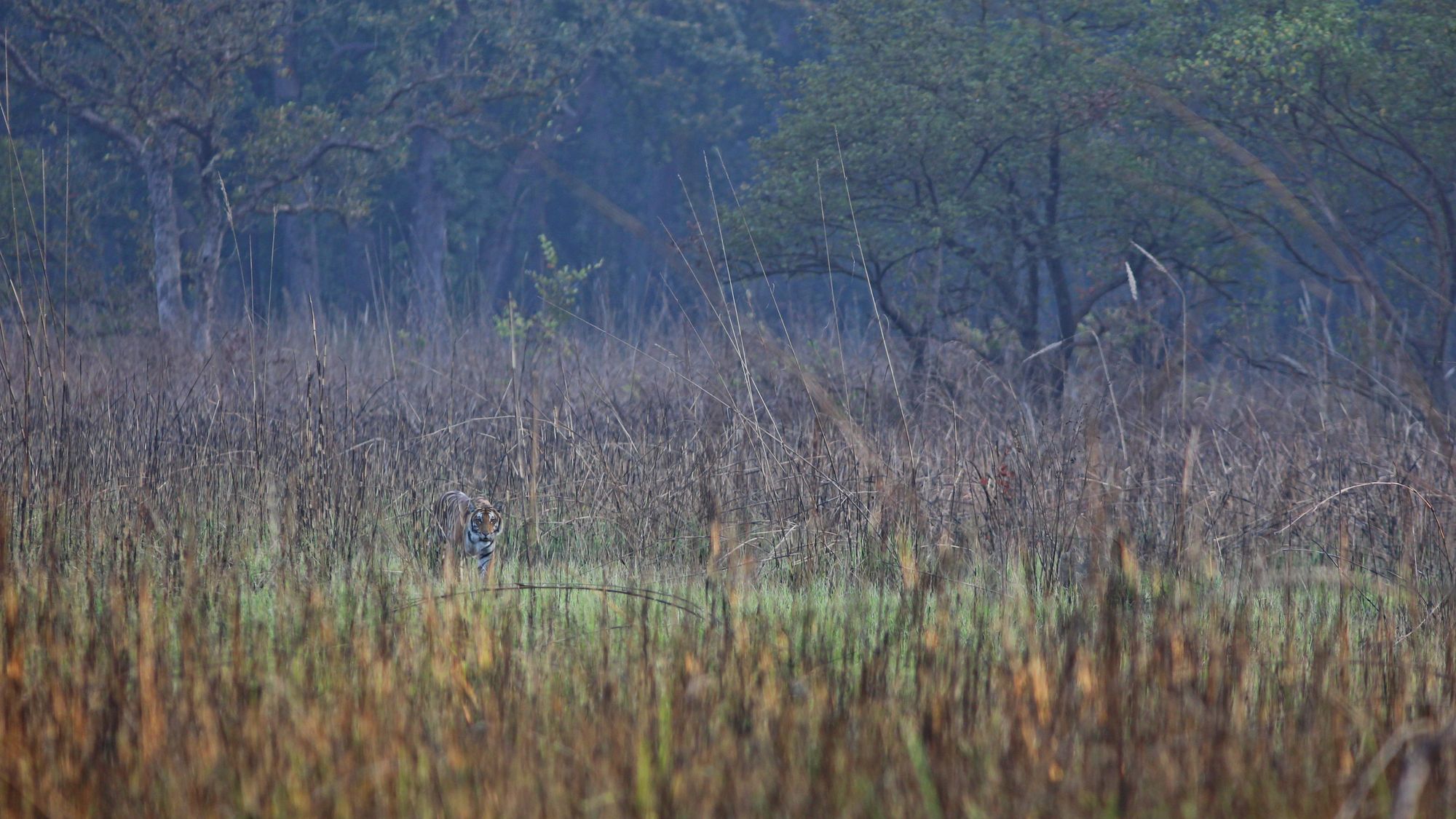
Central India is particularly significant for tiger-focused journeys, while the Terai offers the possibility of seeing tigers within a landscape of tall grasslands, sal forests and riverine habitats. We consider season, park conditions, your available time and your appetite for exploring beyond the tiger when designing the journey.
A tiger is always wild. Sightings can never be promised, and the quality of a safari should never depend entirely upon one encounter.
Which safari is best for seeing wildlife beyond tigers?
If your interest extends beyond the tiger, India becomes considerably more expansive.
Depending on the landscape, a journey can include leopard, dhole, sloth bear, elephant, rhinoceros, wild buffalo, gaur, crocodilians, primates, endemic birds and a remarkable range of smaller mammals. The Western Ghats and Northeast are particularly rewarding for species diversity and endemism, while the Himalayas open an entirely different world of high-altitude wildlife.
We design around the ecology of a place rather than treating the tiger as the sole measure of a successful safari.
What is the best Indian safari for a wildlife photographer?
There is no single photographic landscape that suits every photographer.
The choice depends upon what you want to photograph: large mammals, birds, behaviour, forests, landscapes, intimate details or a particular species. Light, vegetation, vehicle access, seasonal conditions and the amount of time available all influence the photographic experience.
For serious photographers, we place particular emphasis on private vehicles, flexible pacing, knowledgeable naturalists and sufficient time in the field.
What is the best Indian safari for a family?
A family safari should be designed around the ages, interests and rhythm of the family rather than simply adding children to an adult itinerary.
Some landscapes work particularly well for families because they combine accessible wildlife experiences with comfortable lodges and opportunities to understand the natural world together. The pace, duration of drives, accommodation and transfers can all be considered when designing the journey.
For younger travellers, the wilderness is often most memorable when it is allowed to become an experience of discovery rather than a search for a checklist of animals.
What is the best Indian safari for first-time visitors to India?
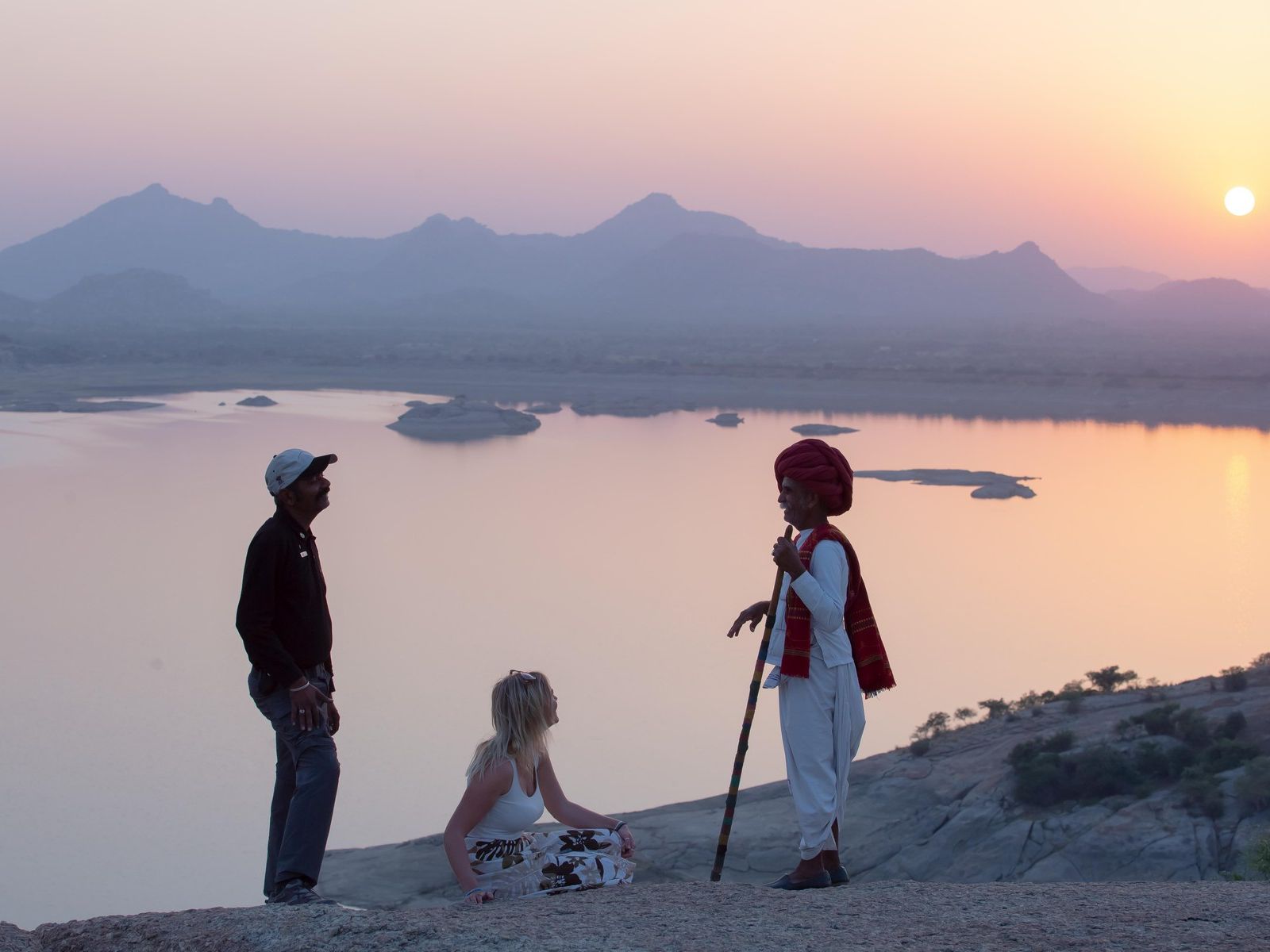
For a first visit, there is value in choosing a journey that gives you time to understand both India and its wilderness.
Central India and the Terai can provide a strong introduction to India's forest and grassland ecosystems, while combining wildlife with carefully chosen cultural or heritage experiences can give greater context to the country beyond the national parks.
There is no prescribed first safari. We shape the journey around the traveller rather than expecting every first-time visitor to follow the same route.
Where should I go in India for a specialist wildlife safari?
A specialist safari is less about a famous park and more about the depth of the experience.
India has specialist landscapes for tigers, birds, elephants, rainforest species, Himalayan wildlife, high-altitude mammals, wetlands and lesser-known species. The right destination depends on your interests, season and the amount of time you can devote to the wilderness.
Safari Vista India works across these landscapes to create private journeys built around natural history rather than conventional sightseeing.
Which species are unique or particularly special to India?
India's wildlife includes species and subspecies that have become closely associated with the country's landscapes.
The Asiatic lion, Bengal tiger, Indian one-horned rhinoceros, sloth bear, dhole, Indian wild ass, gharial, Nilgiri tahr, lion-tailed macaque and several highly specialised Himalayan and Northeastern species are among those that make India particularly significant for wildlife travellers.
Some are geographically restricted; others are part of larger Asian populations but have distinctive ecological importance within India. A specialist journey allows those stories to become part of the experience.
Which Indian safari destinations are best for birdwatching?
India is exceptionally rich in birdlife, with habitats ranging from Himalayan forests and high-altitude wetlands to Terai grasslands, Central Indian forests, Western Ghats rainforest and Northeastern ecosystems.
The most rewarding destination depends upon whether your interest lies in endemic species, raptors, waterbirds, forest birds, grassland specialists or simply observing a broad diversity of species.
For serious birders, the landscape and season matter as much as the destination itself.
What are some of India's most unusual wildlife species?
India's wildlife extends far beyond the animals most commonly associated with safari.
Hispid hare, fishing cat, dhole, sloth bear, gharial, Gangetic dolphin, lion-tailed macaque, Nilgiri tahr, red panda and several remarkable Himalayan and Northeastern species offer glimpses into ecological worlds that are easily overlooked.
The smaller and less celebrated species often reveal as much about a landscape as its larger mammals.
Should I choose one national park or explore several landscapes?
That depends on what you want from your journey.
Staying within one landscape allows more time to understand its ecology and build familiarity with its wildlife. Moving between landscapes creates a broader natural history journey, allowing you to experience how dramatically India's forests, grasslands, wetlands and mountains change.
For travellers with sufficient time, we often favour depth across complementary landscapes rather than simply collecting a number of parks.
Can I combine different landscapes into one safari journey?
Yes. A private journey makes it possible to connect landscapes according to your interests, travel dates and available time.
A multi-region journey might move from Central India's forests to the Terai, or connect a Himalayan experience with a very different forest ecosystem elsewhere in India. The purpose is not to accumulate destinations but to create a coherent journey through India's ecological diversity.
India's Wildlife Landscapes
What are the major wildlife landscapes of India?
India's wilderness encompasses tropical forests, dry deciduous woodland, sal forests, grasslands, wetlands, river systems, rainforest, mangroves, Himalayan forests and high-altitude cold deserts.
At Safari Vista India, we look at these as living landscapes rather than collections of parks. Each has its own geology, climate, vegetation, wildlife and seasonal rhythm.
How do India's wildlife landscapes differ from one another?
The differences begin with climate, altitude, rainfall and vegetation.
A dry Central Indian forest behaves very differently from the humid forests of the Western Ghats. The Terai's grasslands and river systems create another ecological world, while the Himalayas transform dramatically with altitude.
Those differences influence not only what you may see, but how you experience the wilderness itself.
Why does Safari Vista India design journeys around landscapes?
Because wildlife does not exist independently of its habitat.
A tiger is not simply a tiger sighting; it is an animal moving through a particular forest, grassland, river system or season. Understanding the landscape gives context to behaviour, tracks, calls, prey, vegetation and the relationship between species.
Our journeys are therefore built around the living wilderness itself.
What does a specialist wildlife journey mean?
A specialist wildlife journey is built around knowledge, access and time rather than a fixed sightseeing schedule.
It means travelling with people who understand habitat, animal behaviour, tracking, seasons and the character of individual landscapes. It also means having the flexibility to spend more time where something meaningful is unfolding.
The objective is not simply to visit a national park, but to understand the wilderness you have entered.
Why is time in the wilderness more important than ticking off species?
Wildlife rarely follows a timetable.
Some of the most memorable encounters may involve behaviour, a call heard before an animal is seen, a track in the dust, a change in light or a quiet interaction between species. These moments require patience.
We believe the value of a safari lies in the quality of attention it allows, not in the number of species recorded.
Plan with a specialist
Have a question this chapter didn’t answer?
Every enquiry is answered directly by an India specialist.
Begin the Conversation