
The Safari Vista India Guide
The Guide
Everything worth knowing before you go.
A ten-part guide to planning, understanding and travelling through India's wildlife landscapes properly — written the way we'd explain it to a guest, not a search engine.
India's wilderness is not one landscape, one season or one kind of safari. It is a continent of forests, grasslands, river systems, wetlands, mountains and high-altitude deserts, each with its own ecology, rhythm and wildlife.
This guide is designed to help you understand those differences, choose the journey that suits you, prepare thoughtfully and know what to expect once you arrive.
Search the Guide
Ask the Guide
Or begin with a chapter below. 103 questions, answered in ten parts.
The ten parts
How to Plan a Private India Safari: Everything to Know Before You Book
How far ahead to plan, what to decide first, and how a private itinerary comes together.
17 questionsWhere to Go on an India Safari: Matching Landscape to What You Want to See
A guide to the Terai, Central India, the Western Ghats, the Himalayas and beyond.
18 questionsWhat to Pack for an India Safari: Visas, Health and Travel Logistics
What to bring, what to leave behind, and the practical details of travelling in India.
18 questionsWhere to Stay on an India Safari: Lodges, Tented Camps and Homestays
How accommodation is chosen, and what separates a good lodge from a great one.
9 questionsFood and Culture on an India Safari: What to Expect at the Table
Eating well on safari, and the cultural context around India's wilderness regions.
2 questionsIndia Safari Activities: Game Drives, Walking Safaris and More
Game drives, walking safaris, boat safaris and the experiences beyond the vehicle.
8 questionsBest Time to Visit India for Wildlife: A Season-by-Season Guide
What to expect and when, from the dry season to the monsoon.
5 questionsIndia Safari Photography: Camera Gear and Field Technique
Practical advice for photographing wildlife from a private vehicle.
10 questionsResponsible Travel in India: How Tourism Can Fund Conservation
How tourism can fund conservation instead of eroding it.
7 questionsThe Safari Vista India Difference: What Is Always True, On Every Journey
What is always true on every journey, and why it matters.
9 questionsChapter 01
How to Plan a Private India Safari: Everything to Know Before You Book
A private journey is shaped before it begins: by your dates, your interests and the order in which landscapes are joined. These questions cover how a journey comes together, how it is booked, and what happens if plans have to change.
Planning Your Safari
There is no meaningful minimum that suits every journey.
A short safari can introduce you to one landscape, but more time allows the rhythm of the wilderness to emerge and gives greater flexibility around weather, wildlife and travel conditions. A multi-landscape journey naturally requires more time because moving between ecosystems should not become a succession of hurried transfers.
For a private journey, we recommend allowing enough time for the wilderness to breathe.
This depends on your priorities and the landscape you are visiting.
If a particular species or photography is important to you, additional drives increase the amount of time you have in the field and the range of conditions you may experience. More importantly, repeated drives allow you to understand a landscape rather than treating one outing as the entire experience.
We prefer a considered number of drives with enough time between them to rest and absorb the surroundings.
The first consideration should be ecological coherence.
Choose landscapes that genuinely add something different to the journey rather than repeating the same experience under different names. Seasonality, travel time, park opening periods, wildlife priorities, accommodation and internal flights all need to work together.
Our role is to make the transitions feel deliberate rather than allowing logistics to dominate the journey.
India is geographically vast, and distances between wildlife landscapes can be significant.
Some journeys involve domestic flights followed by road transfers; others are better connected by road or rail. The time required depends entirely on the landscapes being combined.
We plan transfers as part of the journey itself, balancing efficient movement with the need to avoid unnecessary travel.
For a private, multi-region journey, earlier planning gives considerably more choice.
Safari permits, sought-after lodges, internal flights and specialist naturalist availability can all influence what is possible. This becomes particularly important during peak wildlife seasons.
We recommend beginning the conversation as early as your dates and priorities allow.
Booking Your Safari Vista Journey
The process begins with a conversation.
We learn about your interests, travel dates, companions, preferred pace, wildlife priorities and the kind of India you want to experience. We then develop a private journey around those considerations, rather than asking you to choose from a fixed departure.
Once the journey is agreed, we coordinate the accommodation, permits, transport and specialist arrangements required to bring it together.
We recommend beginning as early as possible, particularly for journeys during high-demand wildlife seasons.
Early planning provides greater choice of lodges, permits, flights and specialist naturalists. It is especially important when several landscapes are being connected.
Inclusions vary according to the journey designed for you.
Your proposal will clearly set out the accommodation, safari arrangements, private vehicle, naturalist services, transfers and other services included in the agreed journey. We believe the cost should be transparent before you travel.
Items not included will be clearly identified in your proposal.
Depending on the journey, these may include international flights, visas, personal expenses, travel insurance, certain meals or beverages, gratuities and services outside the agreed itinerary.
Nothing should be assumed: your final proposal will specify the inclusions and exclusions.
Payment schedules are established when your journey is confirmed and will depend upon the services involved.
Because safari permits, accommodation and specialist services may require advance commitments, deposits and payment deadlines can apply. Your confirmation documentation will set out the applicable schedule clearly.
Yes.
For an international wildlife journey, comprehensive travel insurance is an important part of responsible planning. We recommend cover that includes trip cancellation or interruption, medical expenses, emergency assistance and other relevant travel risks.
Changes, Cancellations & Refunds
Cancellation terms depend upon the services booked and the commitments made to lodges, protected areas, transport providers and other partners.
Your booking documentation will set out the applicable cancellation schedule before you confirm the journey. We believe these terms should be understood clearly before any non-refundable commitment is made.
We will first assess availability across the affected accommodation, permits, flights and other services.
Where changes are possible, we will work to restructure the journey while protecting its overall character. Any additional costs or non-refundable amounts imposed by suppliers will be communicated transparently.
We will help you understand which parts of the journey can be cancelled or recovered and which services have become non-refundable.
Because wildlife travel involves advance permits and reserved accommodation, cancellation costs can vary considerably depending upon how close the cancellation is to departure.
The applicable terms will always be those set out in your confirmed booking.
Permit refund rules are determined by the relevant protected-area or state authority and can vary between destinations.
We will communicate the applicable conditions for your particular journey before booking.
The outcome depends on the timing, the nature of the cancellation and the terms of the suppliers involved.
This is one of the reasons we strongly recommend comprehensive travel insurance. Where possible, Safari Vista India will assist with rebooking or recovery options, but supplier-specific non-refundable commitments may still apply.
Occasionally, circumstances outside our control may require a change.
This could include a protected-area decision, weather disruption, transport cancellation or accommodation issue. If a change becomes necessary, we will seek an appropriate alternative that preserves the character and quality of the journey and communicate the implications clearly.
Chapter 02
Where to Go on an India Safari: Matching Landscape to What You Want to See
India's wildlife landscapes are not interchangeable. Choosing well begins with what you hope to experience, and with understanding how differently each landscape behaves.
Choosing Your Safari
The right safari begins with understanding what you want to experience rather than simply choosing a famous national park. Some travellers arrive with a particular species in mind; others are drawn to birds, landscapes, photography, natural history or the possibility of moving through several distinct ecosystems.
We begin with your interests, travel dates, preferred pace and the kind of wilderness experience you seek. From there, we match the journey to the landscape, season and places where those interests can be explored with depth.
India's major wildlife landscapes offer profoundly different experiences.
Central India is shaped by dry deciduous forests, bamboo and open meadows, with tiger, leopard, dhole, sloth bear and rich birdlife among its possibilities. The Terai is a wetter, grassland-and-forest ecosystem of sal forests, tall elephant grass and river systems. The Western Ghats bring ancient rainforest, extraordinary endemism and species adapted to a very different world. The Himalayas move from forested valleys to alpine and high-altitude landscapes, while Northeast India encompasses some of the country's richest rainforest, riverine and montane habitats.
The choice should follow the experience you want to have, not simply a list of destinations.
India's tiger landscapes extend across several states and ecological regions, and each offers a different setting in which to encounter the species.
Central India is particularly significant for tiger-focused journeys, while the Terai offers the possibility of seeing tigers within a landscape of tall grasslands, sal forests and riverine habitats. We consider season, park conditions, your available time and your appetite for exploring beyond the tiger when designing the journey.
A tiger is always wild. Sightings can never be promised, and the quality of a safari should never depend entirely upon one encounter.
If your interest extends beyond the tiger, India becomes considerably more expansive.
Depending on the landscape, a journey can include leopard, dhole, sloth bear, elephant, rhinoceros, wild buffalo, gaur, crocodilians, primates, endemic birds and a remarkable range of smaller mammals. The Western Ghats and Northeast are particularly rewarding for species diversity and endemism, while the Himalayas open an entirely different world of high-altitude wildlife.
We design around the ecology of a place rather than treating the tiger as the sole measure of a successful safari.
There is no single photographic landscape that suits every photographer.
The choice depends upon what you want to photograph: large mammals, birds, behaviour, forests, landscapes, intimate details or a particular species. Light, vegetation, vehicle access, seasonal conditions and the amount of time available all influence the photographic experience.
For serious photographers, we place particular emphasis on private vehicles, flexible pacing, knowledgeable naturalists and sufficient time in the field.
A family safari should be designed around the ages, interests and rhythm of the family rather than simply adding children to an adult itinerary.
Some landscapes work particularly well for families because they combine accessible wildlife experiences with comfortable lodges and opportunities to understand the natural world together. The pace, duration of drives, accommodation and transfers can all be considered when designing the journey.
For younger travellers, the wilderness is often most memorable when it is allowed to become an experience of discovery rather than a search for a checklist of animals.
For a first visit, there is value in choosing a journey that gives you time to understand both India and its wilderness.
Central India and the Terai can provide a strong introduction to India's forest and grassland ecosystems, while combining wildlife with carefully chosen cultural or heritage experiences can give greater context to the country beyond the national parks.
There is no prescribed first safari. We shape the journey around the traveller rather than expecting every first-time visitor to follow the same route.
A specialist safari is less about a famous park and more about the depth of the experience.
India has specialist landscapes for tigers, birds, elephants, rainforest species, Himalayan wildlife, high-altitude mammals, wetlands and lesser-known species. The right destination depends on your interests, season and the amount of time you can devote to the wilderness.
Safari Vista India works across these landscapes to create private journeys built around natural history rather than conventional sightseeing.
India's wildlife includes species and subspecies that have become closely associated with the country's landscapes.
The Asiatic lion, Bengal tiger, Indian one-horned rhinoceros, sloth bear, dhole, Indian wild ass, gharial, Nilgiri tahr, lion-tailed macaque and several highly specialised Himalayan and Northeastern species are among those that make India particularly significant for wildlife travellers.
Some are geographically restricted; others are part of larger Asian populations but have distinctive ecological importance within India. A specialist journey allows those stories to become part of the experience.
India is exceptionally rich in birdlife, with habitats ranging from Himalayan forests and high-altitude wetlands to Terai grasslands, Central Indian forests, Western Ghats rainforest and Northeastern ecosystems.
The most rewarding destination depends upon whether your interest lies in endemic species, raptors, waterbirds, forest birds, grassland specialists or simply observing a broad diversity of species.
For serious birders, the landscape and season matter as much as the destination itself.
India's wildlife extends far beyond the animals most commonly associated with safari.
Hispid hare, fishing cat, dhole, sloth bear, gharial, Gangetic dolphin, lion-tailed macaque, Nilgiri tahr, red panda and several remarkable Himalayan and Northeastern species offer glimpses into ecological worlds that are easily overlooked.
The smaller and less celebrated species often reveal as much about a landscape as its larger mammals.
That depends on what you want from your journey.
Staying within one landscape allows more time to understand its ecology and build familiarity with its wildlife. Moving between landscapes creates a broader natural history journey, allowing you to experience how dramatically India's forests, grasslands, wetlands and mountains change.
For travellers with sufficient time, we often favour depth across complementary landscapes rather than simply collecting a number of parks.
Yes. A private journey makes it possible to connect landscapes according to your interests, travel dates and available time.
A multi-region journey might move from Central India's forests to the Terai, or connect a Himalayan experience with a very different forest ecosystem elsewhere in India. The purpose is not to accumulate destinations but to create a coherent journey through India's ecological diversity.
India's Wildlife Landscapes
India's wilderness encompasses tropical forests, dry deciduous woodland, sal forests, grasslands, wetlands, river systems, rainforest, mangroves, Himalayan forests and high-altitude cold deserts.
At Safari Vista India, we look at these as living landscapes rather than collections of parks. Each has its own geology, climate, vegetation, wildlife and seasonal rhythm.
The differences begin with climate, altitude, rainfall and vegetation.
A dry Central Indian forest behaves very differently from the humid forests of the Western Ghats. The Terai's grasslands and river systems create another ecological world, while the Himalayas transform dramatically with altitude.
Those differences influence not only what you may see, but how you experience the wilderness itself.
Because wildlife does not exist independently of its habitat.
A tiger is not simply a tiger sighting; it is an animal moving through a particular forest, grassland, river system or season. Understanding the landscape gives context to behaviour, tracks, calls, prey, vegetation and the relationship between species.
Our journeys are therefore built around the living wilderness itself.
A specialist wildlife journey is built around knowledge, access and time rather than a fixed sightseeing schedule.
It means travelling with people who understand habitat, animal behaviour, tracking, seasons and the character of individual landscapes. It also means having the flexibility to spend more time where something meaningful is unfolding.
The objective is not simply to visit a national park, but to understand the wilderness you have entered.
Wildlife rarely follows a timetable.
Some of the most memorable encounters may involve behaviour, a call heard before an animal is seen, a track in the dust, a change in light or a quiet interaction between species. These moments require patience.
We believe the value of a safari lies in the quality of attention it allows, not in the number of species recorded.
Chapter 03
What to Pack for an India Safari: Visas, Health and Travel Logistics
Preparation is mostly a matter of season and landscape. These answers cover clothing and kit, documents and health, money and connectivity, and what happens when a flight is disrupted.
What to Pack & What to Wear
Pack for the season and the landscape rather than for a generic safari.
Light, comfortable layers, neutral clothing, a warm layer where required, comfortable footwear, sun protection, personal medication, binoculars and photographic equipment are useful foundations. A small day bag is also practical for drives.
Your final packing list should reflect the exact regions and dates of your journey.
Comfort matters more than appearance.
Choose breathable, lightweight layers that allow you to adapt to changing temperatures. Early mornings can be surprisingly cold in some landscapes, while afternoons may become hot.
Long sleeves and trousers are practical for sun, dust and insects.
Muted, natural colours are generally the most practical choice.
Earth tones, khaki, beige, olive, brown and soft grey blend naturally into most safari environments. There is no need to dress in head-to-toe khaki, but very bright colours are best avoided.
In many regions, particularly during winter, absolutely.
Early morning drives can be cold even when daytime temperatures become comfortable or warm. Central India and the northern plains can experience particularly cold mornings, while Himalayan destinations require a much more substantial approach to layering.
Your packing advice should always be tailored to your exact journey.
Comfortable, closed footwear is usually the most useful.
You do not need specialist hiking boots for a conventional vehicle safari, but sturdy walking shoes or comfortable trainers are valuable for lodge walks and authorised activities.
For journeys involving genuine trekking or high-altitude terrain, footwear requirements will be different.
Yes, particularly if you appreciate birds and smaller wildlife.
Binoculars allow you to observe animals without asking the vehicle to move closer and are invaluable for identifying birds, distant mammals and behaviour taking place beyond the immediate track.
Most luxury lodges are relaxed rather than formal.
Comfortable daywear, light evening clothing, a warm layer for cooler nights, personal toiletries, medication, chargers and appropriate footwear are generally sufficient. There is rarely a need to overpack formal clothing unless your wider India journey includes formal occasions.
Practical Information Before You Travel
Most international visitors require an appropriate Indian visa or travel authorisation, depending on nationality and circumstances.
Tourist e-Visas are available to eligible nationalities, but requirements can change and should be checked against the official Indian government visa system before travel.
Safari Vista India can assist with the practical information required for your journey, but the traveller remains responsible for holding the correct travel documentation.
Health requirements depend upon your nationality, itinerary, season, duration and the regions you visit.
We recommend consulting a qualified travel-health professional well before departure. They can advise on routine vaccinations, destination-specific precautions, medication and personal health considerations.
Yes, provided the journey is designed around the traveller.
Safari itself does not generally require strenuous physical activity, but early starts, vehicle movement, uneven ground and heat can affect comfort. Accommodation, transfer lengths and the number of activities can be planned accordingly.
Yes, with thoughtful planning.
The right landscape, lodge, safari duration and daily rhythm can make a wildlife journey deeply engaging for children. The experience is often strongest when young travellers are encouraged to observe, ask questions and understand the natural world rather than simply search for large animals.
A conventional vehicle safari is generally not physically demanding.
The main considerations are early mornings, time spent seated in a vehicle, uneven access around some lodges and exposure to heat or cold depending on the season. Journeys involving walking, trekking or high-altitude environments require a different level of preparation.
Connectivity varies considerably between wilderness destinations.
Some lodges have reliable Wi-Fi or mobile coverage, while others deliberately sit in remote locations where connectivity is limited. We advise travellers to expect periods of reduced connectivity and to regard them as part of the rhythm of wilderness travel.
Most established luxury lodges provide charging facilities, although the exact arrangement varies.
Remote properties may have restrictions or designated charging areas. We advise carrying the appropriate adapters and keeping essential devices charged whenever facilities are available.
The need for cash varies by destination and property.
Most luxury lodges and established travel services can handle major payments electronically, but small amounts of local currency can be useful for incidental expenses, gratuities or remote areas where card facilities may be limited.
We will advise you according to the route you are travelling.
The Indian Rupee (INR) is India's local currency.
International travellers will generally find cards widely accepted in cities and established hotels, while remote wilderness areas can be less predictable. We recommend carrying a modest amount of local currency during safari travel.
Wildlife permits are controlled by the relevant state forest departments, protected areas and tourism authorities.
Requirements, availability, entry zones and booking procedures differ between destinations. Safari Vista India handles the relevant arrangements as part of the journey, subject to the rules and availability of the authorities concerned.
Flights, Weather & Unexpected Changes
Travel disruptions are handled according to the circumstances and the terms of the relevant airlines, hotels and service providers.
Safari Vista India coordinates the ground arrangements and works to minimise the effect on the journey wherever possible. Because wildlife permits and accommodation can be date-specific, changes may sometimes have financial or logistical consequences.
Travel insurance is strongly recommended.
Chapter 04
Where to Stay on an India Safari: Lodges, Tented Camps and Homestays
A lodge shapes the rhythm of every safari day. Its position, character and relationship with the surrounding landscape matter as much as the room itself.
Lodges & Accommodation
Accommodation is chosen according to the landscape, access, character and the nature of the journey.
Safari Vista India looks beyond a room and considers how a lodge sits within its surroundings, how it connects with the wilderness and how well it supports the overall experience.
A good safari lodge combines thoughtful hospitality with a genuine relationship to its landscape.
Location, access, architecture, food, service, privacy, natural-history interpretation and environmental responsibility all matter. Luxury should feel connected to place rather than imposed upon it.
Very important.
Time spent travelling unnecessarily between a lodge and the forest reduces time available for the wilderness. A well-positioned lodge can also shape the rhythm of the entire day.
We consider location as part of the safari experience, not simply an accommodation choice.
There is no universal answer.
Staying close to or within the appropriate access zone can make early starts easier and reduce road time, while some lodges outside protected areas offer distinctive landscapes, architecture and experiences of their own.
The right choice depends upon the destination, regulations and what you value most.
Life at a good safari lodge is built around the rhythm of the wilderness.
Mornings begin early, followed by time in the field, breakfast and a period of rest during the warmer part of the day. Afternoons lead back into the landscape, followed by evenings around the lodge, often with food, conversation and time to reflect on what you have seen.
The lodge becomes part of the journey rather than simply a place to sleep.
Facilities vary considerably between properties.
Depending on the lodge, you may find private or spacious rooms, excellent dining, lounges, pools, spa facilities, natural-history libraries, outdoor spaces and thoughtful guest services.
We select accommodation for its relationship with the journey rather than relying on a standard list of amenities.
Many established safari lodges can accommodate dietary requirements when informed in advance.
We collect your requirements during the planning process and communicate them to the relevant properties before arrival. This is particularly important for allergies or medically necessary restrictions.
Many are, but suitability depends upon the property and the age of the children.
Room configuration, swimming pools, meal flexibility, activities, safety considerations and the rhythm of safari drives all need to be considered.
We recommend properties according to the family rather than assuming one lodge will suit everyone.
A well-run wilderness lodge can contribute through employment, local sourcing, habitat protection, waste and water management, community partnerships and direct conservation initiatives.
We look at the relationship between a property and its surrounding landscape when considering accommodation.
Chapter 05
Food and Culture on an India Safari: What to Expect at the Table
India's wilderness is never separate from the country around it. A journey can move between protected forest and historic city, and what is served at the table is planned as carefully as the time in the field.
Planning Your Safari
Wildlife can be placed within a broader journey through India's history, architecture, food and living culture.
The key is to create a natural relationship between the wilderness and the cultural landscape rather than treating them as separate holidays. Depending on the route, a journey can move from protected forests into historic cities, rural landscapes, architectural sites or places of cultural significance.
We favour thoughtful transitions rather than trying to see everything.
Practical Information Before You Travel
Yes, most well-established properties can accommodate many dietary requirements when they are communicated in advance.
We discuss your requirements before the journey and coordinate with accommodation providers accordingly. For severe allergies or medical restrictions, clear advance communication is particularly important.
Chapter 06
India Safari Activities: Game Drives, Walking Safaris and More
Most time in the field is spent in your own vehicle, from dawn and again in the afternoon. What happens on a drive, how long it lasts, and how to behave when wildlife comes close are set out here.
Your Safari Experience
A safari begins long before the first animal appears.
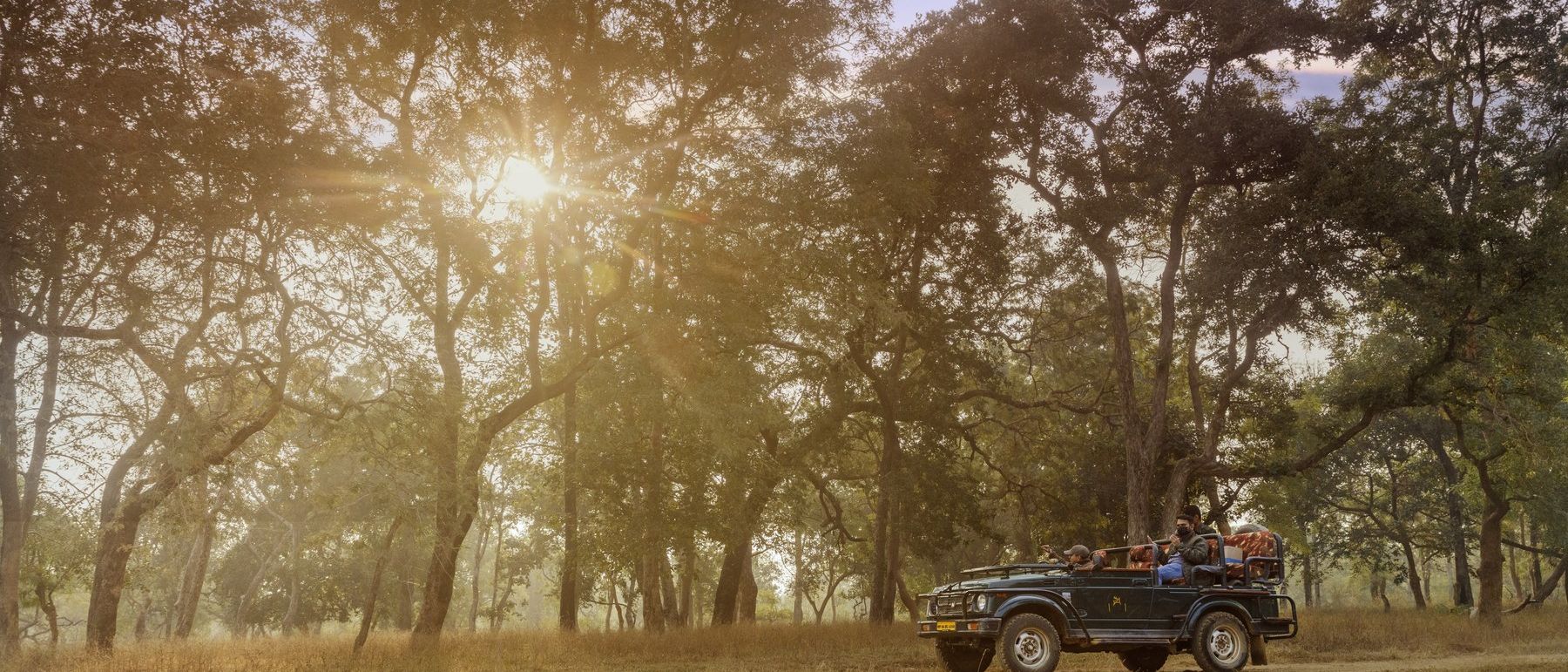
You enter the forest with your naturalist, observing tracks, calls, movement, light and changes in habitat. Some drives involve long periods of quiet observation; others can unfold quickly when wildlife activity develops.
There is no script. The landscape determines the experience.
Morning drives generally begin around dawn, although exact timings depend on the destination, season and local regulations.
The early hours are often particularly rewarding because the forest is cooler, quieter and full of activity.
Safari durations vary according to the protected area, entry and exit regulations and the type of safari being undertaken.
The intention is to make the most of the permitted time without turning the experience into a race. Your naturalist will help you understand the rhythm of the day and what to expect in that particular landscape.
Wildlife determines the distance.
We never approach an animal simply to obtain a closer photograph. The vehicle remains at a respectful distance according to the behaviour of the animal, the terrain and the regulations of the protected area.
A responsible encounter is one in which the animal remains undisturbed.
Every protected area has regulations governing vehicles, routes, distances, timing and visitor behaviour.
These rules exist to protect wildlife and maintain the character of the wilderness. Your naturalist and driver will ensure that your safari follows the applicable regulations.
Generally, guests may only leave the vehicle in designated and authorised areas.
A protected forest is not a place where visitors can simply step out whenever they wish. Your naturalist will advise you when it is safe and permitted to do so.
Remain calm, quiet and seated.
Do not call out, make sudden movements or attempt to attract the animal's attention. Your naturalist will manage the situation and advise you on where to look and how to behave.
Often the most extraordinary encounters happen when the vehicle becomes almost completely still.
Nothing has gone wrong.
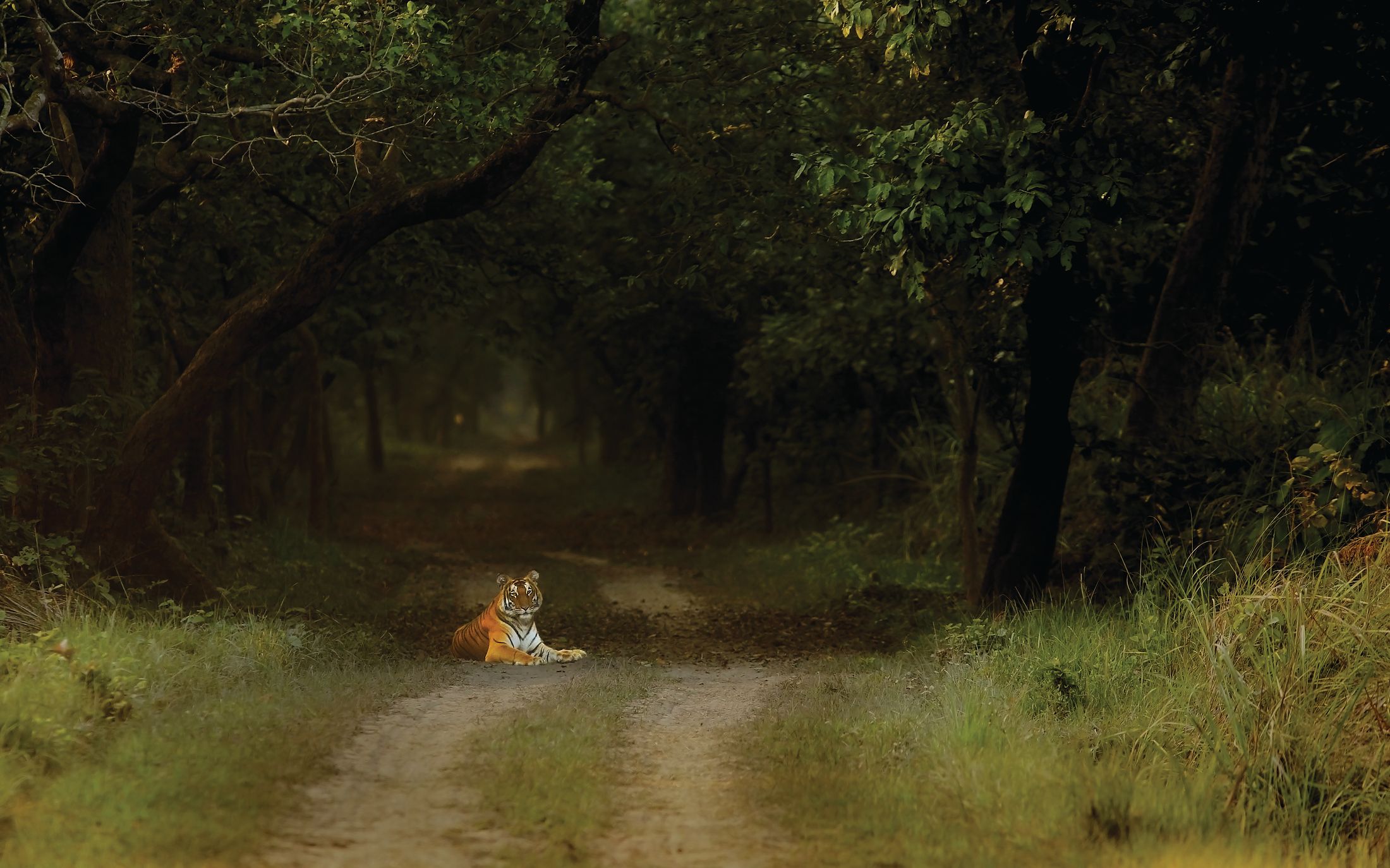
A tiger is wild, and no ethical safari can guarantee an encounter. The absence of a tiger can still reveal tracks, alarm calls, prey species, birds, other mammals and the ecological relationships that make the forest what it is.
We believe in honest wildlife travel: sightings are opportunities, not promises.
Chapter 07
Best Time to Visit India for Wildlife: A Season-by-Season Guide
There is no single best month for wildlife in India. The country changes dramatically with the seasons, and the ideal time to travel depends on what you want to see, where you want to go and how you want to experience the landscape.
India's Wildlife Landscapes
Seasonality is fundamental to an Indian safari.
Winter can bring cool mornings, mist and exceptional bird activity. As temperatures rise, vegetation changes and animals may become easier to locate around water or in more open areas. The monsoon transforms many landscapes completely, bringing fresh growth, flowing rivers and renewed ecological activity, while many protected areas close during this period.
A journey should therefore be planned around the seasonal character of the landscape, not simply around a calendar of dates.
Planning Your Safari
There is no single safari season for the whole of India.
Different landscapes have different opening periods and seasonal strengths. In many Central Indian reserves, the cooler months offer comfortable conditions, while the hotter months can bring different wildlife behaviour and increased visibility in some habitats. The Terai has its own seasonal rhythm, while Himalayan and Northeastern destinations follow very different patterns.
The ideal dates therefore depend upon where you want to go and what you want to experience.
Protected areas operate according to their own seasonal calendars, and opening periods can also be affected by local conditions and government regulations.
We check the relevant park schedules, permit availability and current operating conditions as part of planning your journey. This is particularly important when travelling across several landscapes.
Flights, Weather & Unexpected Changes
Wildlife travel is inherently seasonal, and weather can influence visibility, road conditions, wildlife movement and access.
Where conditions affect a planned activity, we work with the local team to make the safest and most sensible adjustment available. The priority is always the safety of guests and wildlife.
Protected-area authorities retain the right to restrict or suspend access because of weather, conservation requirements, safety concerns or other circumstances.
If this occurs, Safari Vista India will work with you and our local specialists to determine the appropriate alternative, subject to availability and the terms of the affected services.
Chapter 08
India Safari Photography: Camera Gear and Field Technique
Good wildlife photography depends less on equipment than on patience, light and restraint. The ethics of the photograph matter as much as the kit used to make it.
Wildlife Photography
A camera body with a good telephoto lens is the foundation for wildlife photography.
A second body can be useful for serious photographers, allowing a telephoto and wider lens to remain ready without changing equipment in dusty conditions. Spare batteries, memory cards, lens cloths and protection from dust are equally important.
The ideal kit depends on your photographic ambitions and the species you hope to photograph.
There is no requirement to own a professional camera.
Modern mirrorless and DSLR systems can produce excellent results, and the right lens and familiarity with your equipment often matter more than the price of the body.
Bring equipment you already know how to use confidently.
No.
A professional camera can provide advantages in autofocus, low-light performance and reach, but a well-used enthusiast camera can create exceptional wildlife photographs.
The quality of an encounter is not determined by the equipment in your hands.
Your position, light and the behaviour of the animal matter more than constant shooting.
Keep your equipment ready, anticipate movement and listen to your naturalist. Avoid sudden movements and unnecessary noise inside the vehicle.
Often the strongest photograph comes after several minutes of simply watching.
Allow the animal to remain the subject rather than turning it into a performance.
Never call, whistle or gesture to attract an animal for a photograph. Do not pressure a driver to move closer when an animal is resting or showing signs of disturbance.
Ethical photography begins with accepting that the animal's welfare comes before the image.
Ethical wildlife photography means photographing without altering an animal's behaviour.
That includes maintaining appropriate distance, respecting protected-area regulations, avoiding baiting or calling animals, keeping noise low and accepting missed photographs when getting the image would compromise the animal's welfare.
The photograph should document an encounter, not manufacture one.
Ethical wildlife photography is rooted in observation rather than interference.
The photographer remains a visitor in the animal's world. Patience, distance, silence and respect are as important as shutter speed and focal length.
Drone use is highly regulated and is not something travellers should assume is permitted within protected areas.
Rules can vary according to the location and applicable authorities. Safari Vista India will advise you according to the regulations governing your particular journey.
A beanbag can be useful for photographers using long lenses from a vehicle.
It provides a stable platform without taking up the space of a full tripod. Whether you need one depends on your equipment and photographic style.
India's wildlife landscapes can expose equipment to dust, heat, moisture and sudden changes in temperature.
Use protective bags, keep lenses capped when not in use, carry cleaning cloths and avoid unnecessary lens changes in dusty environments. In humid regions, appropriate moisture protection becomes particularly important.
Chapter 09
Responsible Travel in India: How Tourism Can Fund Conservation
Wildlife travel carries a responsibility to the places that make it possible. These answers set out how to behave in the field, why sightings are never promised, and how a journey can support conservation.
Responsible Wildlife Travel
Responsible wildlife tourism means entering protected landscapes with humility and leaving as little disturbance as possible.
It involves respecting regulations, wildlife behaviour, local communities and the ecological limits of a destination. It also means recognising that tourism has a responsibility to contribute positively to the places that make the journey possible.
Wildlife tourism can support conservation through protected-area revenue, employment, local economies and responsible tourism infrastructure.
At Safari Vista India, conservation is considered part of the journey itself. We also commit 5% of the value of every journey towards conservation.
Safari Vista India commits 5% of the value of each journey to conservation.
We intend this to be a meaningful and accountable commitment rather than a marketing statement. The contribution will be tracked and reported through an annual audit, with the first audit report following the first full year of operation.
As a new operator, we believe it is important to be transparent about the distinction between a commitment and an established historical record.
Observe quietly, remain patient and allow the animal to determine the encounter.
Never call an animal, feed wildlife, attempt to attract attention or pressure the driver for a closer position. Follow your naturalist's instructions and the rules of the protected area.
The privilege of seeing wildlife comes with the responsibility not to disturb it.
Because wildlife is wild.
Animals move according to food, weather, territory, breeding, disturbance and countless factors beyond human control. A responsible safari operator can use knowledge and experience to improve the quality of opportunities, but cannot ethically promise an encounter.
The uncertainty is part of what makes a genuine wildlife experience meaningful.
Protected areas use regulations, permits, vehicle limits, designated routes, seasonal closures and other management systems to control tourism pressure.
These measures help protect habitats and wildlife while allowing visitors to experience them responsibly. Tourism must remain within the ecological limits of the landscape.
Wildlife tourism should never alter the behaviour of the animals it exists to observe.
Visitors should avoid feeding, baiting, calling, crowding or otherwise manipulating wildlife. Responsible operators and naturalists help ensure that the desire for a sighting never takes precedence over the welfare of the animal.
Chapter 10
The Safari Vista India Difference: What Is Always True, On Every Journey
A private vehicle, a dedicated naturalist, no fixed departures, specialist ground handling and conservation built in from the start: these are true of every Safari Vista India journey, and the questions below explain what they mean in practice.
Planning Your Safari
Yes. This is central to how Safari Vista India works.
There are no fixed departures shaping the journey. We consider your interests, dates, preferred pace, accommodation preferences and the landscapes you want to understand, then build the journey around them.
Your safari should feel considered specifically for you rather than selected from a catalogue.
Your Safari Experience
A private Safari Vista India journey is built around your dates, interests and pace.
Your safari vehicle is exclusively yours, with specialist naturalist-led wildlife experiences, carefully selected accommodation and specialist ground handling. Permits, transfers and the practical details are coordinated so that your attention can remain on the journey.
Conservation is also part of the journey rather than an afterthought.
A fixed departure follows a predetermined date, route and group structure.
Private travel allows the journey to be shaped around you: your dates, your interests, your pace and your companions. You have your own vehicle and can work with your naturalist according to what is happening in the field.
For travellers seeking privacy and depth, that flexibility changes the experience considerably.
A naturalist does far more than identify animals.
They read tracks, alarm calls, bird calls, vegetation, weather and animal behaviour. They understand the landscape and use those observations to interpret what is happening around you.
The finest naturalists make the forest more legible without taking away its mystery.
A dedicated naturalist allows knowledge to accumulate throughout the journey.
Instead of repeatedly introducing yourself to a different guide, you build a relationship with someone who understands your interests and can adapt the experience accordingly. Over several days, conversations become more detailed and observations become more connected.
The naturalist becomes an interpreter of the wilderness rather than simply a guide through it.
Where the journey and logistics allow, Safari Vista India aims to provide continuity with one specialist throughout.
This creates familiarity and allows the naturalist to understand what interests you, how you like to travel and what you have already experienced.
Where a change is necessary because of geography or local specialist requirements, we work to maintain the same standard of expertise and personal attention.
With Safari Vista India, your private safari vehicle is reserved exclusively for your party.
This means there is no requirement to share the vehicle with unrelated travellers and allows the naturalist to respond to your interests and preferred pace.
Yes. Private travel is fundamental to the Safari Vista India experience.
Your vehicle is exclusively yours, giving you greater privacy, flexibility and continuity throughout the safari.
The Safari Vista India Philosophy
Conservation is part of the foundation of Safari Vista India.
We commit 5% of the value of each journey towards conservation and intend to report that commitment through an annual audit. We also believe responsible travel means respecting protected-area regulations, wildlife behaviour, local communities and the ecological limits of each landscape.
Safari Vista India is a new operator, and we believe transparency matters: our conservation commitment is established, while our audited record will develop with the business. The objective is to build a wildlife company whose success remains connected to the places and species that make these journeys possible.