
What to expect and when, from the dry season to the monsoon.
There is no single best month for wildlife in India. The country changes dramatically with the seasons, and the ideal time to travel depends on what you want to see, where you want to go and how you want to experience the landscape.
October begins the transformation. The monsoon has withdrawn, forests are green, rivers and wetlands are full, and many landscapes are at their most visually dramatic. Winter brings cooler conditions, exceptional birding and some of the best opportunities for exploring India's smaller and more elusive mammals. As spring approaches, forests begin to dry, vegetation opens and wildlife becomes increasingly concentrated around water. By March and April, the character of a safari can be completely different from what you experienced only a few months earlier.
And the best season for a tiger is not necessarily the best season for a snow leopard, red panda, Asiatic lion, small cat or migratory bird.
India rewards the traveller who plans around the wildlife, rather than simply choosing a convenient month.
Our guide looks at the Indian wildlife calendar from October to April, month by month, and then goes further—examining the best seasonal windows for India's major species and habitats, from tiger forests and Terai grasslands to Himalayan snowfields, Northeast forests, Western Ghats rainforests and the great wetlands of the subcontinent.
India does not have one safari season
Ask when the best time to go on safari in India is and you will often receive a simple answer: winter, or perhaps the hotter months when animals gather around water.
The reality is considerably more interesting.
India is not one wildlife destination. It is a continent-sized mosaic of forests, grasslands, wetlands, rivers, mountains, deserts and rainforests, each governed by its own seasonal rhythm. The conditions that make a tiger easier to find in a dry Central Indian forest are very different from those that bring a snow leopard into view in the Himalaya. The season for red pandas in the eastern Himalaya does not follow the same calendar as the Asiatic lion in Gir. The best period for India's smaller wild cats can be quite different again.
For Safari Vista India, the broad wildlife travel season runs from October through April, when many of the country's principal wildlife landscapes are accessible and offer compelling experiences. But within those seven months, the character of the wilderness changes almost continuously.
October can bring the first clear mornings after the monsoon, saturated landscapes and full rivers. November and December introduce cooler weather and exceptional birding. January and February are particularly rewarding for winter wildlife and Himalayan journeys. March brings a subtle shift as the forests begin to dry and smaller cats and other elusive species can become easier to look for. April brings heat, open vegetation and increasingly concentrated wildlife activity around water, creating some of the most intense tiger experiences of the year.
So the better question is not simply When is the best time for a wildlife safari in India?"
It is:
What do you want India to reveal?
October --- The country begins to breathe again
October marks the beginning of the post-monsoon wildlife season in much of India. The rains have transformed the landscape, leaving forests green, rivers full and grasslands remarkably fresh. For a traveller interested in landscapes as much as individual sightings, this can be one of the most beautiful times to enter the Indian wilderness.
The character of October varies considerably between regions. In the northern Terai, the grasslands and sal forests can be extraordinarily lush, with wetlands holding water and migratory birds beginning to return. In parts of Central India, the forests remain greener than they will be later in the season, while in the Himalayan foothills the post-monsoon clarity can reveal a landscape that feels completely different from the dry-season forests farther south.
October is also an important month for travellers interested in the red panda and eastern Himalayan forests, depending on the precise destination and local conditions. The landscape is still carrying the imprint of the monsoon, and the combination of changing foliage, mist and mountain forest creates a very different wildlife experience from the tiger reserves of Central India.
This is not necessarily the month to choose if your sole objective is to maximise tiger visibility. It is a month for seeing India as a living landscape—green, wet, recovering and changing.
November --- The beginning of the classic Indian safari season
By November, many of India's principal wildlife landscapes begin to settle into their dry-season rhythm. Temperatures become more comfortable, roads and forest tracks are generally easier to travel, and the combination of pleasant weather and changing vegetation makes this an excellent month for a broad Indian wildlife journey.
For tiger landscapes, November can offer very rewarding conditions, although the forests can still retain considerable vegetation following the monsoon. Tigers are present throughout the year; what changes is how easy it is to find and observe them.
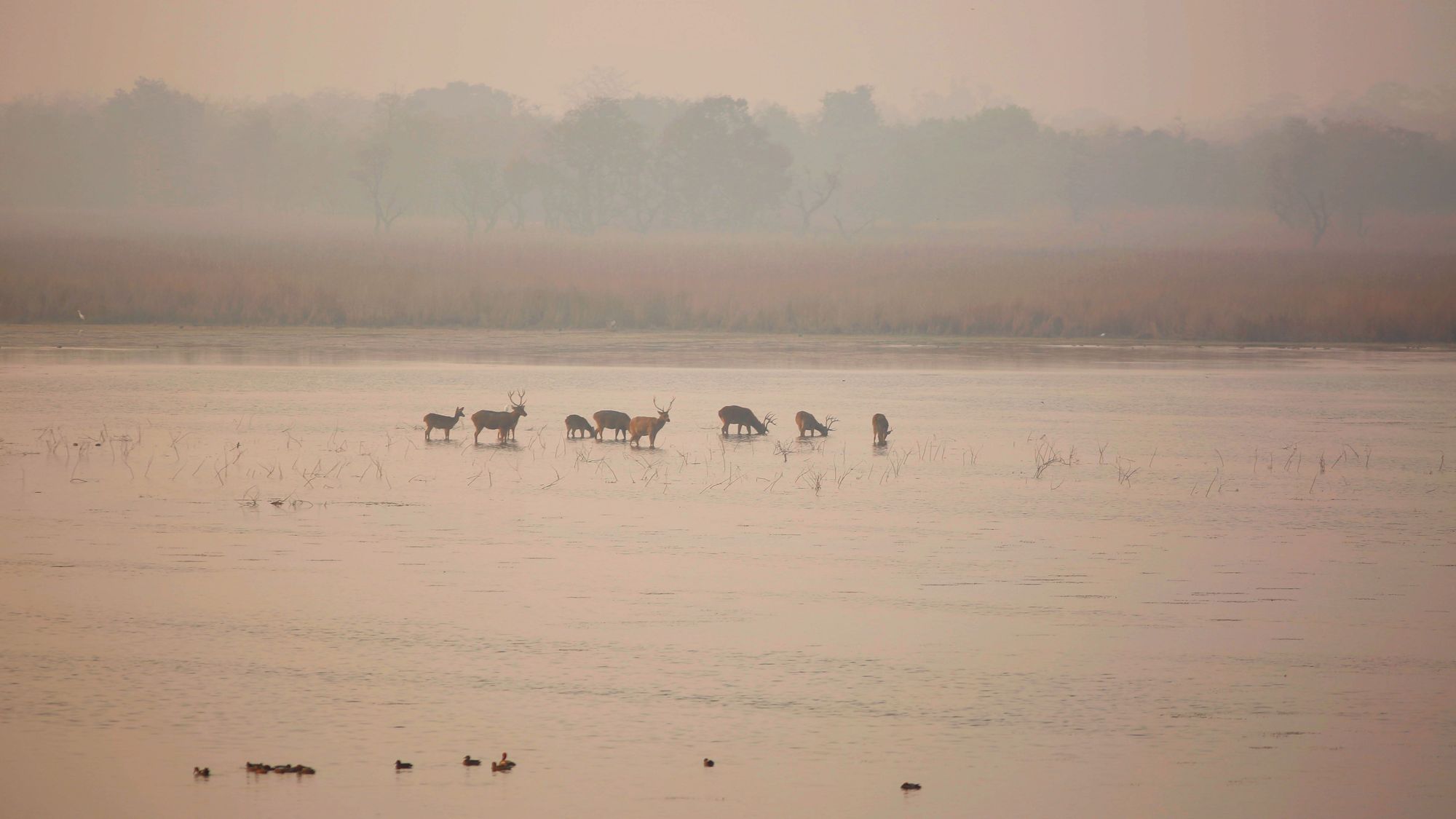
The Terai is particularly compelling at this time of year. Grasslands remain productive, wetlands attract increasing numbers of birds and the cooler conditions make long mornings in the field comfortable. One-horned rhinoceros, swamp deer, elephants and an extraordinary variety of waterbirds can become part of the experience.
November is also an excellent period for travellers who want to combine several habitats. Rather than building an itinerary around a single species, you can begin in the northern forests and grasslands, move towards Central India's tiger landscapes and continue into other regions where the ecology changes completely.
December --- Winter arrives
December brings some of the most comfortable wildlife-travel conditions in India. Mornings can be cold, particularly in northern India, but the clear winter light and cooler daytime temperatures make long periods in the field enjoyable.
For the traveller interested in birds, this is one of the great advantages of winter in India. Wetlands, rivers, grasslands and agricultural landscapes can fill with migratory species arriving from northern Eurasia and Central Asia. A safari itinerary that incorporates birding can therefore become considerably richer during these months.
The cooler conditions are also particularly useful for exploring India's smaller mammals. Winter vegetation can begin to open in some dry forests, and patient naturalists may spend time looking for jungle cats, leopard cats, fishing cats and other elusive species rather than concentrating exclusively on large mammals.
For tiger travellers, December can provide excellent conditions, but the experience remains different from the hotter months that follow. The forest is still relatively dense in many places, and tiger movements are not governed as strongly by water availability.
For those who prefer comfortable temperatures and a broad wildlife experience, December is one of the most versatile months on the Indian wildlife calendar.
January --- Snow leopards, winter wildlife and extraordinary birding
January is when the Indian wildlife calendar begins to split into very different worlds.
In the Himalaya, the high-altitude snow leopard season is underway. As winter deepens, prey species move through their own seasonal patterns and the possibility of encountering a snow leopard in the stark mountain landscape becomes one of India's most extraordinary wildlife experiences.
For travellers prepared for cold, altitude and demanding terrain, January through April is a particularly important window for snow leopard journeys, with conditions varying according to altitude, location and weather.
Far below the mountains, January offers excellent winter wildlife conditions across many northern and central landscapes. Migratory birds are present in large numbers, wetlands are alive with activity and the cool mornings make long safari drives considerably more comfortable than they will be later in the season.
This is also a particularly good period for a journey that combines large mammals with birding. A tiger safari does not have to be exclusively about tigers, and the winter landscape often rewards travellers who are willing to stop and look beyond the headline species.
February --- A month of remarkable diversity
February sits at an interesting point in the Indian wildlife season. Winter remains present in the north, but the first signs of spring begin appearing in many forests.
For Central India's tiger landscapes, conditions remain comfortable and wildlife viewing can be rewarding. For the Himalayan traveller, snow leopard journeys continue. In the Northeast, forests and foothills offer opportunities for species associated with cooler conditions, while wetlands continue to support winter migrants.
February is also a good month for travellers interested in red pandas and the eastern Himalayan landscape, depending on the destination and local conditions. These journeys are fundamentally different from tiger safaris: the forest is denser, the terrain more challenging and the species considerably more elusive.
That contrast is precisely what makes a multi-region Indian wildlife journey so compelling.
Within a few days, you can move from a dry forest inhabited by tigers to a mountain ecosystem where the search is for a small, elusive mammal that may reveal itself only through patience and careful observation.
March --- The forest begins to open
March is one of the most interesting transition months in India.
Temperatures begin to rise. Winter migrants start preparing to leave. Vegetation begins to lose some of its winter density, and the forests start moving towards the intense heat of summer.
For many travellers interested in small cats, March is particularly attractive. Species such as jungle cat, fishing cat, leopard cat and rusty-spotted cat can be difficult to find at any time of year, and there is no guarantee of a sighting, but the changing conditions can make late winter and early spring particularly rewarding for specialists who are prepared to spend time looking beyond the obvious.
March is also an excellent period for tiger landscapes because the combination of increasing temperatures and changing vegetation begins to alter animal behaviour.
Water becomes progressively more important.
The forest becomes quieter.
The light changes.
And the landscape starts to reveal the first signs of the intense dry season ahead.
For an experienced safari traveller, this transitional period can be particularly fascinating because you are watching the ecosystem itself change rather than simply arriving at a destination during a static season."
April --- Heat, water and the great tiger season
By April, the character of many Indian forests has changed dramatically.
The green of the post-monsoon season has faded. Leaves begin to fall. Grasses dry. Visibility through the forest improves, and temperatures rise sharply.
Water becomes increasingly important.
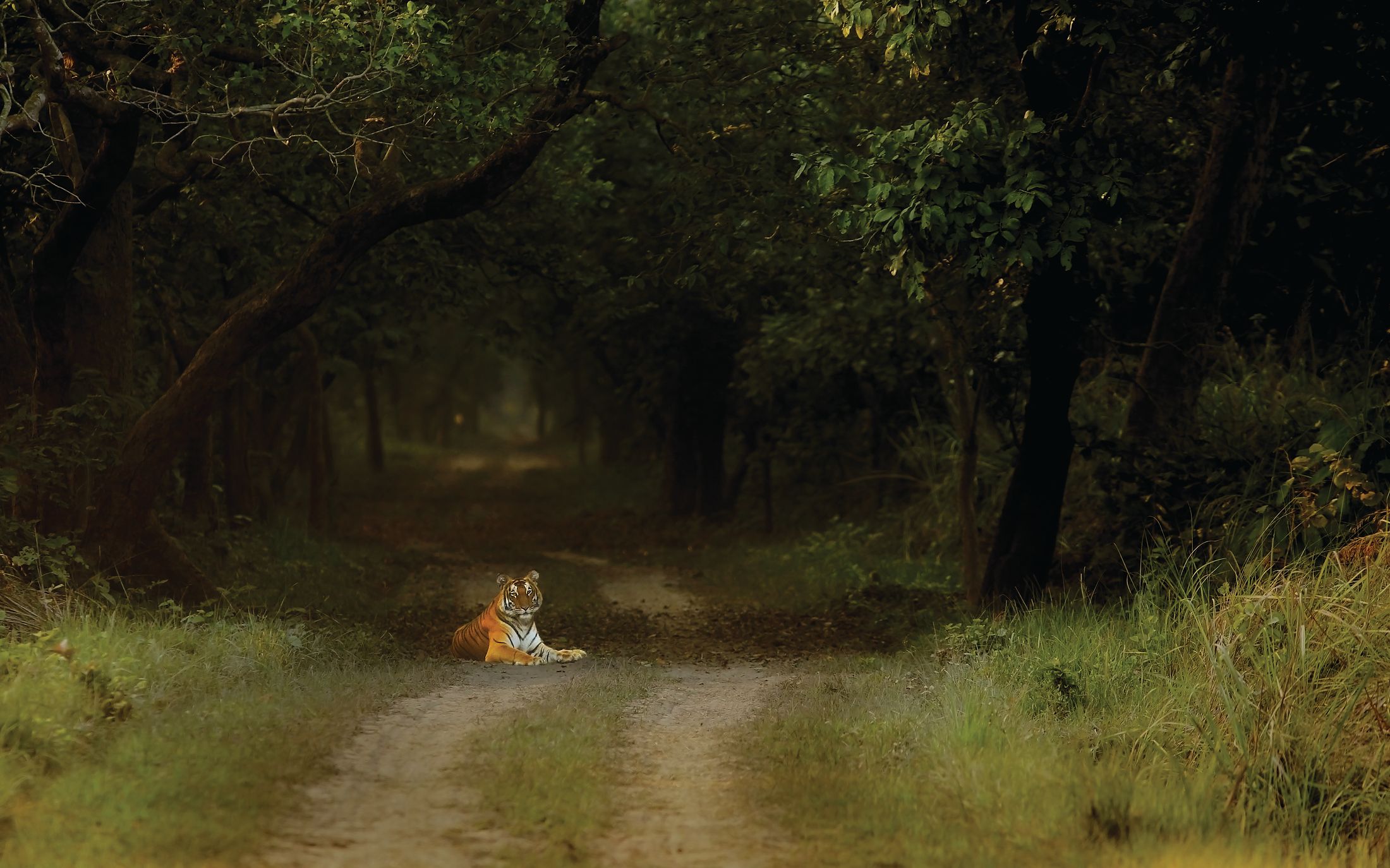
In Central India's tiger landscapes, this can create some of the most compelling conditions of the entire wildlife season. Tigers do not suddenly appear because it is April; they are present throughout the year. But the combination of heat, sparse vegetation and dependence on remaining water sources can make them easier to locate and observe.
This is why April and May are often discussed by experienced naturalists as particularly productive months for tiger viewing.
The trade-off is obvious.
The forest may give you better visibility, but it asks you to tolerate considerably more heat.
For travellers comfortable with early starts, high temperatures and long periods in the field, the reward can be extraordinary. A tiger lying beside a waterhole in the afternoon heat, a herd of chital gathering beneath the last shade of the day, or a sloth bear appearing on a dry forest track can create a very different safari from the cooler months.
April is also an excellent month to understand the forest ecologically. As water becomes scarce, the relationships between predator and prey become easier to observe. Animals begin concentrating around the remaining resources, and the dry forest becomes a much more legible landscape.
What about May and June?
Although Safari Vista's broad multi-region operating window is October to April, May and June deserve mention because they can offer some exceptionally intense wildlife conditions in parts of India.
The heat becomes severe, particularly in Central India, and this is not a season we would recommend simply because someone has heard that tiger sightings are better in summer." The experience is physically demanding, and the suitability of the season depends heavily on the traveller.
But for those who tolerate the heat, the rewards can be significant.
Forests are at their driest. Visibility can be excellent. Water sources become crucial. Wildlife behaviour becomes increasingly concentrated around the resources that remain.
The experience is less comfortable but often more intense.
For a broader journey involving multiple regions, however, October through April offers considerably greater seasonal variety.
The best season for a tiger safari in India
If tigers are the principal objective, there is no single month that guarantees sightings. Tigers are resident animals and can be encountered throughout the safari season.
The practical difference is visibility.
During the cooler months, forests can retain more vegetation and temperatures are considerably more comfortable. From March onwards, vegetation begins to open and temperatures rise. April is particularly attractive for travellers who prioritise wildlife viewing over comfort and are prepared for the heat.
Central India is often the focus of tiger journeys, but it should not be the only landscape considered. The Terai offers a completely different tiger habitat, with tall grasslands, sal forests and wetlands. Tigers here exist alongside rhinoceros, swamp deer, elephants and a rich bird community.
The best tiger safari is therefore not necessarily the one with the hottest month. It is the one that matches your expectations of the experience.
The best season for snow leopards
Snow leopard journeys operate on an entirely different calendar.
The strongest broad window is generally January to April, when winter conditions and prey movements can improve the chances of encountering this elusive high-altitude predator.
But this is not a conventional jeep safari.
You travel into mountain landscapes, often at altitude, and spend long periods walking or scanning vast slopes with specialist guides and trackers. The weather can be extremely cold, and sightings can involve patience measured in hours rather than minutes.
The reward is one of the most extraordinary wildlife experiences in Asia: a snow leopard moving almost invisibly through a landscape of cliffs, snow and immense Himalayan valleys.
The best season for red pandas
Red panda journeys belong to India's eastern Himalayan forests and require a completely different mindset from a tiger safari.
A broad October to April window can be productive, with the character of the landscape changing substantially through the season.
The forests can be misty, atmospheric and rich in mosses, ferns and high-altitude vegetation. The species itself is elusive, and success depends heavily on specialist knowledge and patience.
This is one of the reasons we prefer not to reduce India to a collection of large mammals.
A red panda moving quietly through Himalayan bamboo can be every bit as memorable as a tiger crossing a forest track.
The experience simply asks you to look differently.
The best season for Asiatic lions
The Asiatic lion of Gir is another example of why India's wildlife calendar cannot be reduced to one rule.
Lions can be seen throughout much of the year, but the cooler winter months are generally the most comfortable and rewarding period for a safari in Gir.
The dry deciduous forests and open landscapes of Gir provide a very different setting from India's tiger reserves. The wildlife community is different, the vegetation is different and the relationship between forest and surrounding communities has its own distinctive history.
For travellers interested in India's big cats, combining Gir with a tiger landscape can create a particularly interesting journey because you are experiencing two very different expressions of the country's large-predator ecology.
The best season for India's small cats
India's smaller wild cats are among the country's most fascinating and least predictable wildlife subjects.
Jungle cats, leopard cats, fishing cats and rusty-spotted cats inhabit different landscapes and respond differently to habitat and season. There is no single location where all of them can simply be ticked off.
For specialist small-cat journeys, winter through early spring is often particularly interesting, with March standing out as a useful period for some landscapes as vegetation changes and conditions become more favourable for observation.
But small cats require a different philosophy from tiger tourism.
You need time.
You need patience.
And you need a naturalist who is willing to spend a morning looking at the margins of the forest rather than driving directly towards the most obvious large mammal sighting.
For the experienced wildlife traveller, that can be exactly the point.
The best season for rhinoceros in the Terai and Northeast
The one-horned rhinoceros is closely associated with India's great grassland and floodplain ecosystems.
In the Terai and Northeast, cooler months from October through March or April can provide particularly comfortable conditions for exploring these landscapes. Grasslands, wetlands and river systems are also highly rewarding for birding during winter.
A rhinoceros standing in tall elephant grass is an entirely different visual experience from a tiger beneath dry deciduous forest. Combining the two is one of the strengths of travelling through India.
The Terai is particularly interesting because the landscape supports much more than rhinoceros. Tigers, elephants, swamp deer, hog deer, wild boar, gharials and an exceptional bird community form part of a larger ecological system.
The best season for swamp deer and Terai grasslands
The Terai is one of India's most important grassland ecosystems, and winter provides excellent conditions for experiencing it.
Swamp deer, hog deer and other grassland species become particularly interesting during the cooler months, while winter migrants add another layer to the landscape.
The Terai should not be approached simply as another tiger destination.
It is a landscape of grass, water, sal forest and river, and its wildlife becomes much easier to understand when you spend time looking beyond the tiger.
This is one of the regions where a knowledgeable naturalist can completely change the experience.
The best season for birding in India
For serious birders, October to March is one of the most rewarding broad periods for exploring many Indian landscapes, particularly because of the arrival of winter migrants.
Wetlands, river systems, grasslands and forest edges can become extraordinarily productive.
The exact timing varies by region and species, but winter allows a wildlife journey to extend well beyond mammals. Raptors, waterbirds, warblers, flycatchers, hornbills and countless resident species become part of the daily rhythm.
A private safari can therefore be designed around birding without compromising the larger wildlife experience.
In fact, some of the richest safari days are the ones where the tiger never appears because the forest itself has become the subject.
The best season for the Western Ghats
The Western Ghats follow a very different seasonal rhythm from the dry forests of Central India.
These ancient mountain forests are exceptionally rich in endemic species and are particularly rewarding for travellers interested in birds, primates, amphibians, reptiles and plant life.
The cooler and drier months can be more comfortable for exploration, while the post-monsoon landscape can be extraordinarily lush.
Rather than treating the Western Ghats as a conventional big-mammal safari, we would design the experience around its ecological character.
Lion-tailed macaques, Nilgiri langurs, great hornbills and a remarkable variety of endemic species make this one of India's most important landscapes for a traveller interested in biodiversity.
The best time is ultimately the time that matches your journey
The mistake is to ask India for one universal safari season.
There isn't one.
There is the tiger season.
The snow leopard season.
The red panda season.
The birding season.
The lion season.
The small-cat season.
The rhinoceros and grassland season.
And then there is the much larger experience of travelling through India and watching several of these ecosystems change across the same journey.
That is why our journeys are designed around landscapes and seasons rather than simply a list of famous reserves.
A traveller arriving in October may experience a very different India from someone arriving in April. Both can be extraordinary. One may be drawn to green forests, rivers, wetlands and migratory birds; another may prefer dry landscapes, open visibility and intense tiger encounters.
The question is not simply when wildlife is easiest to see. It is when the India you want to experience is most alive.
A seasonal India, rather than a fixed itinerary
India rewards travellers who allow the landscape to determine the journey.
From the Terai grasslands and sal forests in the north to Central India's dry tiger forests, from Gir's Asiatic lions to the rainforests of the Western Ghats, and from the eastern Himalaya's red pandas to the high mountains where snow leopards move across winter slopes, the country contains several entirely different wildlife worlds.
A carefully designed private India safari can connect some of them, but it should never attempt to force every destination into one generic itinerary.
The right route depends on the species you want to understand, the landscapes you want to experience, the season in which you travel and the amount of time you are willing to give the wilderness.
There is no perfect month for India. There is only the right season for the journey you want to make.
Plan with a specialist
Tell us when you can travel.
We will be honest about what that season is likely to offer.
Begin the Conversation