Plan Your Journey
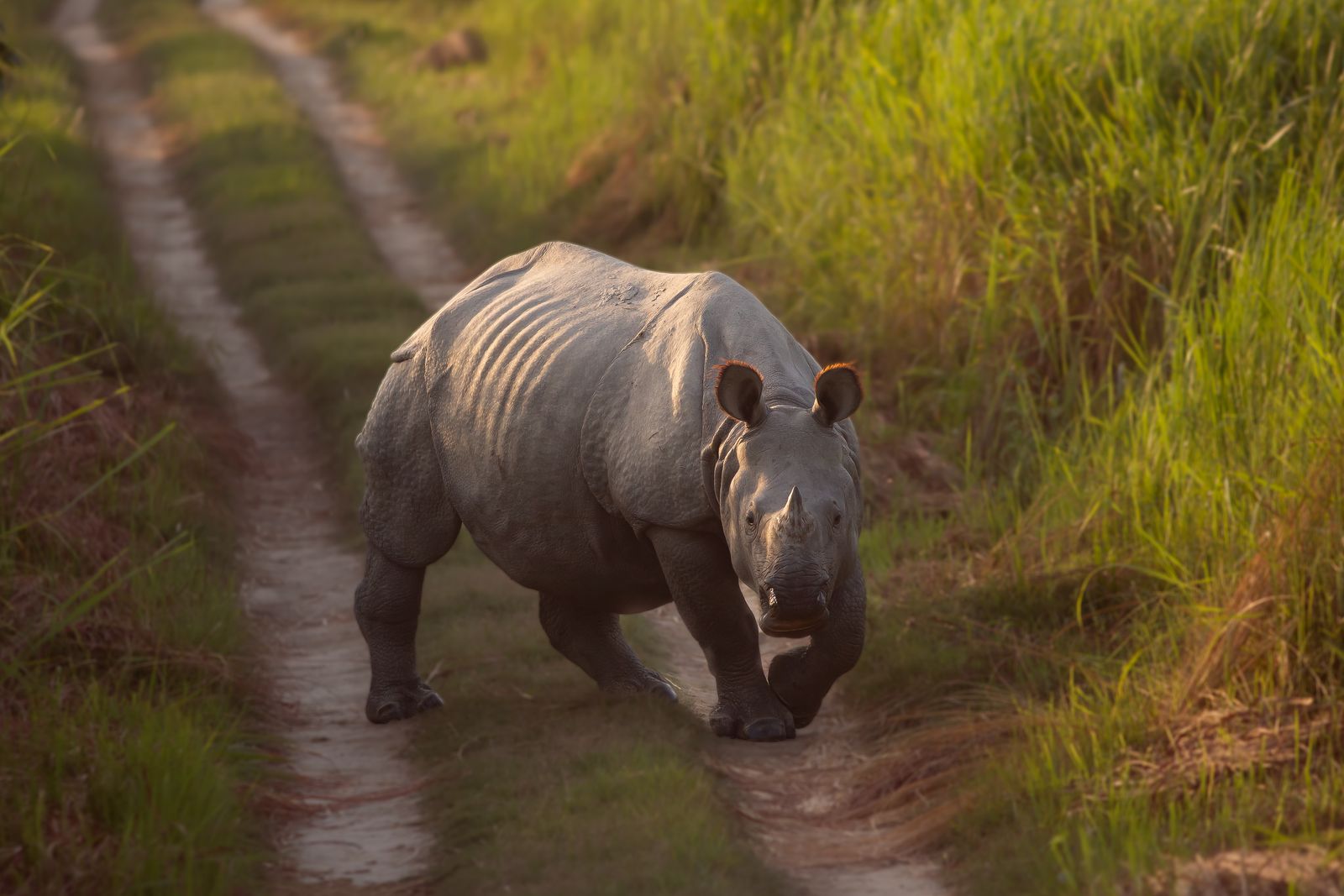
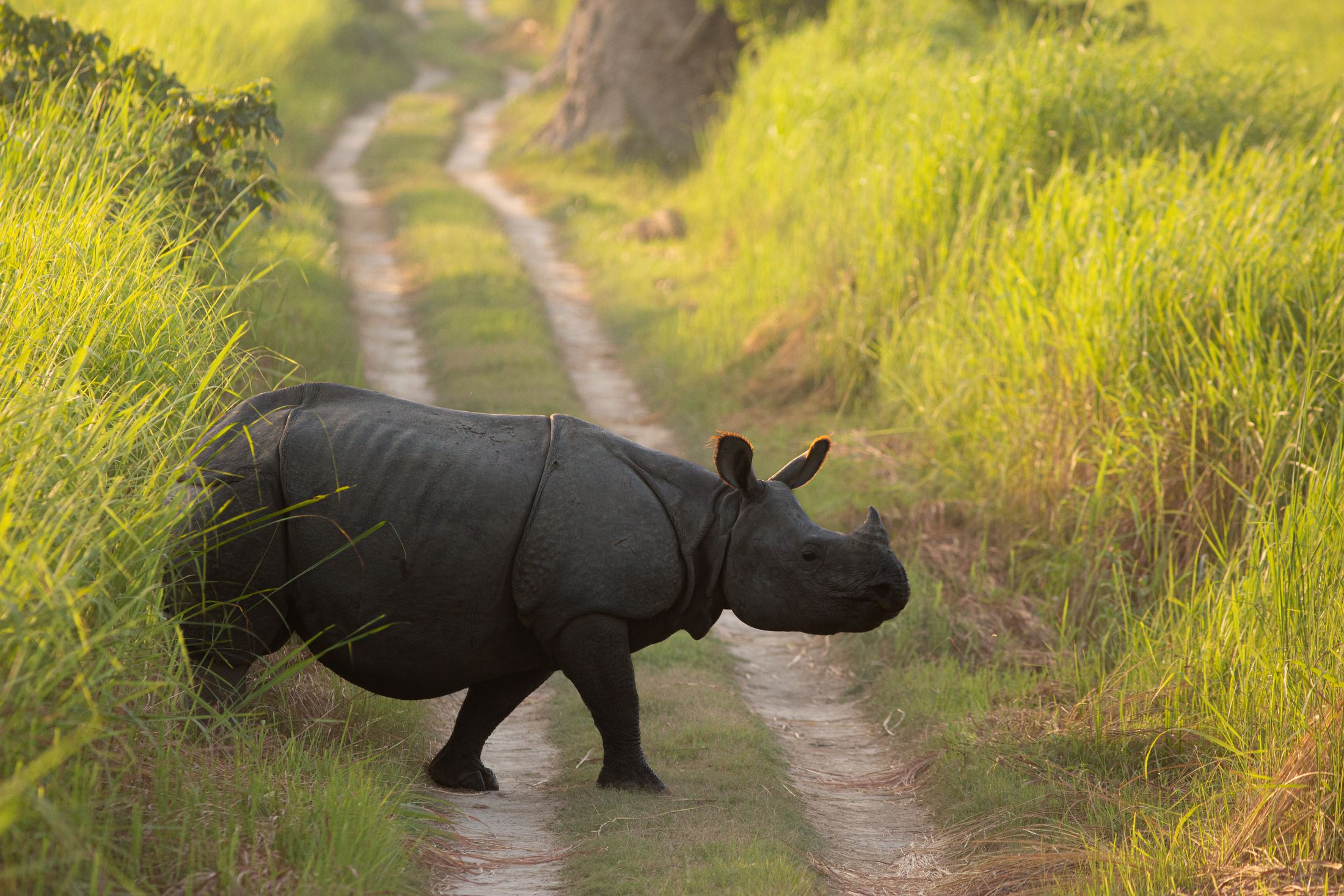
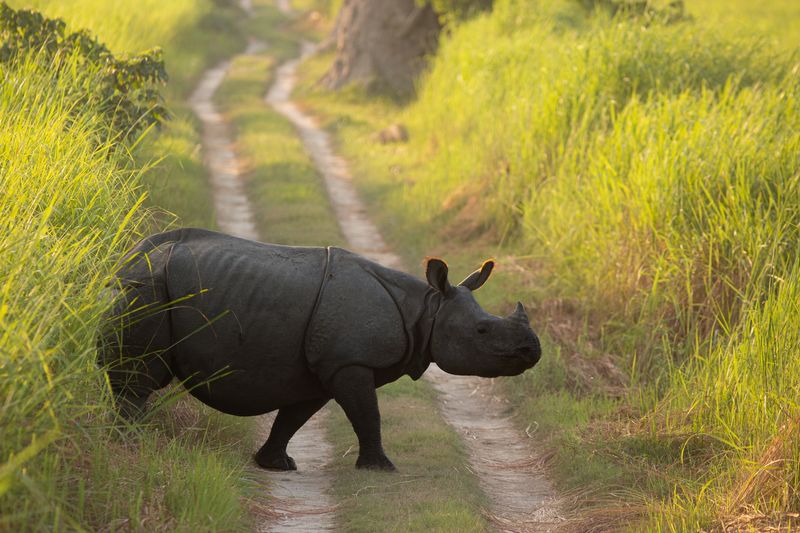
A greater one-horned rhinoceros crossing a track through tall grass

Home / Journeys / The Northeastern Rainforests

Assam · India

The Northeastern Rainforests

India's Rhino and Wild Buffalo Stronghold

Private journeys through elephant grass, beel and broadleaf forest on the Brahmaputra floodplain in Assam: the one-horned rhinoceros, wild water buffalo, the hoolock gibbon and the pygmy hog.

Begin Your Journey

Along the Brahmaputra’s floodplain in Assam, tall elephant grass and dense, moist broadleaf forest hold one of the most concentrated large-mammal populations found anywhere in Asia.

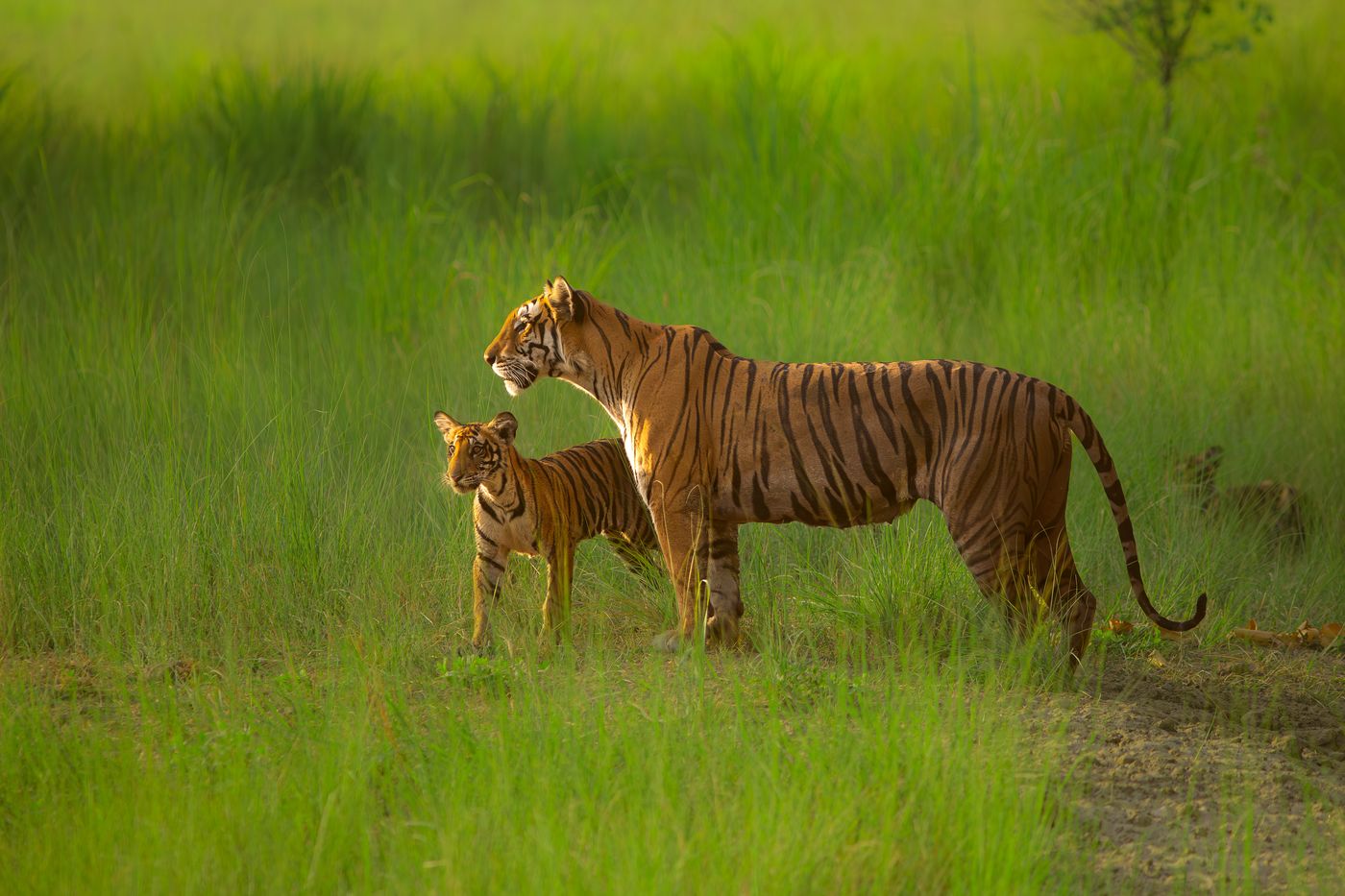
A tigress and cub in tall green grass
The Brahmaputra floodplain

Built on river silt and seasonal flood

This is Kaziranga and Manas country — a landscape built on river silt and seasonal flood, where the Indian one-horned rhinoceros survives in numbers found nowhere else on Earth, and where India’s tiger population reaches its highest recorded density in any protected area in the world.

Further into Assam’s forests, the same river system and its tributaries support a different kind of rarity entirely: a small, elusive wild pig once thought extinct, and India’s only true ape, swinging through the forest canopy in family groups that call to each other across the treeline each morning.

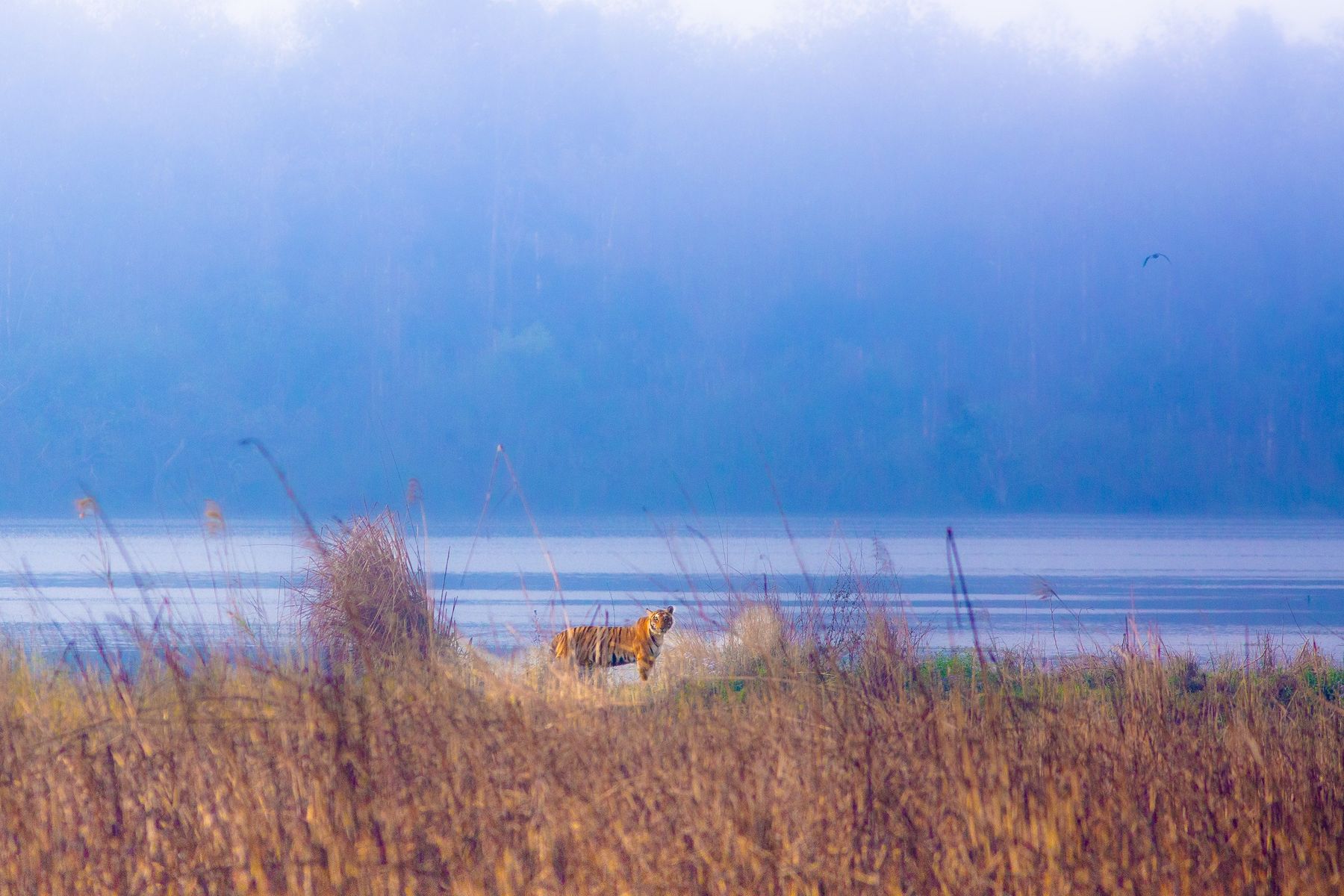
A tiger in pale grass beside still water, misty hills beyond
The landscape

Grass, beel and broadleaf forest

Kaziranga sits directly on the floodplain of the Brahmaputra, its landscape shaped entirely by the river’s seasonal rhythm — vast stretches of tall elephant grass and marshland crossed by the Brahmaputra itself and three smaller rivers, interspersed with pockets of dense tropical moist broadleaf forest and numerous shallow water bodies known locally as beels.

Each monsoon, the Brahmaputra floods much of the park, forcing animals onto higher ground and periodically reshaping the landscape’s grassland and waterways in a cycle the entire ecosystem has evolved around rather than against.

Manas and Hoollongapar

One landscape across a border

Manas, further west along the Himalayan foothills and sharing an unbroken forest border with Bhutan’s own Royal Manas National Park, adds a different texture: riverine forest and grassland along the Manas River as it descends from the mountains, forming one contiguous transboundary conservation landscape rather than an isolated park.

Further east, the forests around Hoollongapar protect smaller, denser pockets of semi-evergreen forest, important less for their scale than for the specific, highly localised species they still support.

Encounters

The wildlife of the Northeastern Rainforests

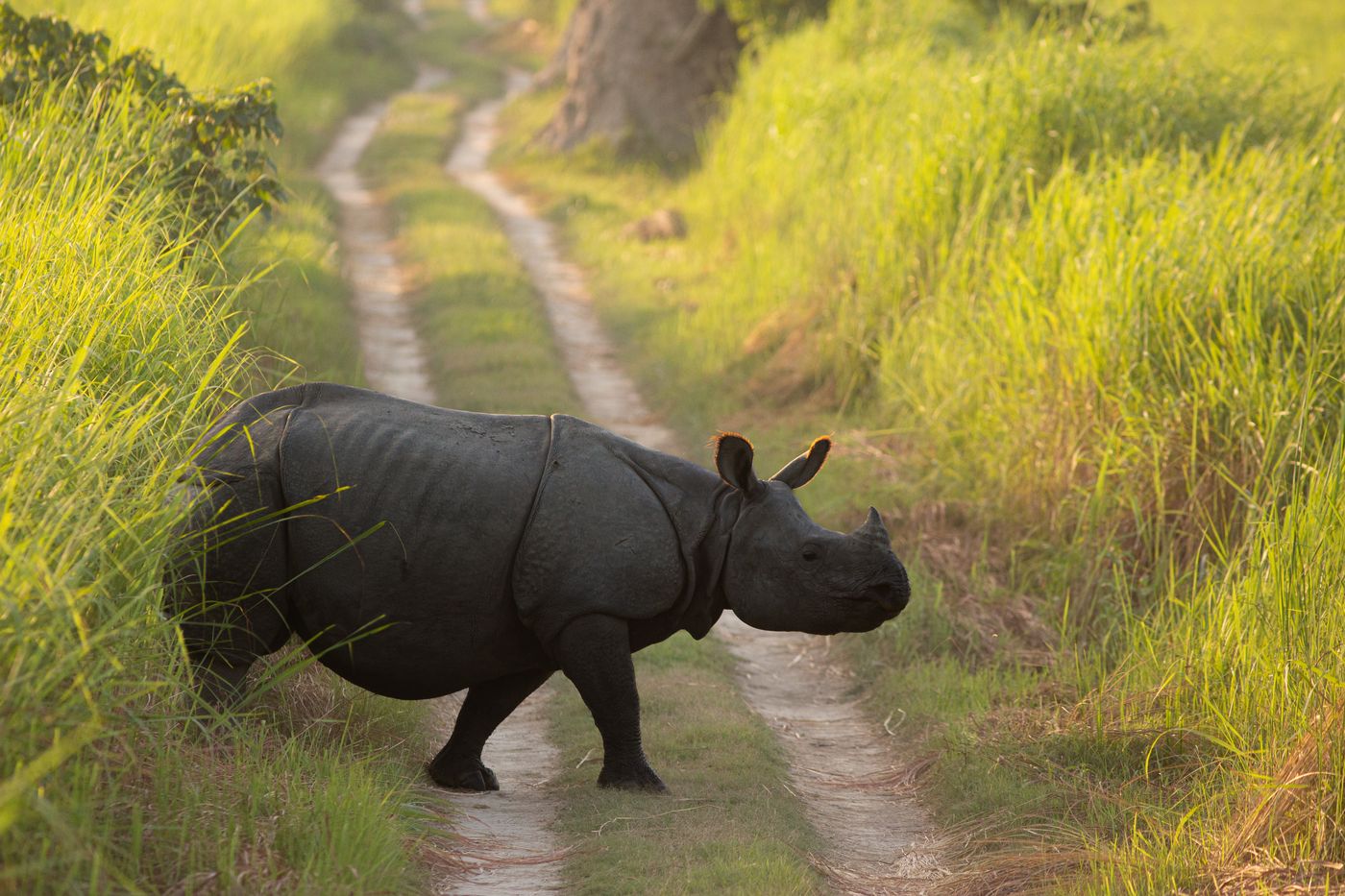
A greater one-horned rhinoceros crossing a grassland track
One-horned rhinoceros · Kaziranga

A recovery built from almost nothing

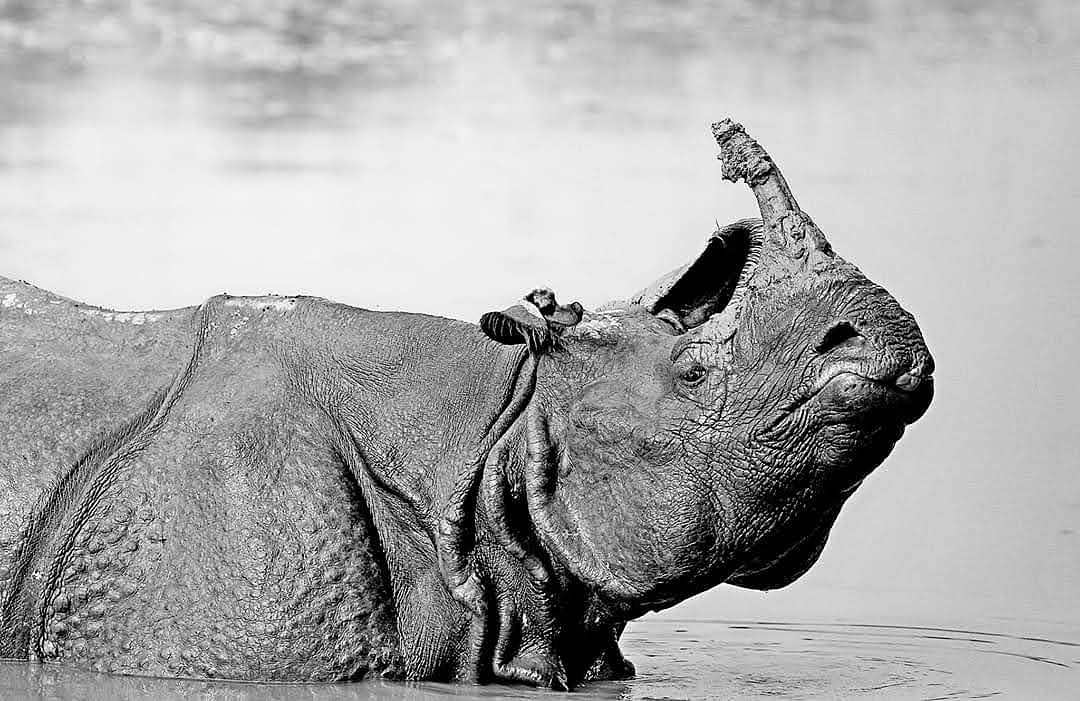
Kaziranga holds the single largest population of the Indian one-horned rhinoceros anywhere on the planet — more than 2,400 individuals at last count, representing the clear majority of the species’ entire global population.

It is a recovery built from almost nothing: in 1900, hunting had reduced the rhino’s numbers in this landscape to around a dozen animals, and more than a century of sustained, dedicated protection has rebuilt that population into the stronghold it represents today.
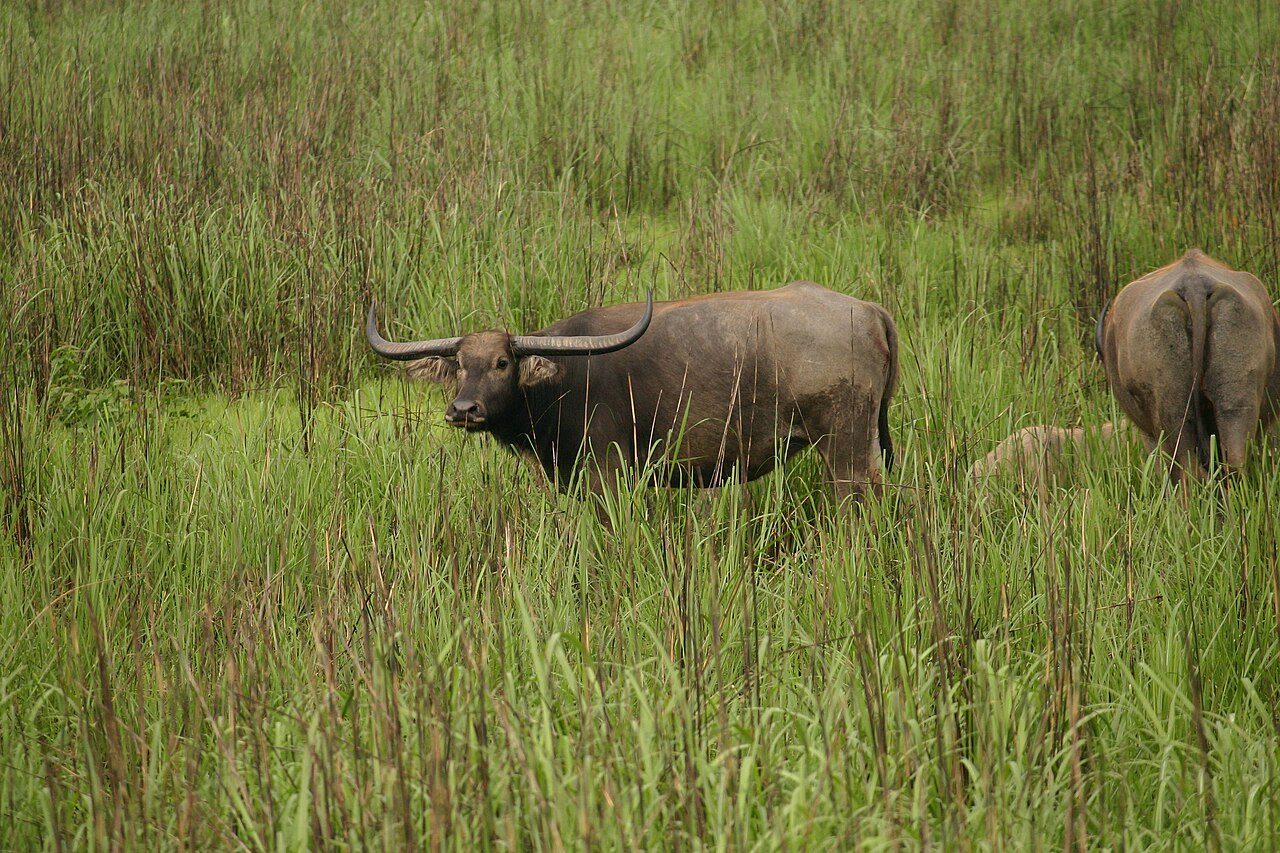
A wild water buffalo with long swept-back horns in tall grasslandPhoto: David Raju / CC BY-SA 4.0
Wild water buffalo · eastern swamp deer

Genuinely wild, and increasingly rare

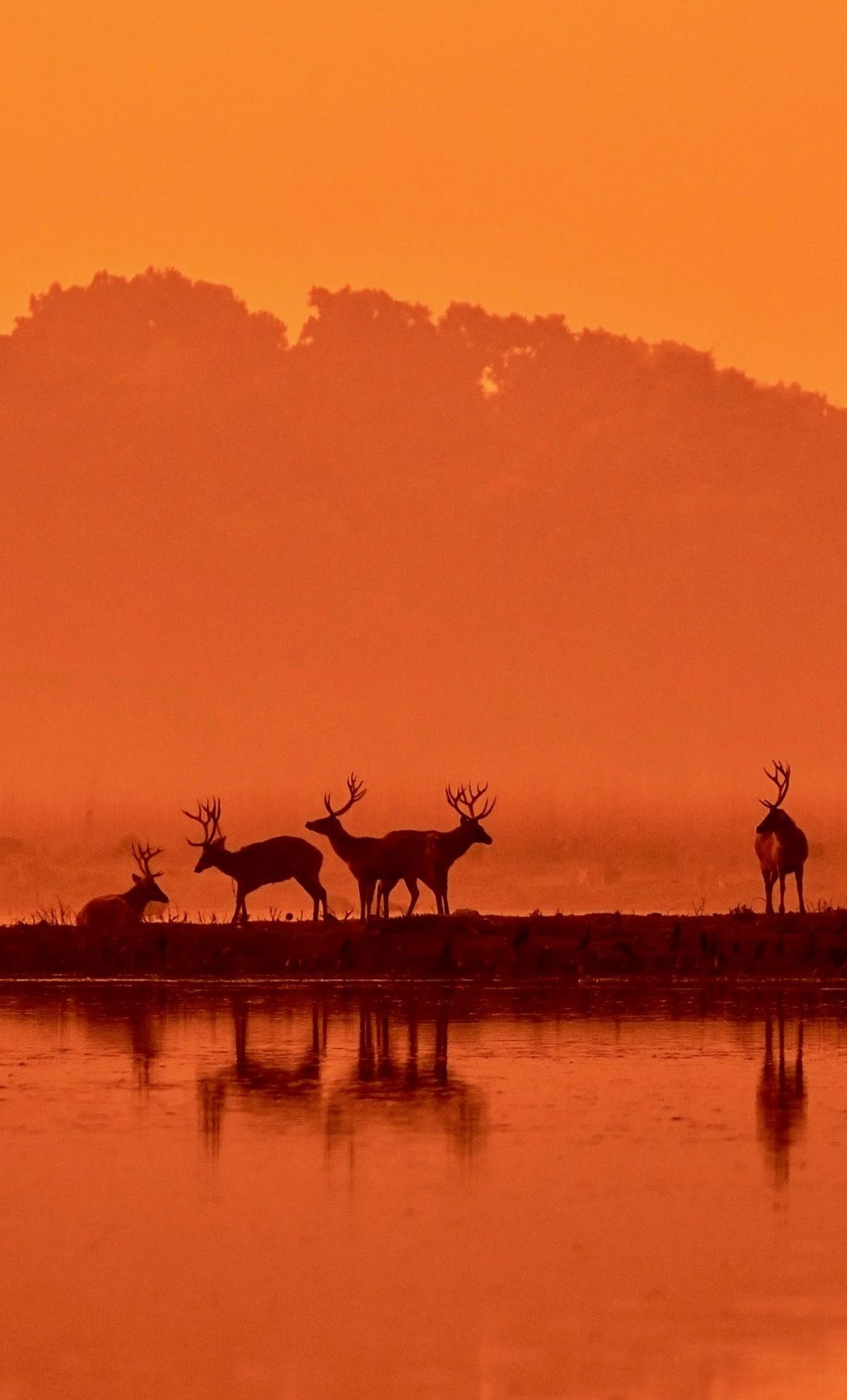
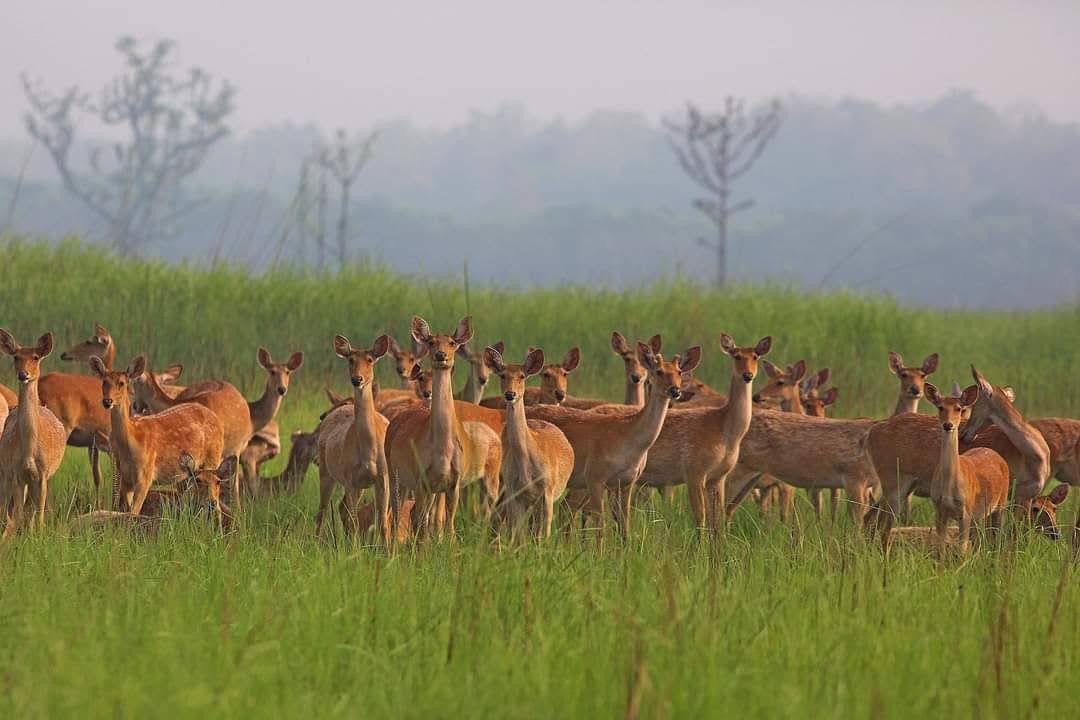
The same grassland and forest mosaic supports the only viable population of the eastern swamp deer left anywhere, alongside roughly half the world’s entire population of wild water buffalo — a genuinely wild bovine increasingly rare across its historical range, now surviving in numbers here that exist almost nowhere else.

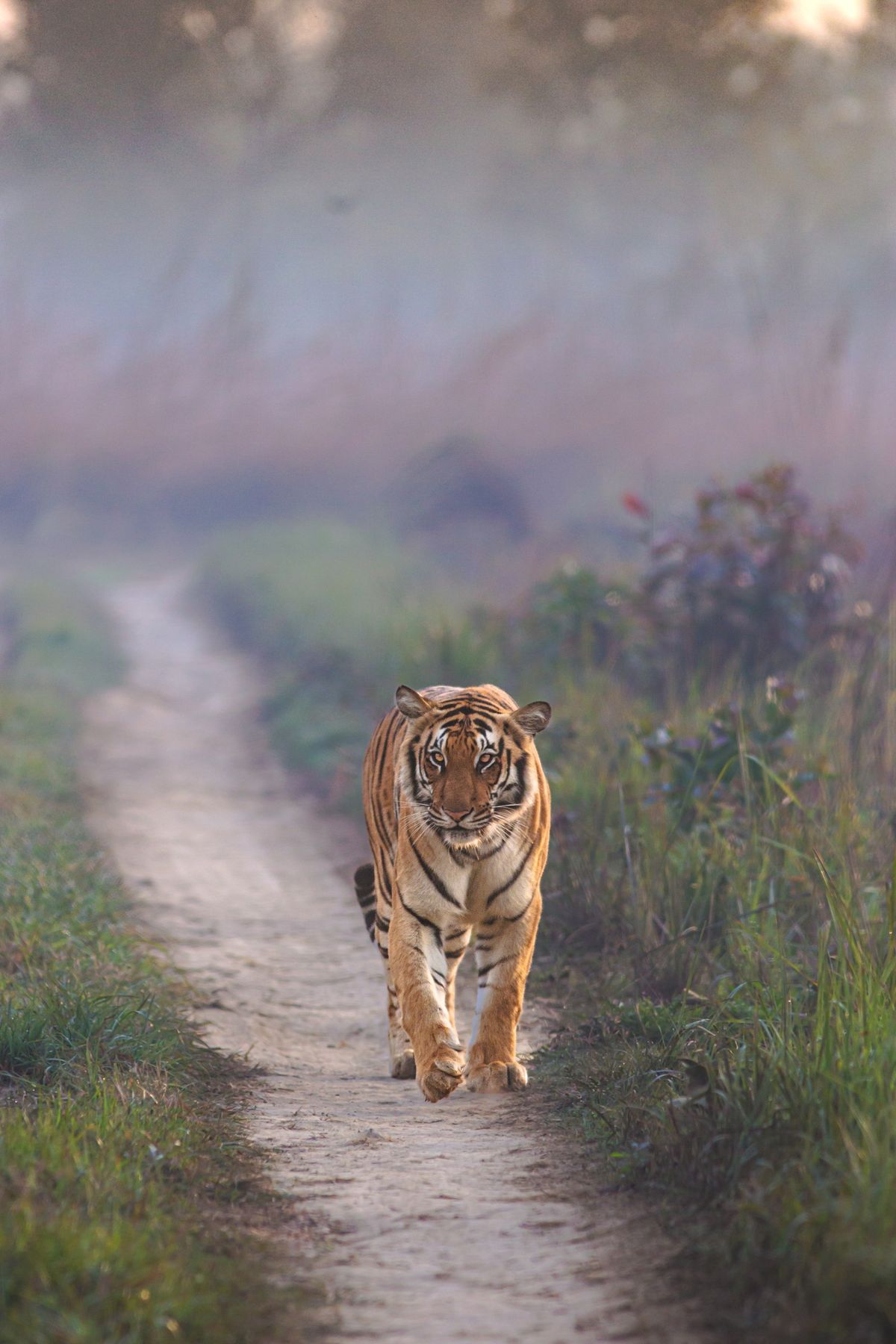
A tiger walking a narrow path through tall grass in mist
Tiger · Kaziranga

A density the grassland sustains

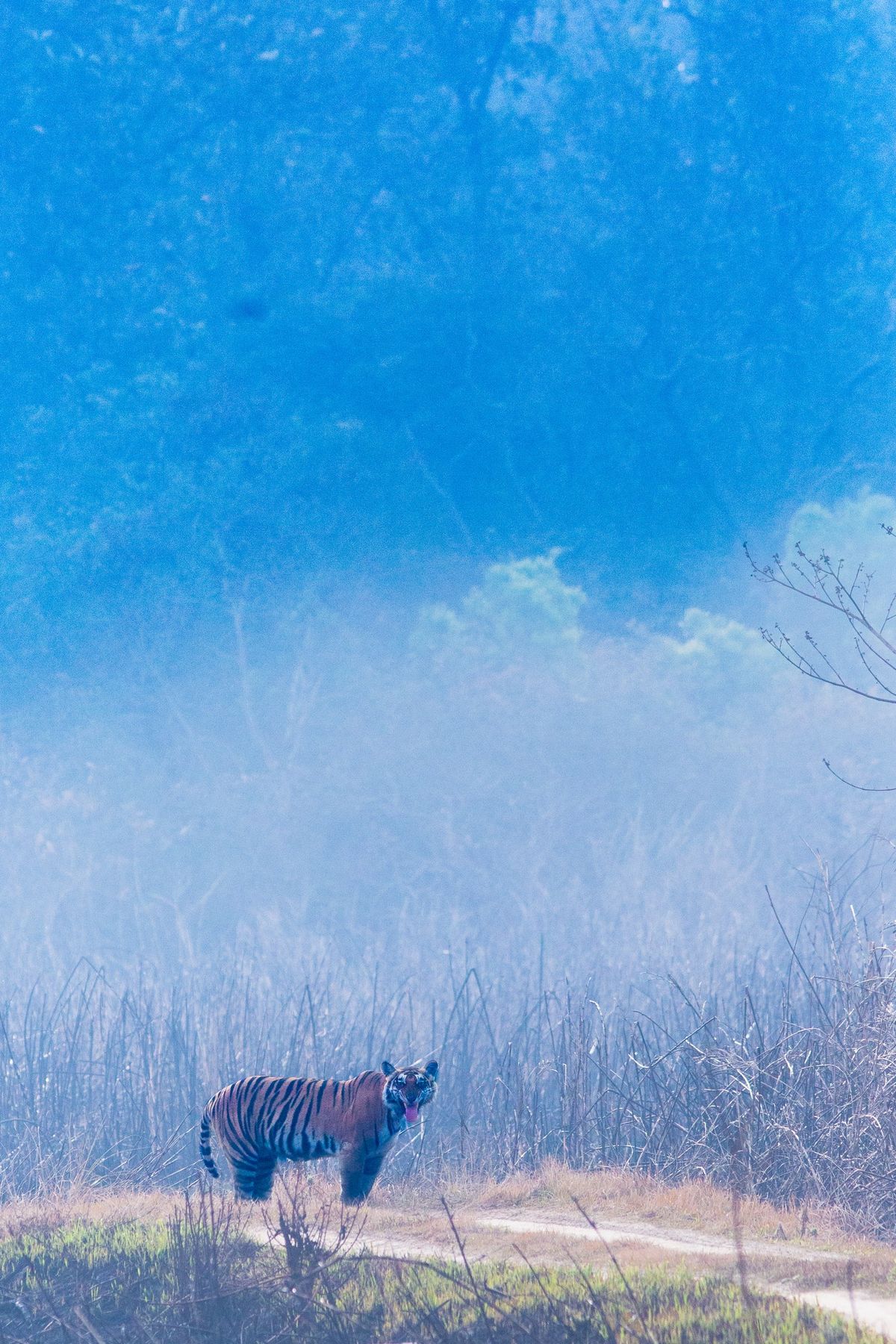
Kaziranga’s tiger population adds a further, less expected distinction: tiger density within the park is the highest recorded anywhere in the world, a reflection of the sheer concentration of prey the floodplain’s grassland sustains.

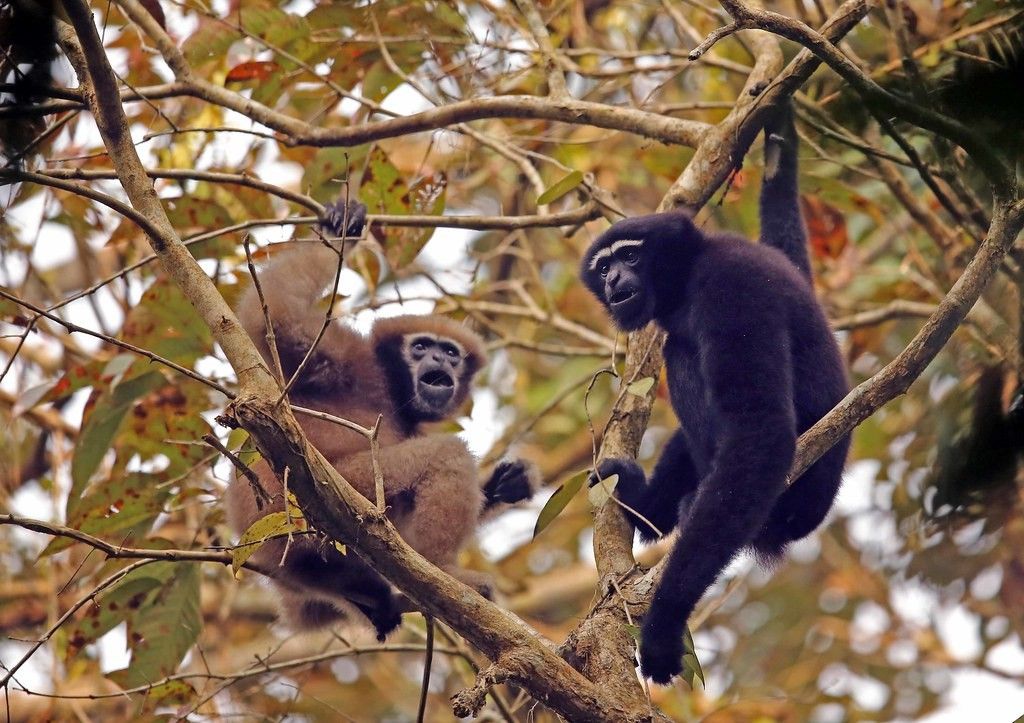
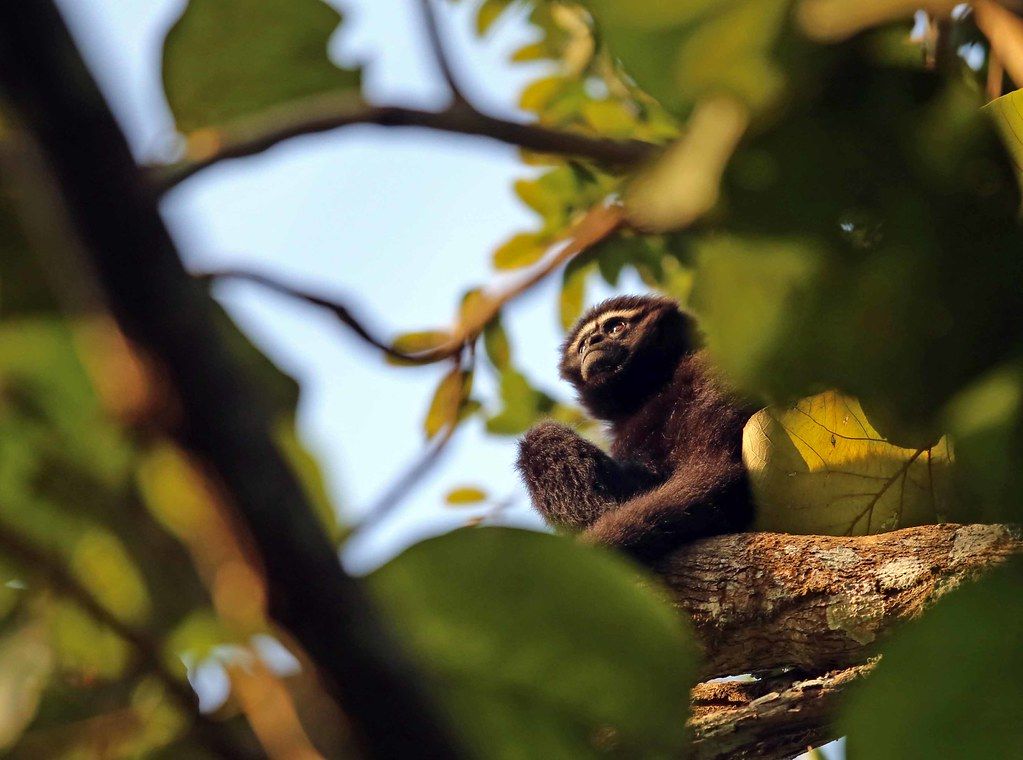
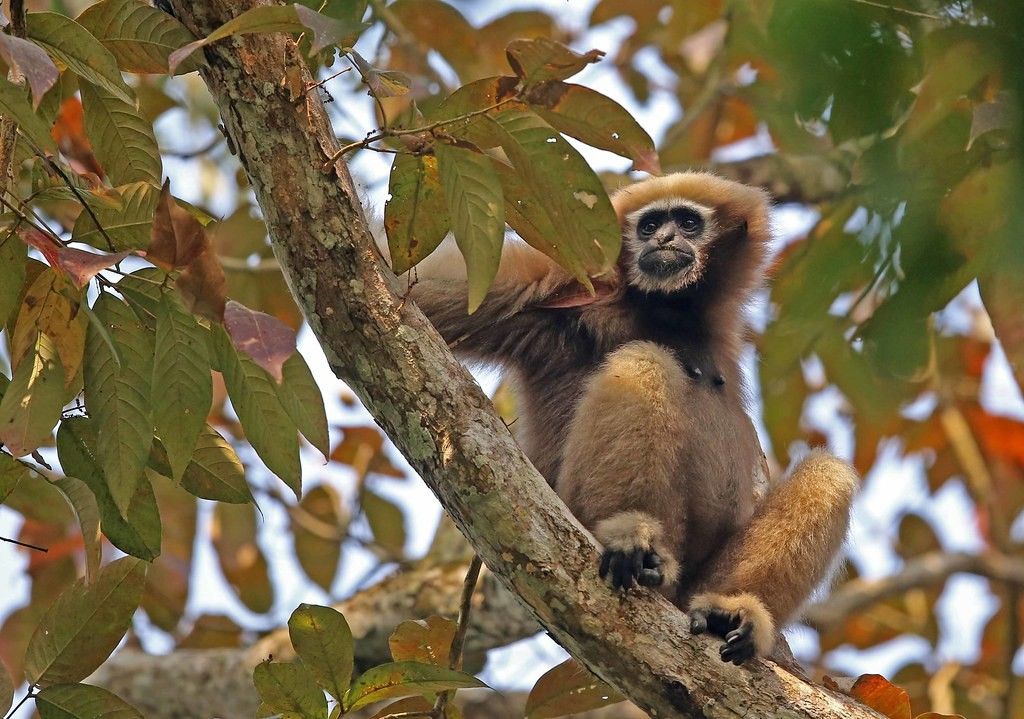
Two hoolock gibbons in the forest canopyPhoto: Surya Ramchandran
Hoolock gibbon

Heard before it is seen

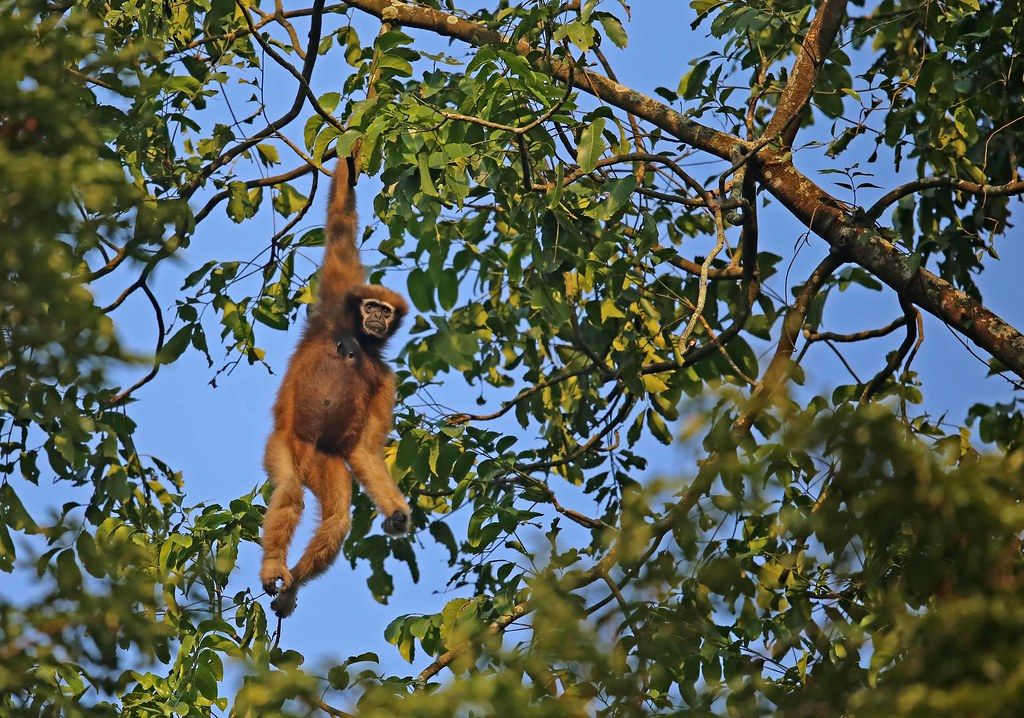
Hoolock gibbon, India’s only true ape, is also present within Kaziranga’s forest pockets, its distinctive, far-carrying call often heard well before any animal comes into view.

Further east, the forests protecting Hoollongapar’s gibbon population hold one of the more reliable sites in India for observing the hoolock gibbon at close range, moving in close-knit family groups through the forest canopy.

Pygmy hog · Manas

At Manas, the same tiger-elephant-rhino assembly persists alongside the pygmy hog — a tiny, now critically endangered wild pig that was believed extinct for much of the twentieth century until a small surviving population was rediscovered, with Manas today hosting the only known wild population of the species anywhere on Earth.

Experiences

Ways to experience the Northeastern Rainforests

The case for the Northeastern Rainforests

What sets the Northeastern Rainforests apart

The world's rhino stronghold

Kaziranga holds the single largest population of the one-horned rhinoceros, more than 2,400 animals.

Tigers at their densest

Tiger density in Kaziranga is the highest recorded anywhere in the world.

Genuinely wild buffalo

Roughly half the world's wild water buffalo, and the only viable population of the eastern swamp deer.

India's only ape

The hoolock gibbon's far-carrying call is often heard well before any animal comes into view.

A species given a second chance

Manas hosts the only known wild population of the pygmy hog, once believed extinct.

Shaped by the flood

An ecosystem evolved around the Brahmaputra's seasonal flood rather than against it.

A tiger in pale grass under a blue morning mist
In the field

More of what lives here

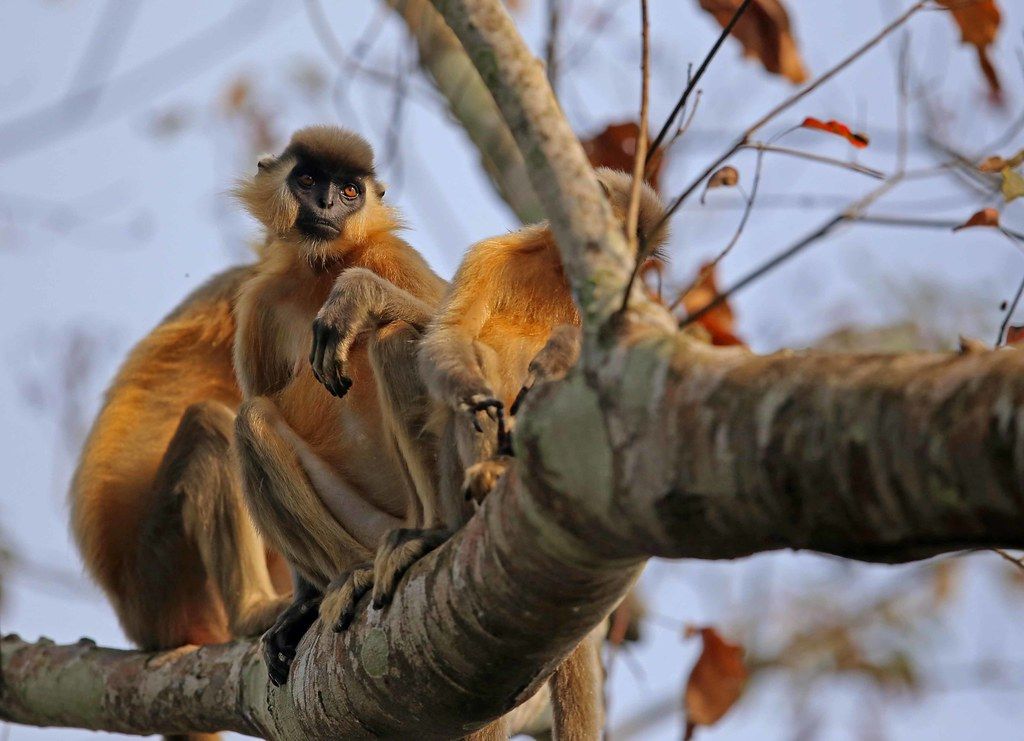
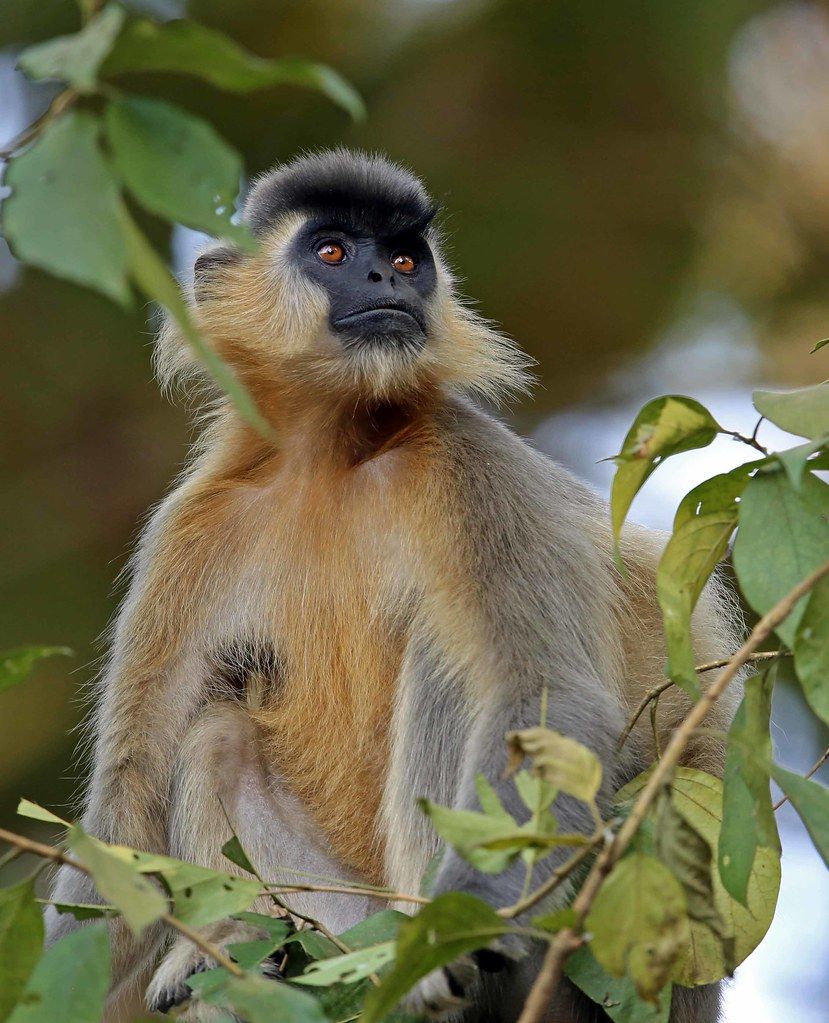
The forests of the Northeast belong to the primates as much as to the rhino: India's only ape calling through the canopy, and the golden langur in the trees along the Bhutan border.

People and place

Life around the wilderness

Kaziranga villageA significant grey pelican breeding colony sits near Kaziranga village.
Across the borderWildlife moves freely between Manas and Bhutan's Royal Manas National Park, across a border that exists only on a map.
Conservation

Conservation is part of the journey

Kaziranga’s rhino recovery, from a population of roughly a dozen animals at the turn of the twentieth century to several thousand today, stands as one of the clearest conservation success stories anywhere in the world, built on over a century of sustained protection against sophisticated and persistent poaching pressure.

Manas tells a more fragile, ongoing version of the same story: the pygmy hog’s entire global wild population exists within this one landscape, following a rediscovery that gave conservationists a second chance after the species was presumed lost entirely, making continued protection here a matter of the species’ total survival rather than one population among several.

The transboundary forest connection between Manas and Bhutan’s Royal Manas National Park also represents one of the more significant examples of international conservation cooperation in the Himalayan foothills, with wildlife moving freely across a border that exists only on a map.

How Safari Vista India supports conservation
Assam

The Reserves of the Northeastern Rainforests

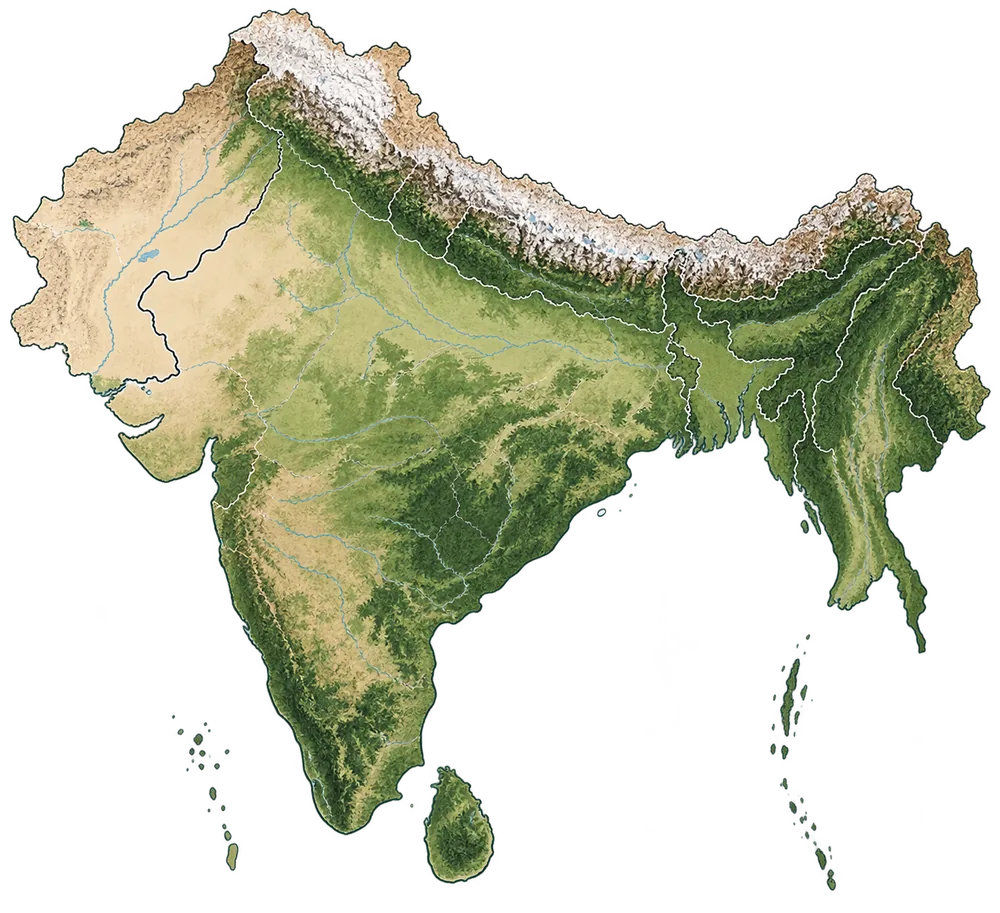
Northeastern Rainforests
Where the Northeastern Rainforests lies in the Indian subcontinent. Indicative, not to scale.
The Safari Vista India Way

The Vista Standard

A journey through Assam’s rainforest and floodplain landscape depends on timing the seasonal window precisely and knowing which combination of jeep, elephant-back and on-foot approaches suits each park’s terrain and each traveller’s interests.

Built the same way as every Safari Vista India journey: one vehicle, yours alone; a naturalist who understands this landscape’s river-driven rhythm and its rarest residents in equal depth; no fixed departures; and one person responsible for the full arc of the journey, from a rhino grazing Kaziranga’s grassland at dawn to a gibbon’s call carrying through Hoollongapar’s canopy.

One vehicle. Yours alone.

For the full length of the journey, with no shared seats.

A naturalist, not a driver-guide.

Someone who has spent years reading this landscape, and teaches you to read it too.

No fixed departures.

You travel when the season and your own calendar suit.

Specialist ground handling.

The seasonal window, zones and the right mix of jeep, elephant-back and on-foot approaches arranged for each park.

Conservation, included.

Part of how the journey is designed from the outset, not an add-on at checkout.

One point of contact, throughout.

One person from the first conversation to the last morning in the field.

Practical information

Planning a Northeastern Rainforests journey

November – February

Winter

Cool, dry, comfortable days (10–25°C); clear visibility across grassland.

Peak rhino, buffalo and bird activity; strongest overall sighting window.

Best for First-time visitors, birders, photographers.

March – April

Spring

Warming steadily (20–32°C); grassland drying further.

Wildlife still highly active before the monsoon builds; good tiger odds as cover thins.

Best for Travellers wanting strong sightings before the heat intensifies.

May – October

Monsoon (Closed)

Heavy, sustained rainfall; the Brahmaputra floods much of the landscape.

Parks closed to visitors; flooding forces animals onto higher ground, part of the ecosystem's natural cycle.

For travellers Not open for safari travel.

When to go

Kaziranga and Manas are both closed through the monsoon, when the Brahmaputra’s seasonal flooding submerges much of the landscape and makes safari travel impossible, typically from May through October.

The cooler months from November through April bring the park’s grassland back to dry, accessible ground, with the late winter and early spring months offering the clearest conditions and strongest general wildlife activity before the heat and humidity build again ahead of the next monsoon.

Time to give the landscape

A focused visit to Kaziranga, combining jeep and elephant-back safari across its different zones, delivers strong rhino, buffalo and bird sightings in three to four days.

Extending west to Manas for its pygmy hog population and considerably quieter atmosphere adds a further three to four days, while a gibbon-focused extension to Hoollongapar can be built in as a shorter one- or two-day addition for travellers with a specific interest in primates.

Between the floods

Both Kaziranga and Manas follow this same broad calendar, since both depend on the Brahmaputra system’s flood cycle rather than operating on an independent administrative schedule — exact reopening typically falls in late October or early November, once floodwaters have fully receded and park roads are passable again.

Questions

Questions about the Northeastern Rainforests

Along the Brahmaputra's floodplain in Assam, tall elephant grass and moist broadleaf forest hold one of the most concentrated large-mammal populations in Asia. The landscape is built on river silt and seasonal flood: each monsoon the river submerges much of Kaziranga, and the whole ecosystem has evolved around that cycle. It is the world's stronghold of the one-horned rhinoceros. Read more

Kaziranga holds the single largest population anywhere, more than 2,400 animals and the clear majority of the species. In 1900 hunting had reduced them here to around a dozen. Jeep drives cross the grassland zones, and in the eastern range elephant-back access reaches areas a vehicle cannot, a distinct way of approaching a rhino at close range. Read more

Yes. Tiger density within Kaziranga is the highest recorded anywhere in the world, a reflection of the concentration of prey that the floodplain's grassland sustains. The same grassland supports roughly half the world's wild water buffalo and the only viable population of the eastern swamp deer, and Manas holds the same tiger, elephant and rhino assembly. Read more

The hoolock gibbon, India's only true ape, is present in Kaziranga's forest pockets, but the forests around Hoollongapar are one of the more reliable places to watch family groups at close range, best early in the morning. The pygmy hog, once believed extinct, survives in the wild only at Manas, which also has far fewer visitors than Kaziranga. Read more

Both parks close through the monsoon, typically from May through October, when the Brahmaputra's flooding submerges much of the landscape. They reopen in late October or early November once floodwaters recede. The cooler months from November through April are the season, with late winter and early spring bringing the clearest conditions and strongest wildlife activity. Read more

A focused visit to Kaziranga, combining jeep and elephant-back safari across its zones, gives strong rhino, buffalo and bird sightings in three to four days. Extending west to Manas for the pygmy hog and a quieter atmosphere adds three to four days, and a gibbon-focused visit to Hoollongapar can be added in one or two more. Read more

A pair of golden langurs resting on a branchPhoto: Surya Ramchandran

If this is the India you want to understand — river-shaped, rhino-stronghold, and home to species found nowhere else on Earth — the right next step is a conversation.

Begin Your Journey

Tell us how you want to experience India, and we will design the journey around you.