
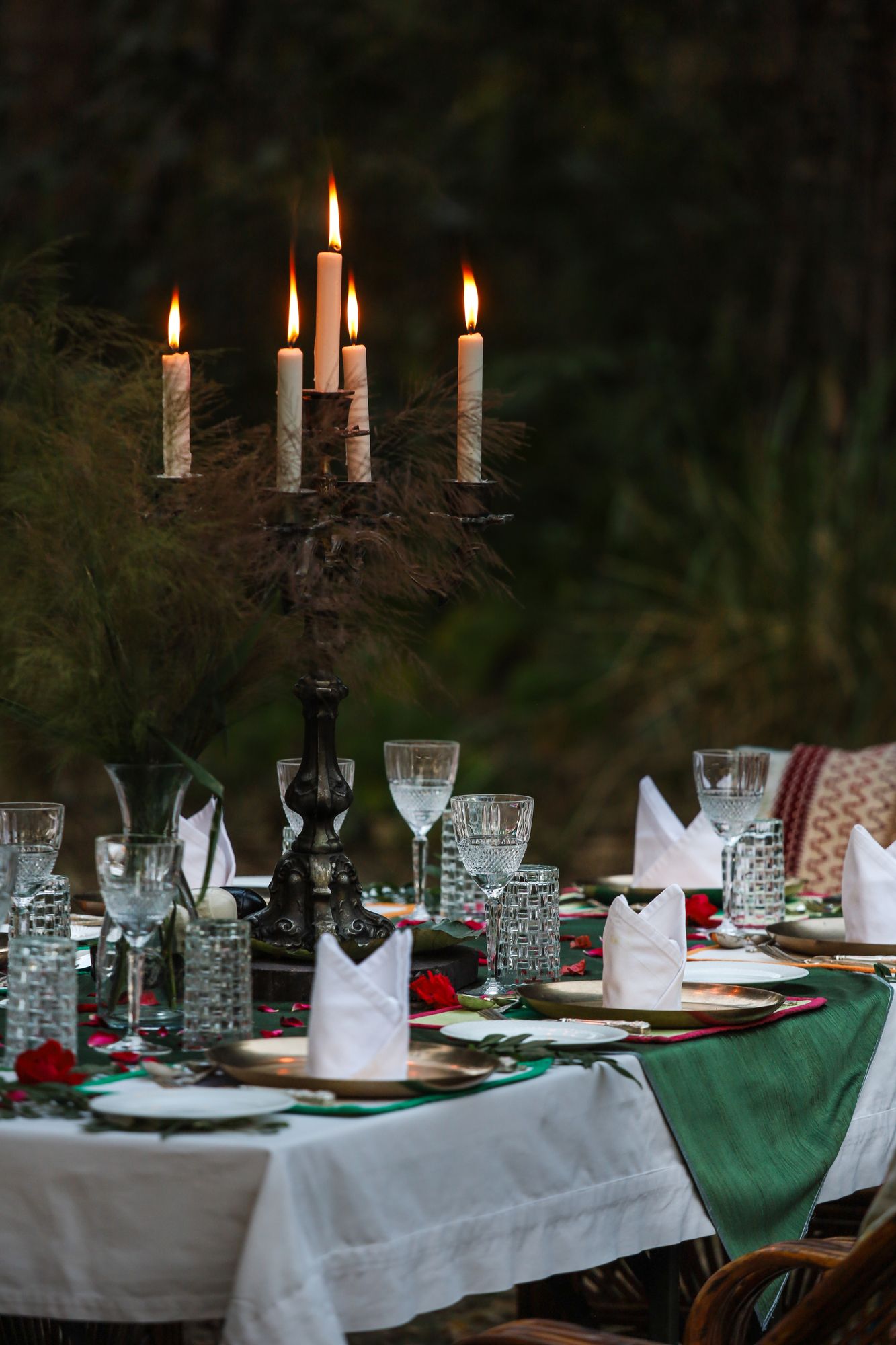
Eating well on safari, and the cultural context around India's wilderness regions.
India's wilderness is never separate from the country around it. A journey can move between protected forest and historic city, and what is served at the table is planned as carefully as the time in the field.
Planning Your Safari
How do I combine wildlife with India's culture and heritage?
Wildlife can be placed within a broader journey through India's history, architecture, food and living culture.
The key is to create a natural relationship between the wilderness and the cultural landscape rather than treating them as separate holidays. Depending on the route, a journey can move from protected forests into historic cities, rural landscapes, architectural sites or places of cultural significance.
We favour thoughtful transitions rather than trying to see everything.
Practical Information Before You Travel
Can dietary requirements be accommodated during a safari journey?
Yes, most well-established properties can accommodate many dietary requirements when they are communicated in advance.
We discuss your requirements before the journey and coordinate with accommodation providers accordingly. For severe allergies or medical restrictions, clear advance communication is particularly important.
At the table and beyond
What Kind of Food Will You Eat in the Field?
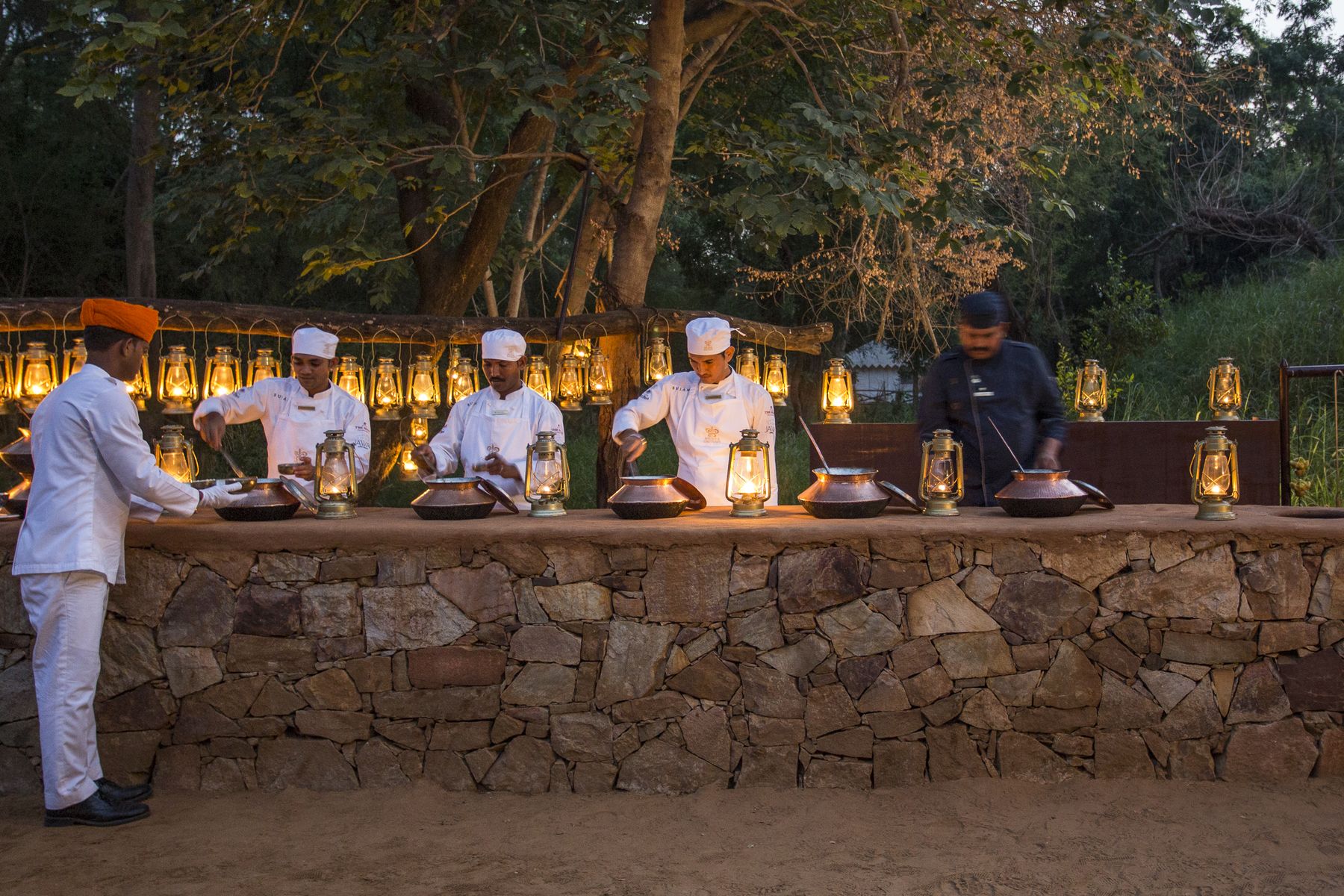
Most lodges serve a mix of Indian and continental food, and many cook with produce from their own gardens or nearby farms. Regional dishes, such as the cooking of the Terai, of Central India or of the Kerala hills, are often the highlight.
Morning drives start early, so breakfast is often a packed meal or taken in the field at a permitted stop. Lunch and dinner are at the lodge.
Drink bottled or filtered water, as the lodges provide. Most travellers find that cooked food at good lodges agrees with them well.
How Does Culture Shift Between Regions?
India changes completely across the landscapes a wildlife journey can cover: Hindi-speaking villages around the Central Indian forests, Tharu communities in the Terai, Buddhist culture in Ladakh, and the many peoples of the Northeast.
Dress modestly in villages and at religious sites, ask before photographing people, and follow your naturalist's lead. Visits to forest-edge communities can be arranged where they are welcome and run fairly, never as a spectacle.
Plan with a specialist
Have a question this chapter didn’t answer?
Every enquiry is answered directly by an India specialist.
Begin the Conversation