Plan Your Journey
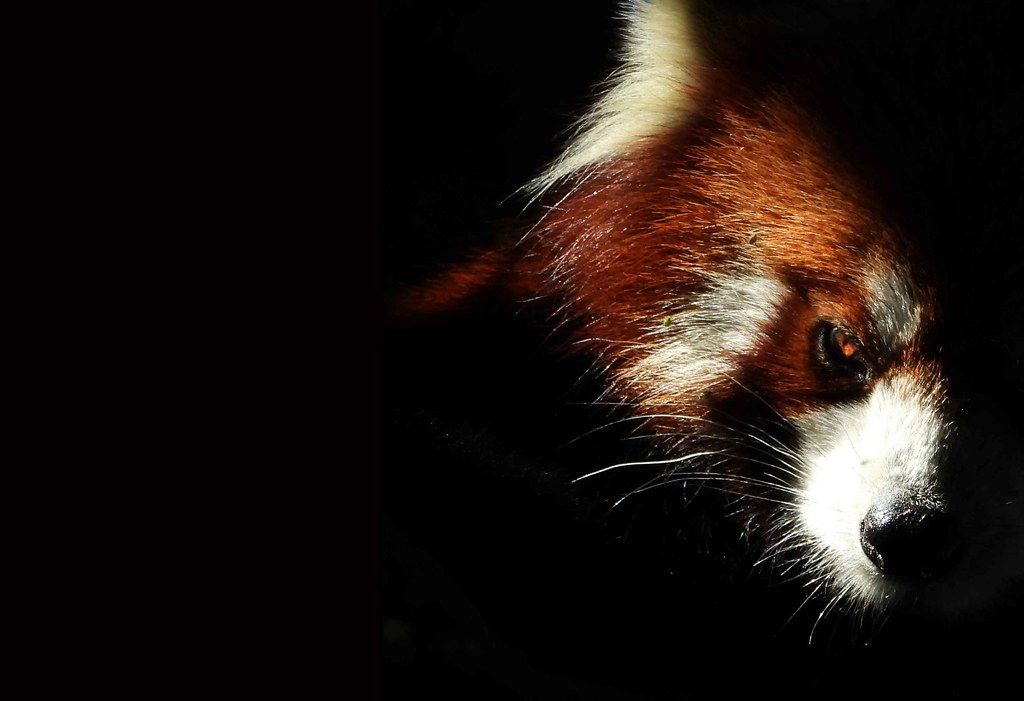
A red panda emerging from deep shadowPhoto: Surya Ramchandran

Home / Journeys / The Eastern Himalayan Forests

Sikkim & West Bengal · India

The Eastern Himalayan Forests

India's Cloud Forest and Red Panda Country

Private journeys from permanent snow to bamboo cloud forest in Sikkim and Darjeeling: the red panda of the Singalila ridge, six wild cats and the sacred mountain Khangchendzonga.

Begin Your Journey

This compressed vertical range is the defining feature of the Eastern Himalayan Forests, and it is the reason this comparatively small corner of India holds one of the most startling concentrations of wildlife and altitude found anywhere on the planet.

Sikkim and Darjeeling

From snow to cloud forest in a matter of hours

In Sikkim and the hills around Darjeeling, the Himalaya does something it rarely does anywhere else within a single day's travel: it descends, in a matter of hours, from permanent snow and bare rock through alpine meadow, rhododendron forest, dense temperate woodland and finally into subtropical cloud forest thick with bamboo and fern.

At the centre of it sits Khangchendzonga National Park, named for the mountain straddling its western boundary — the third-highest peak on Earth at 8,586 metres, and the summit around which the park's entire ecology, and much of Sikkim's cultural identity, is built.

The landscape

The widest altitudinal range on Earth

Khangchendzonga National Park holds the widest altitudinal range of any protected area in the world, its boundary running from roughly 1,220 metres up to the mountain's own summit — a span that lets the park move through mixed broadleaf and coniferous forest, rhododendron thickets, alpine meadow, glacier and permanent snowfield within a single contiguous protected area.

Three parks

Linked by forest and ridgeline

To the south and west, Singalila National Park runs along a narrow ridge connecting Sikkim to West Bengal and the Nepal border, while Neora Valley National Park, further into West Bengal, protects some of the last substantial tracts of undisturbed subtropical and temperate forest in the entire Eastern Himalaya.

Together, these three parks — linked by contiguous forest and shared ridgelines rather than existing as fully isolated islands — form the practical core of this landscape for most travellers.

Encounters

The wildlife of the Eastern Himalayan Forests

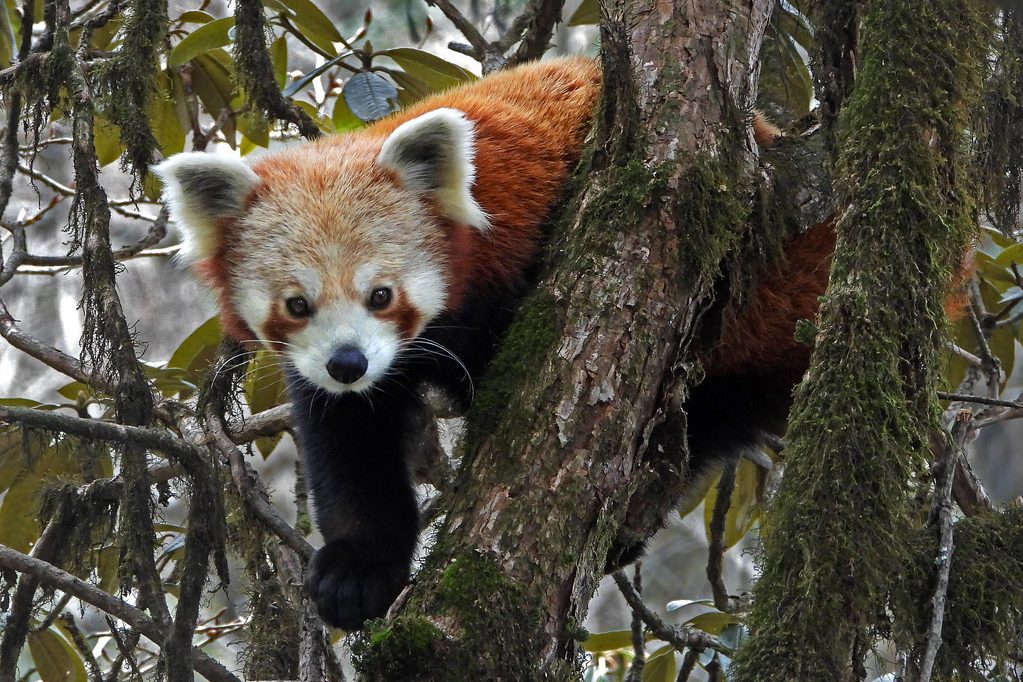
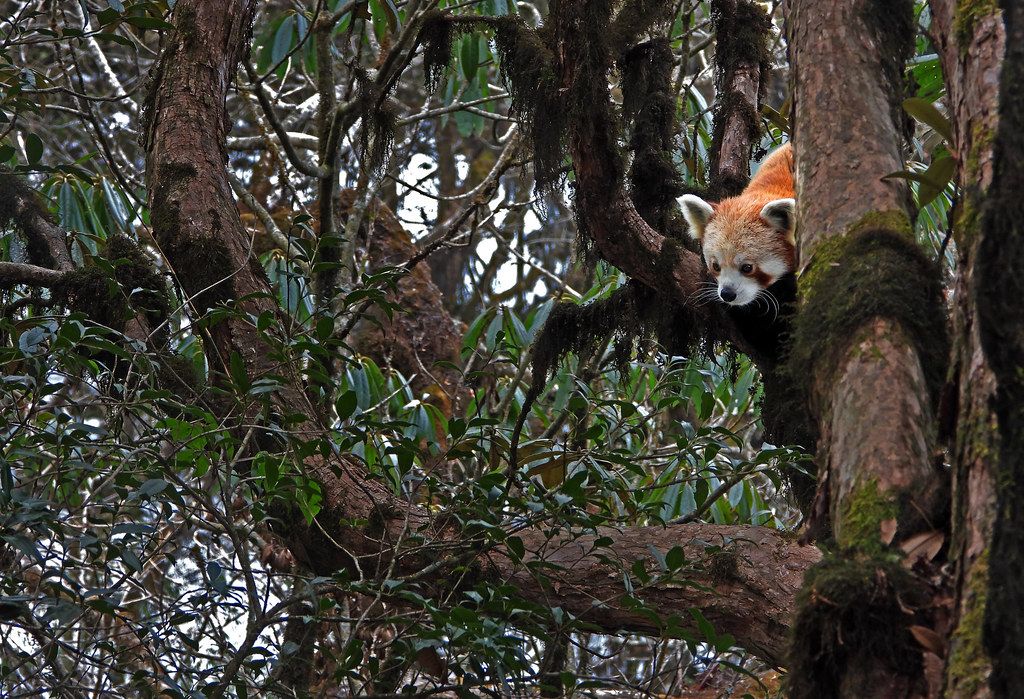
A red panda climbing down a mossy tree trunk, looking towards the cameraPhoto: Surya Ramchandran
Red panda · Singalila

As recognisable as it is hard to find

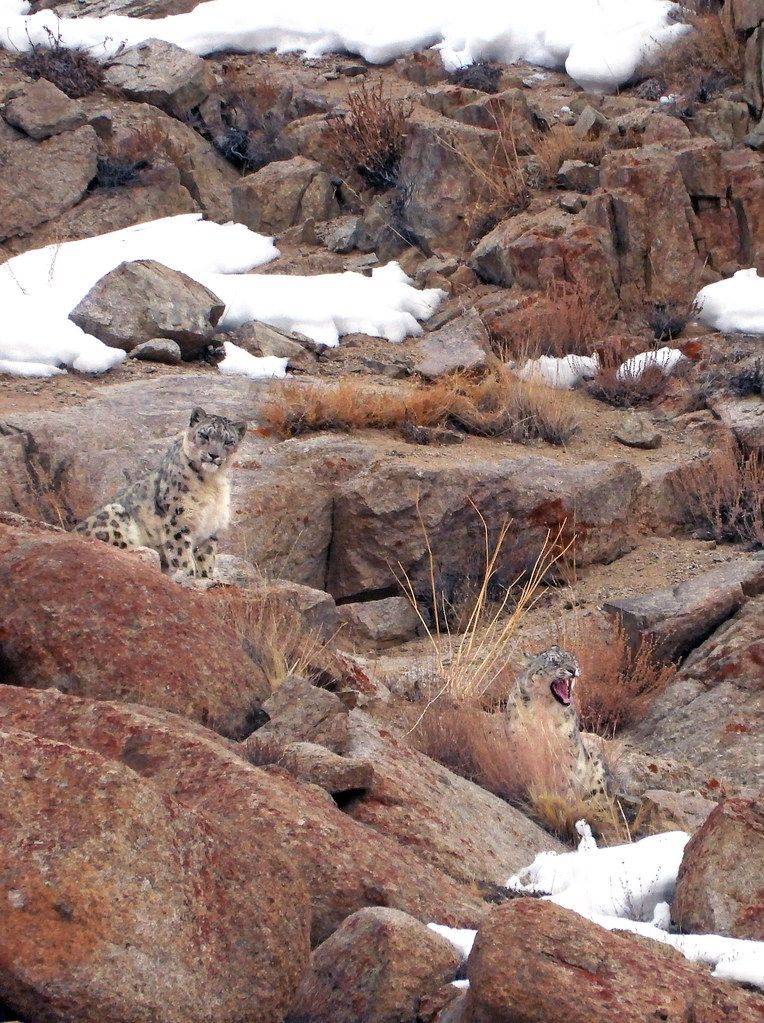
The snow leopard holds the highest, coldest terrain near the permanent snowline; the clouded leopard, elusive and rarely seen anywhere in its range, occupies the dense temperate and subtropical forest lower down; and the red panda, Sikkim's state animal, moves through the bamboo understorey at the mid-elevations between the two, its rust-coloured coat and ringed tail making it as recognisable as it is difficult to actually find in the wild.

Red panda sightings are, in practice, considerably more reliable along the Singalila ridge than almost anywhere else in India, the park's open, bamboo-lined trekking routes giving genuine daylight opportunities that denser forest elsewhere rarely offers.
Six wild cats · Khangchendzonga

Each in its own altitude band

Khangchendzonga National Park has confirmed the presence of six wild cat species within a single protected area — leopard, clouded leopard, snow leopard, jungle cat, golden cat and leopard cat — a density of feline diversity rarely matched anywhere else in Asia, made possible entirely by the park's extraordinary vertical range giving each species its own distinct altitude band to occupy.

Singalila shares its slopes with the Himalayan black bear and, like its neighbours, a clouded leopard population that remains more often inferred from camera traps than seen directly.

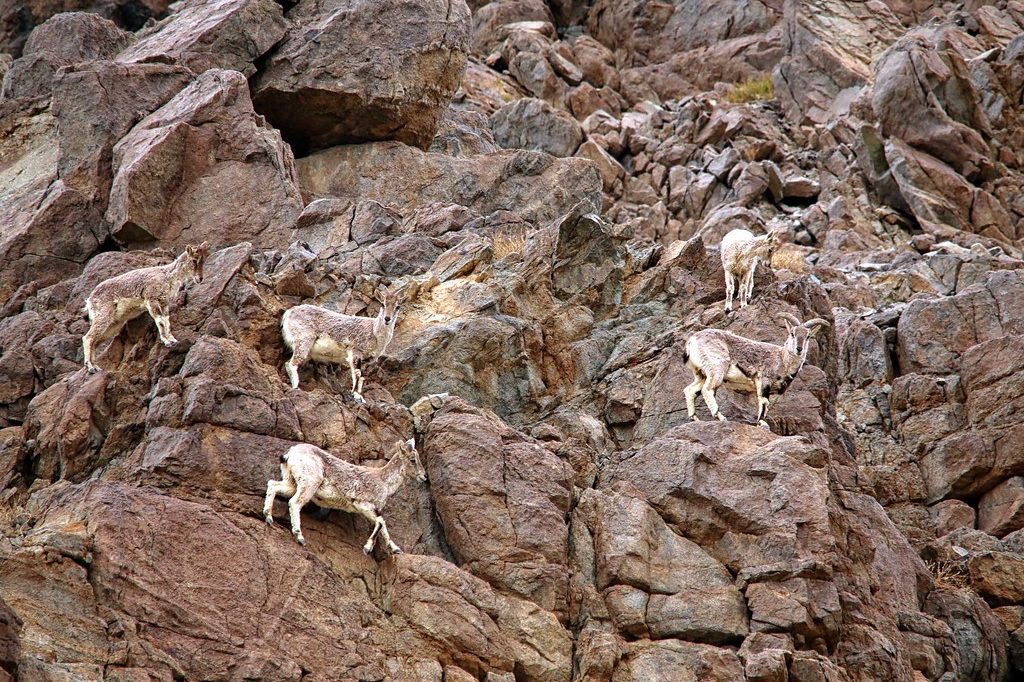
A herd of bharal, the blue sheep, picking their way across a steep rock facePhoto: Surya Ramchandran
Blue sheep · tahr · goral · serow

Between forest and permanent snow

Higher into Khangchendzonga's alpine zone, blue sheep, Himalayan tahr, goral and serow occupy the steep, broken ground between forest and permanent snow, while the Tibetan wolf and golden jackal work the open country above the treeline.

Red panda · gaur · dhole · monal

Neora Valley's own assembly

Neora Valley, protecting dense, little-disturbed forest and bamboo groves, adds its own distinct assembly: red panda again, alongside gaur descending from lower elevations, dhole hunting in packs through the forest, and a healthy population of Himalayan monal, one of the most vividly coloured pheasants anywhere on Earth.

Experiences

Ways to experience the Eastern Himalayan Forests

The case for the Eastern Himalayan Forests

What sets the Eastern Himalaya apart

Six wild cats in one park

Leopard, clouded leopard, snow leopard, jungle cat, golden cat and leopard cat, each in its own altitude band.

Snow to cloud forest in a day

A compressed vertical range, from permanent snow to subtropical forest, within a single day's travel.

The widest range of any park

Khangchendzonga spans the widest altitudinal range of any protected area in the world.

India's most reliable red panda

Red panda sightings are more reliable along the Singalila ridge than almost anywhere else in India.

Nature and culture as one

India's only mixed World Heritage Site, recognised for its biodiversity and its sacred significance alike.

A mountain of birds

Close to half of all bird species recorded in India occur somewhere within Khangchendzonga.

In the field

More of what lives here

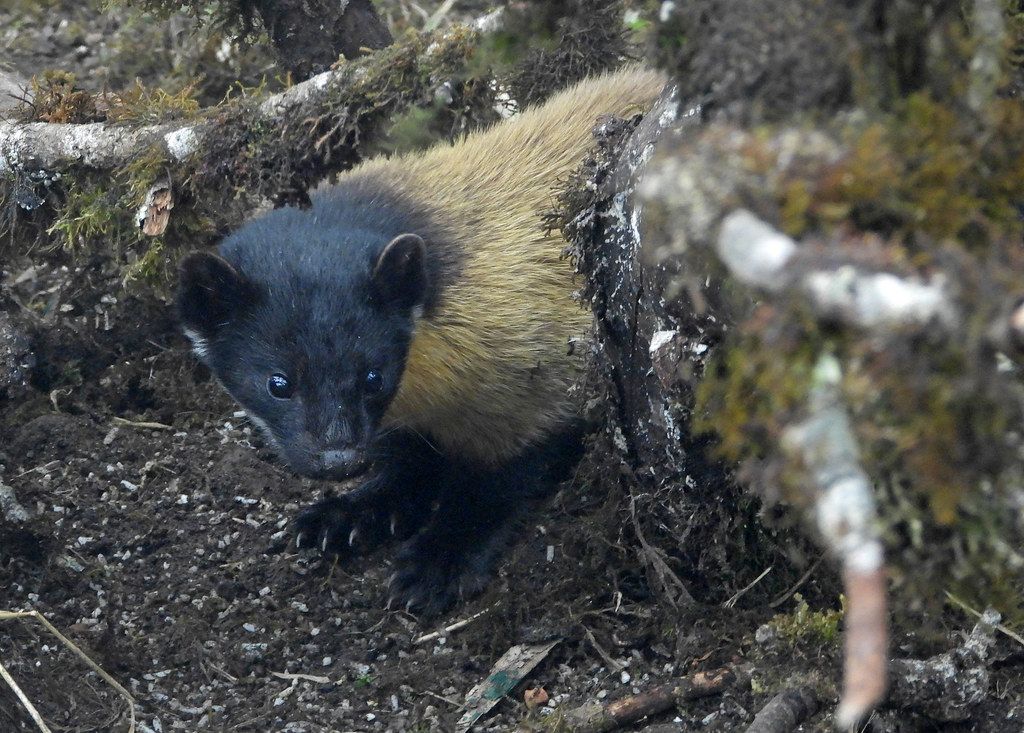
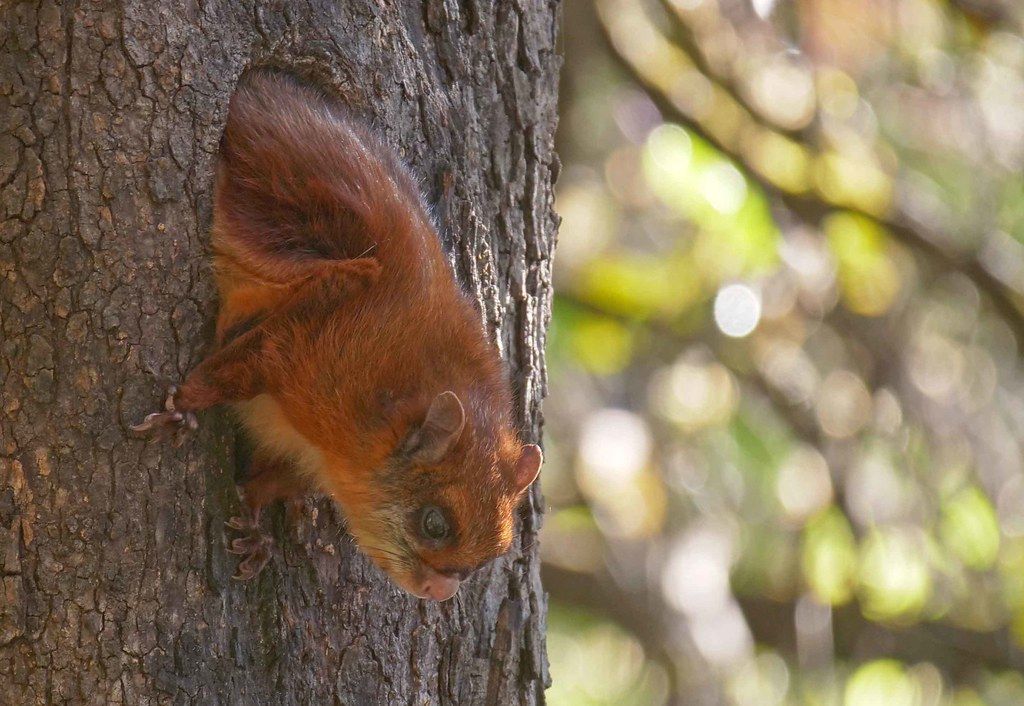
The temperate forests below Khangchendzonga reward patience in the canopy: the red panda most of all, but also martens hunting in pairs and giant squirrels that glide between the trees.

People and place

Life around the wilderness

It is India's first and only mixed UNESCO World Heritage Site, recognised for both its outstanding natural biodiversity and its deep cultural significance: the mountain is revered by Sikkim's Lepcha people as Mayel Lyang, a sacred ancestral landscape, and that reverence has shaped how the park has been protected for generations.

Sacred groundProtection of the mountain as sacred ground worked, in practice, as wildlife protection for generations before formal conservation law existed.
Guides and hostsLocal communities guide and host trekkers on the Singalila ridge, an economic argument for keeping its forest and red pandas intact.
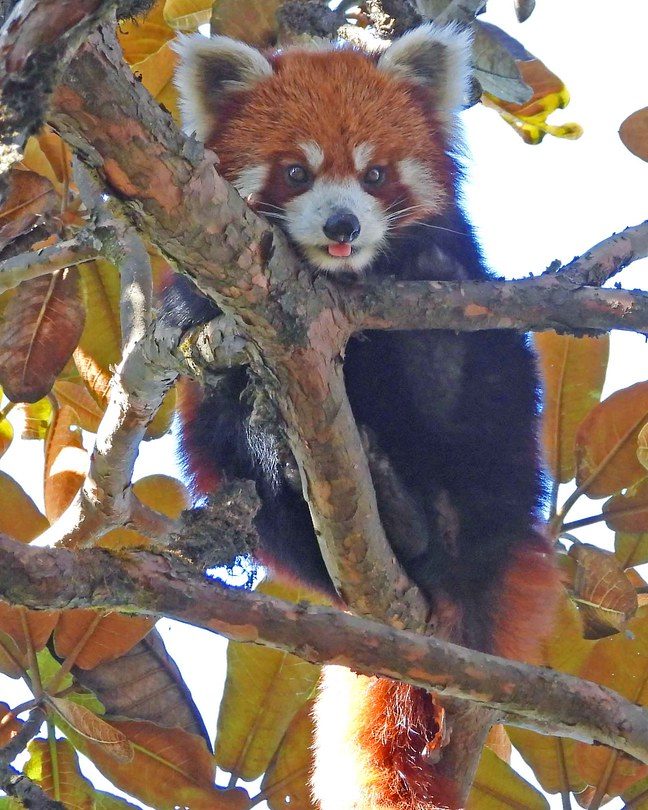
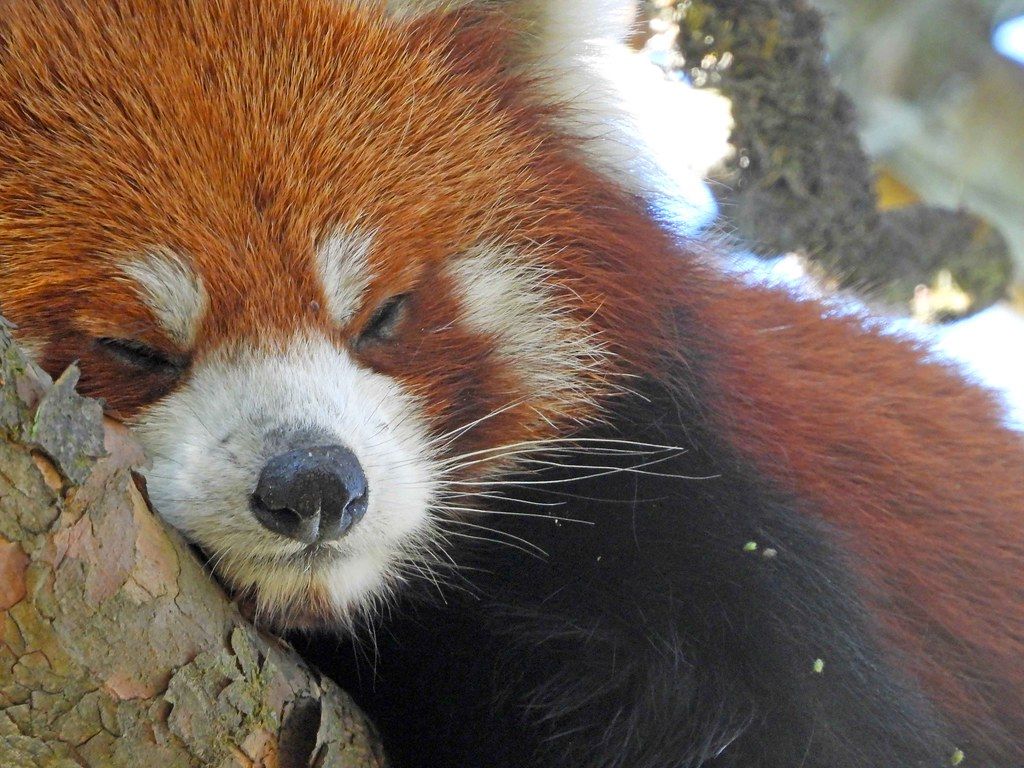
A red panda resting in the fork of a branch among broad leavesPhoto: Surya Ramchandran
Sikkim's state animalThe red panda, moving through the bamboo at mid-elevations, is Sikkim's state animal.
Conservation

Conservation is part of the journey

The concentration of six cat species within one park, each occupying its own narrow altitude band, makes this landscape unusually vulnerable to climate change specifically, since a warming climate that pushes vegetation zones upward could compress or eliminate the very altitude bands several of these species depend on entirely.

Khangchendzonga's recognition as India's only mixed UNESCO World Heritage Site reflects something conservation science has increasingly come to understand about this landscape: that its biodiversity and its cultural significance to Sikkim's indigenous communities are not separate stories but the same one, protection of the mountain as sacred ground having functioned, in practice, as wildlife protection for generations before formal conservation law existed.

Sustained, carefully managed tourism along routes like Singalila's ridge trails has become a genuine economic argument, for the local communities who guide and host trekkers, for keeping this forest and its red panda population intact rather than converted to other land use.

How Safari Vista India supports conservation
Sikkim & West Bengal

The Parks of the Eastern Himalayan Forests

Eastern Himalayan Forests
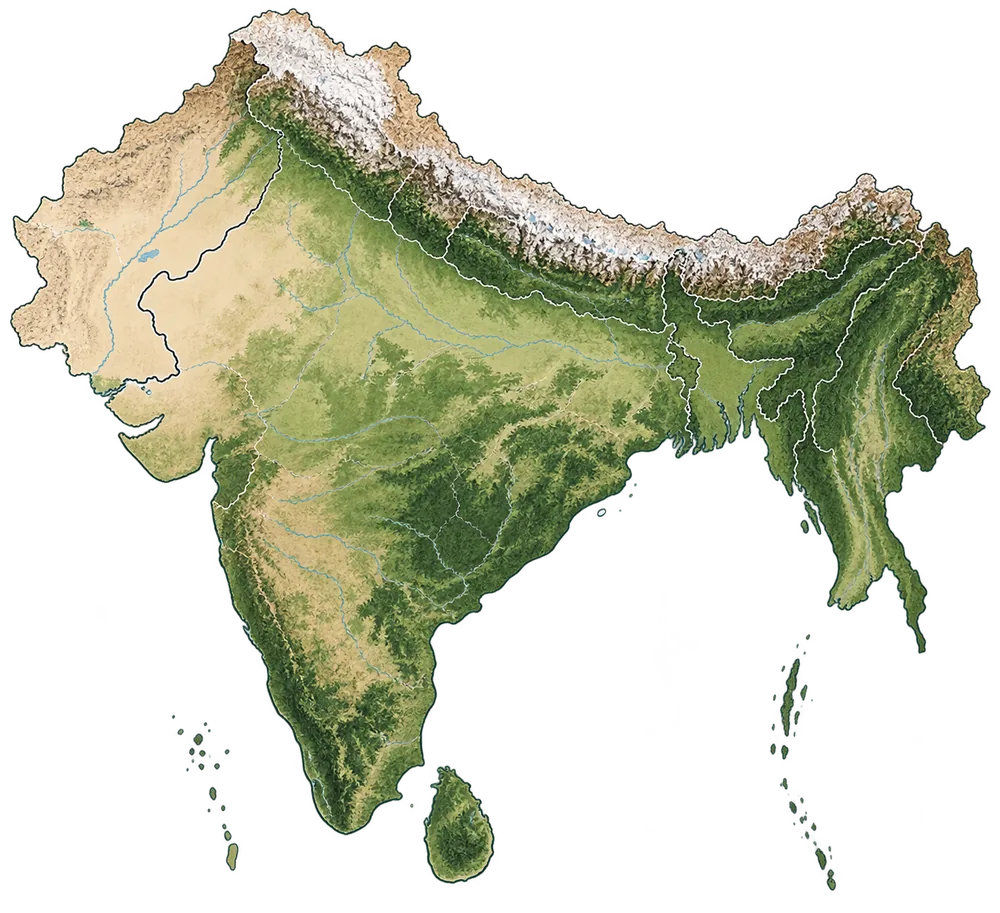
Where the Eastern Himalayan Forests lies in the Indian subcontinent. Indicative, not to scale.
The Safari Vista India Way

The Vista Standard

A journey through the Eastern Himalayan Forests is built around trekking rhythm and altitude as much as wildlife knowledge — knowing which stretch of the Singalila ridge gives the best chance of a red panda at first light, and how to pace a multi-day route so the body adjusts to altitude before the real trekking begins.

Built the same way as every Safari Vista India journey: one dedicated guide and trekking team, yours alone; a naturalist with genuine depth across this landscape's compressed, dramatic altitude bands; no fixed departures; and one person responsible for the full arc of the journey, from Darjeeling's first morning to a ridge above the clouds with Khangchendzonga on the horizon.

One vehicle. Yours alone.

For the full length of the journey, with no shared seats.

A naturalist, not a driver-guide.

Someone who has spent years reading this landscape, and teaches you to read it too.

No fixed departures.

You travel when the season and your own calendar suit.

Specialist ground handling.

Trekking teams, acclimatisation and the pace of multi-day routes arranged so the body adjusts before the real climbing begins.

Conservation, included.

Part of how the journey is designed from the outset, not an add-on at checkout.

One point of contact, throughout.

One person from the first conversation to the last morning in the field.

Practical information

Planning a Eastern Himalayan Forests journey

October – November

Autumn

Clear, crisp skies; cool and stable (5–18°C).

Peak red panda trekking window; best overall mountain visibility.

Best for First-time visitors, photographers, Khangchendzonga trekking.

December – February

Winter

Cold, with snow closing Khangchendzonga's higher reaches (–5–10°C).

Red panda and lower-elevation species more concentrated at accessible altitudes.

Best for Singalila and Neora Valley trekking, away from the high passes.

March – May

Spring

Mild, with rhododendron forests in bloom (10–22°C).

Strong red panda activity; excellent birdlife as breeding season begins.

Best for Red panda trekking, birding, general wildlife viewing.

June – September

Monsoon (Restricted)

Heavy, sustained rainfall; leeches and landslides common.

Trails frequently closed or impassable; visibility poor throughout.

For travellers Not recommended for trekking.

When to go

The red panda trekking season along Singalila runs strongest through the autumn and spring months, when visibility is clearest and the bamboo understorey is most actively browsed.

Winter brings snow to the higher elevations of Khangchendzonga, pushing some wildlife to lower ground and making the park's upper reaches largely inaccessible to trekkers, while the monsoon months bring heavy, sustained rainfall across the entire landscape and considerably reduce visibility and trail access throughout the region.

Time to give the landscape

A focused red panda trek along the Singalila ridge can be built into four to five days from Darjeeling, including acclimatisation and the trekking time the terrain itself demands.

Extending into Khangchendzonga's higher trekking routes, or adding Neora Valley's denser forest for dhole and gaur, extends a full Eastern Himalayan journey to ten days or more, reflecting both the altitude-driven pacing this landscape requires and the genuinely different character each of its three core parks offers.

Questions

Questions about the Eastern Himalayan Forests

In Sikkim and the hills around Darjeeling, the Himalaya descends within a single day's travel from permanent snow through alpine meadow and rhododendron forest into subtropical cloud forest thick with bamboo. That compressed vertical range gives this small corner of India one of the most startling concentrations of wildlife and altitude anywhere, centred on Khangchendzonga National Park. Read more

The Singalila ridge, reached via Darjeeling. Its open, bamboo-lined trekking routes give genuine daylight opportunities that denser forest rarely offers, making sightings more reliable here than almost anywhere else in India. A focused red panda trek takes four to five days, and the season is strongest in autumn and spring, when visibility is clearest. Read more

Six species have been confirmed in the one park: leopard, clouded leopard, snow leopard, jungle cat, golden cat and leopard cat. The park's extraordinary vertical range gives each its own altitude band, with the snow leopard near the snowline and the clouded leopard, rarely seen anywhere, in the dense forest lower down. Read more

Largely, yes. Khangchendzonga is explored through high-altitude trekking routes rather than vehicle safari, given its terrain and limited road access, and Singalila's ridge trails are walked. A journey here is built around trekking rhythm and altitude as much as wildlife knowledge, pacing multi-day routes so the body adjusts before the real trekking begins. Read more

It is India's first and only mixed UNESCO World Heritage Site, recognised for its biodiversity and its cultural significance together. Sikkim's Lepcha people revere the mountain as Mayel Lyang, a sacred ancestral landscape, and protecting it as sacred ground has worked as wildlife protection for generations before formal conservation law existed. Read more

A focused red panda trek along the Singalila ridge can be built into four to five days from Darjeeling, including acclimatisation. Extending into Khangchendzonga's higher trekking routes, or adding Neora Valley's denser forest for dhole and gaur, takes a full journey to ten days or more, reflecting the altitude-driven pacing this landscape requires. Read more

A red panda peering out from the canopyPhoto: Surya Ramchandran

If this is the India you want to understand — vertical, sacred, and layered with wildlife found nowhere else on Earth — the right next step is a conversation.

Begin Your Journey

Tell us how you want to experience India, and we will design the journey around you.