Plan Your Journey
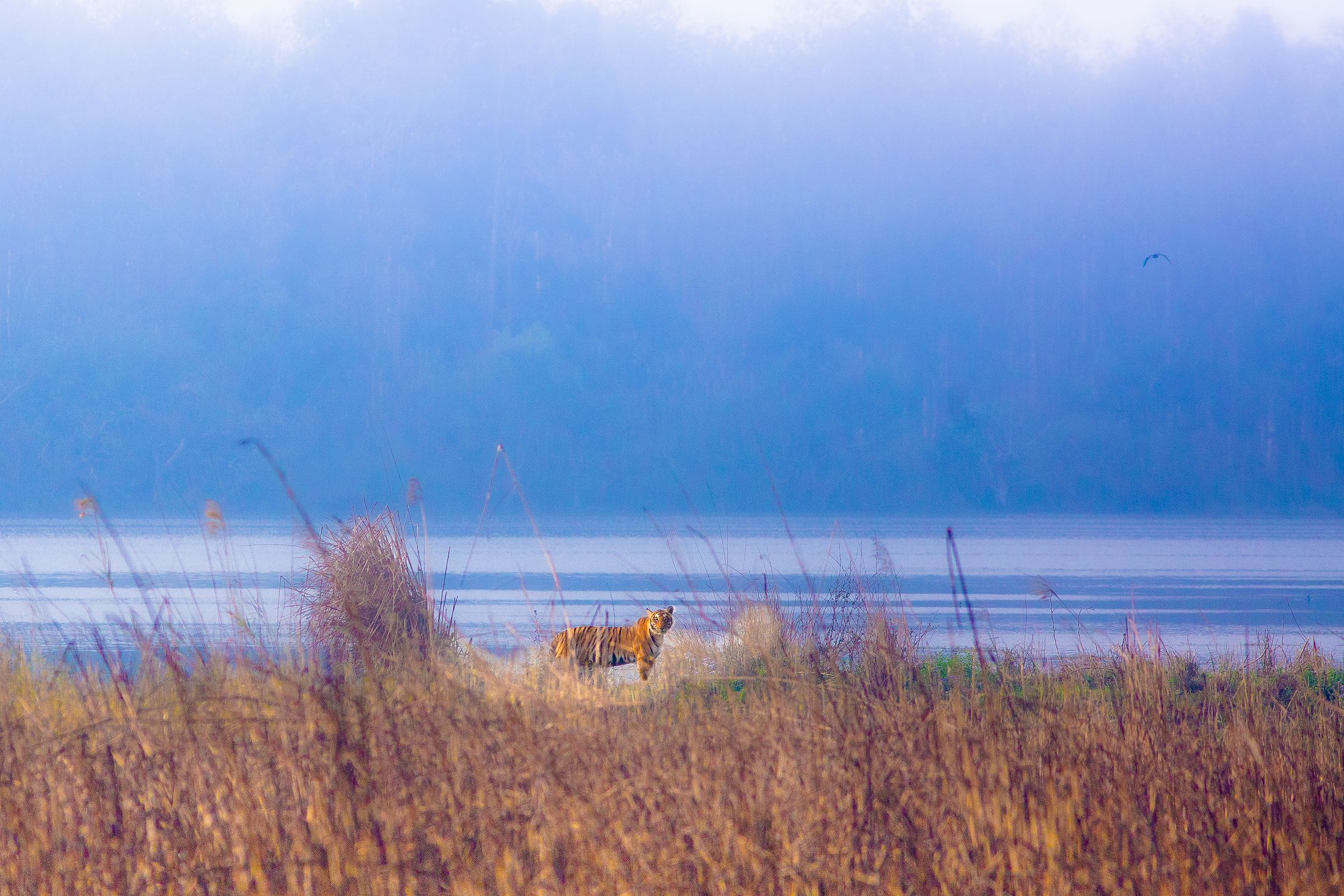
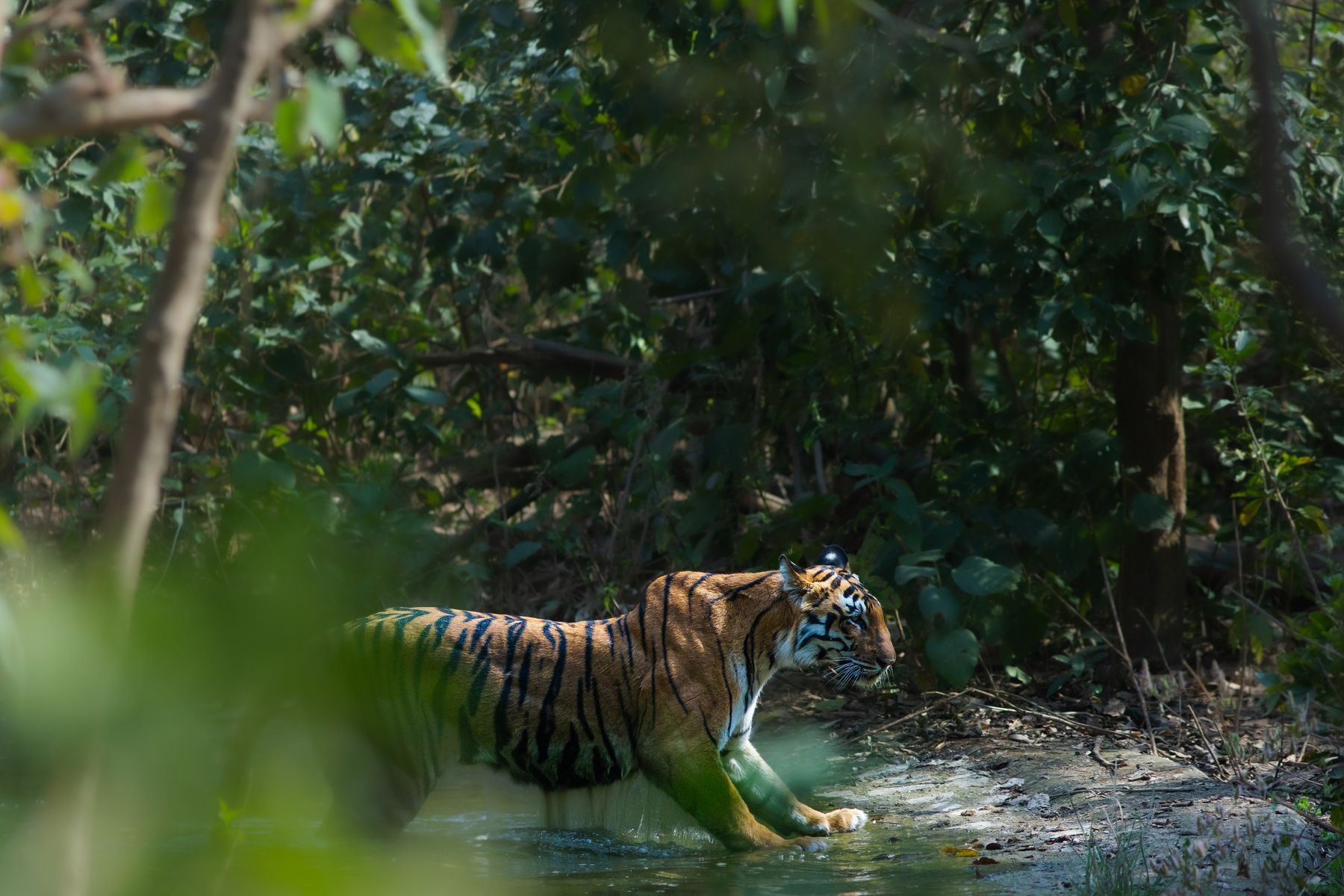
A tiger stepping into water from the bank

Home / Journeys / The Sundarbans

West Bengal · India

The Sundarbans

The World's Only Mangrove Tiger Landscape

Private journeys by boat through the tidal channels, mudflats and mangrove islands at the mouth of the Ganges: the only forest of its kind with wild tigers.

Begin Your Journey

This is wilderness experienced from a boat, in a landscape with no fixed ground, where the forest itself shifts with every tidal cycle.

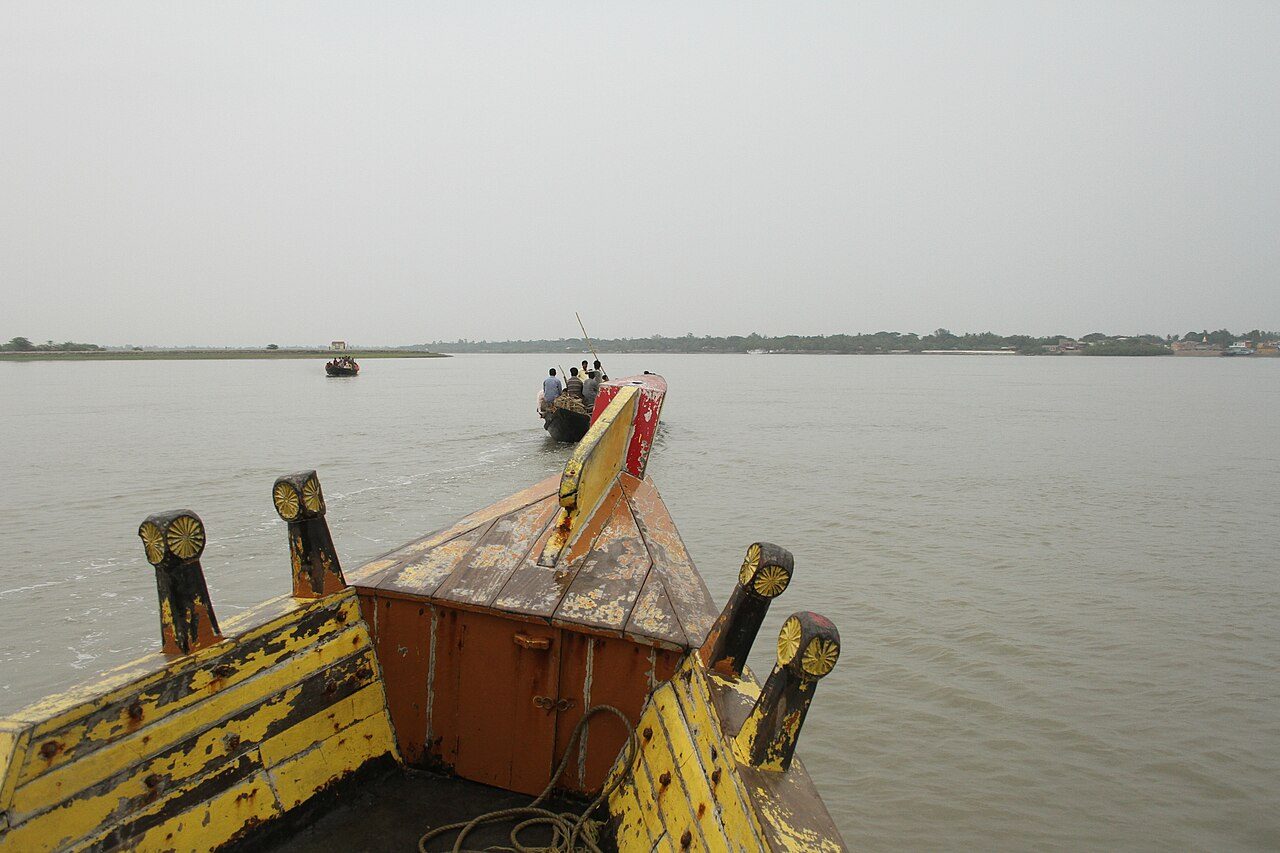
The bow of a painted wooden boat on a wide river, country boats aheadPhoto: David Raju / CC BY-SA 4.0
The mouth of the Ganges

A forest held together by its roots

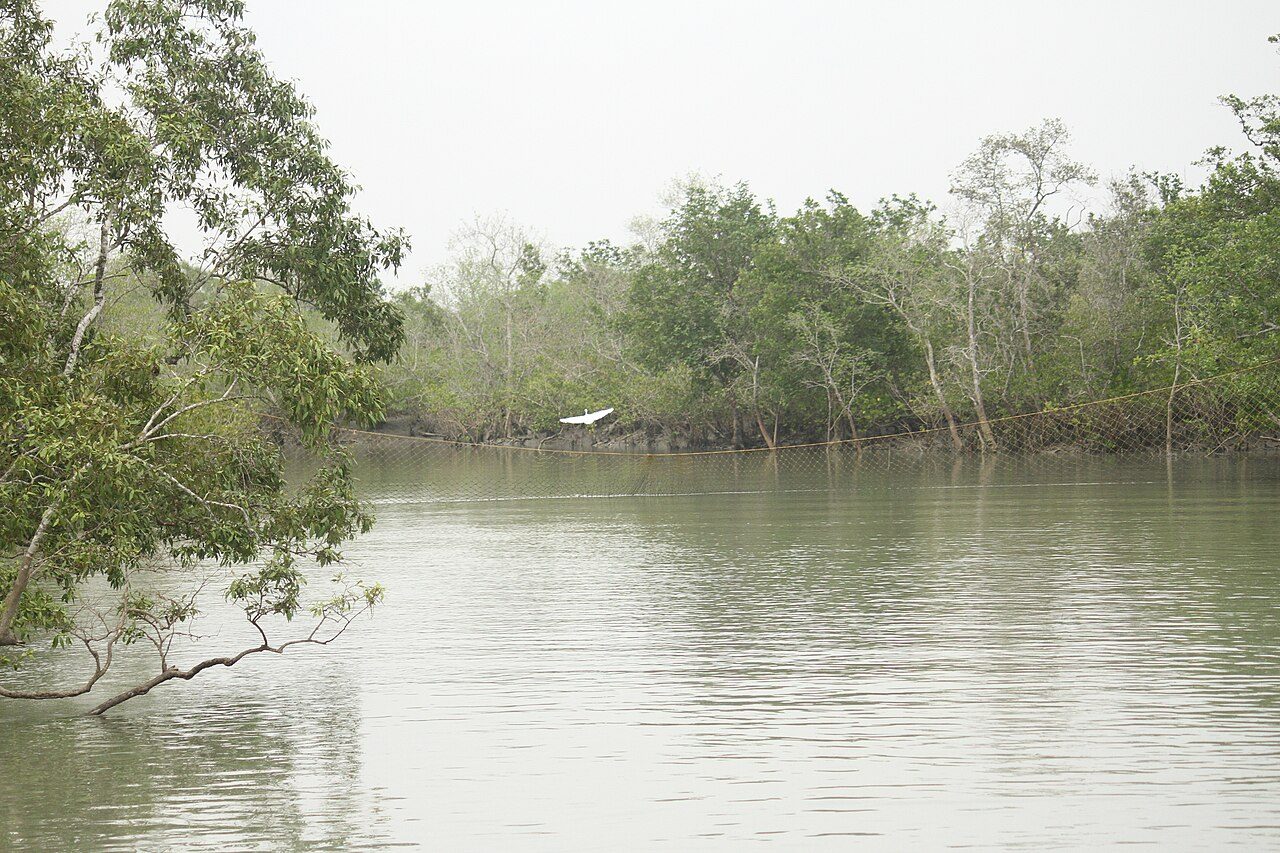
At the mouth of the Ganges, where the river fractures into hundreds of tidal channels before reaching the Bay of Bengal, lies the largest mangrove forest on Earth — and the only one anywhere in the world with a resident population of wild tigers.

The Sundarbans takes its name from the Sundari tree, the dominant mangrove species whose roots lock this entire landscape together against the daily rise and fall of the tide, and it is a landscape built so completely around water that the tiger itself has adapted to it: genuinely capable of swimming long distances between islands, hunting fish and crab as readily as deer, in a way no other tiger population on the planet does.

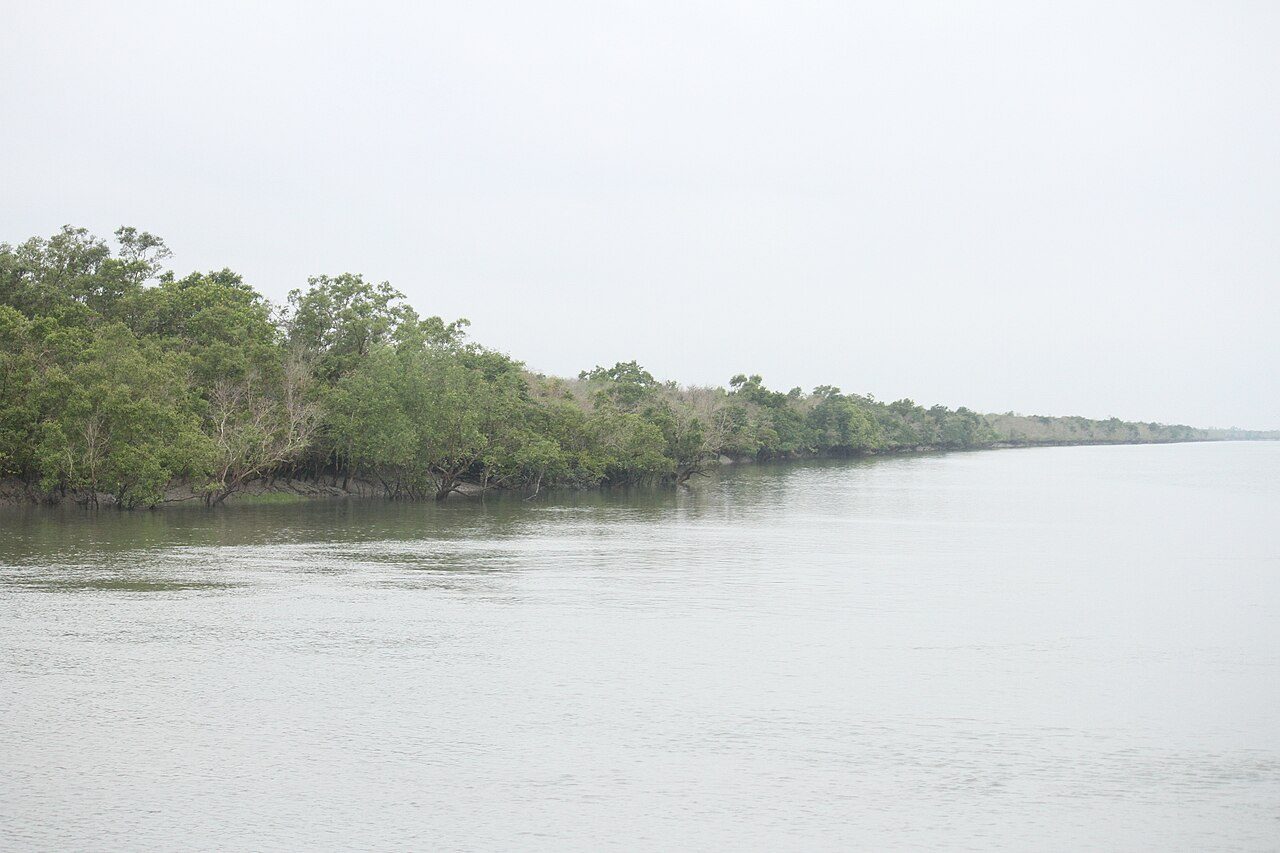
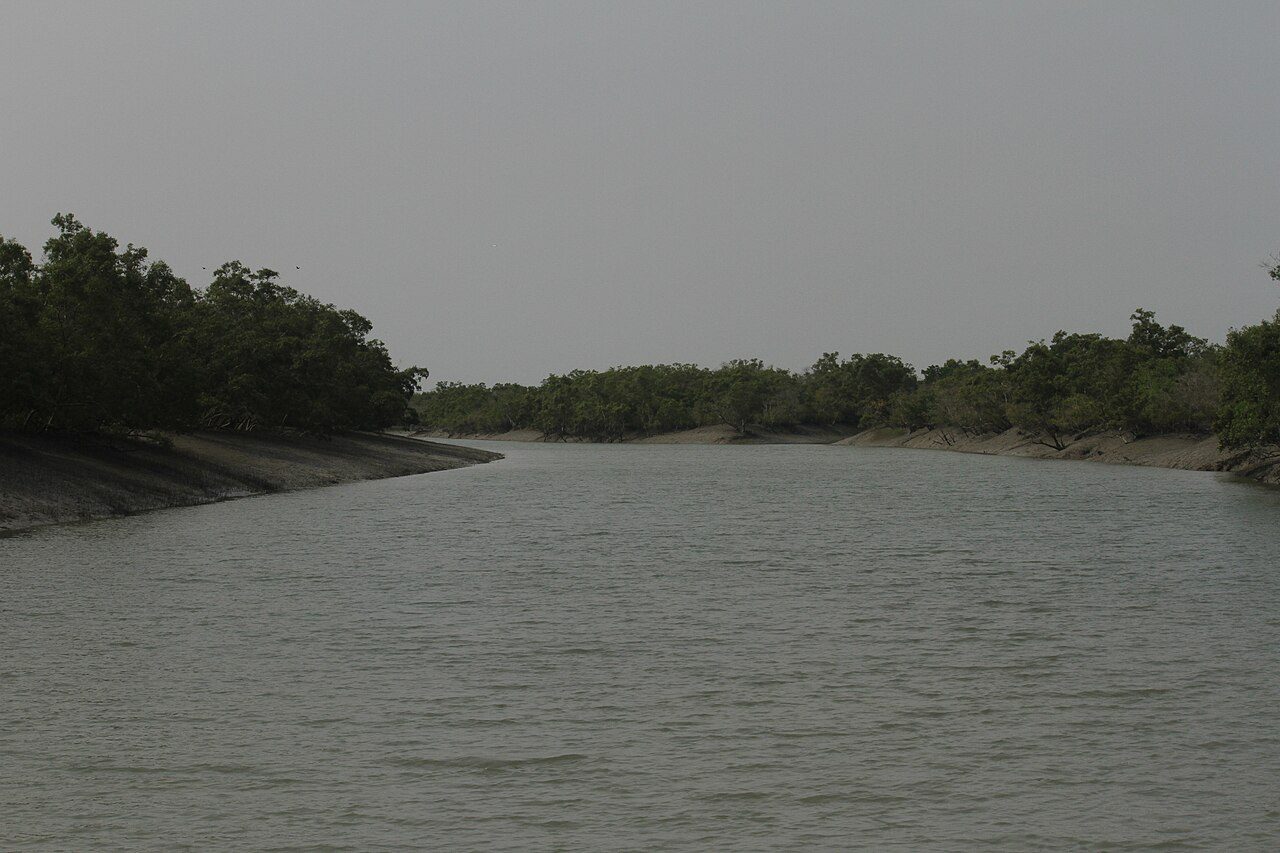
A mangrove channel bending between dark forested mudbanksPhoto: David Raju / CC BY-SA 4.0
The landscape

Submerged and re-emerging twice a day

The Sundarbans spans the delta where the Ganges, Brahmaputra and Meghna rivers empty into the sea, split between India's West Bengal and neighbouring Bangladesh, with the Indian portion protected as Sundarbans National Park and the wider Sundarbans Tiger Reserve.

There is no solid, permanent ground in the way a conventional forest offers — the landscape is a labyrinth of tidal creeks, mudflats and low mangrove islands, submerged and re-emerging twice daily as the tide moves through hundreds of kilometres of waterway.

The richest mangrove forest

A landscape with no fixed ground

Some 78 recorded species of mangrove and mangrove-associated plant life grow across this delta, making it the richest mangrove forest anywhere in the world, with the Sundari tree itself giving the entire landscape its name.

Encounters

The wildlife of the Sundarbans

A tiger stepping into water from the bank
Tiger

Strong, confident swimmers

The Sundarbans holds the single largest population of wild tigers found anywhere in the world within one contiguous landscape, and these tigers behave unlike any other tiger population on Earth.

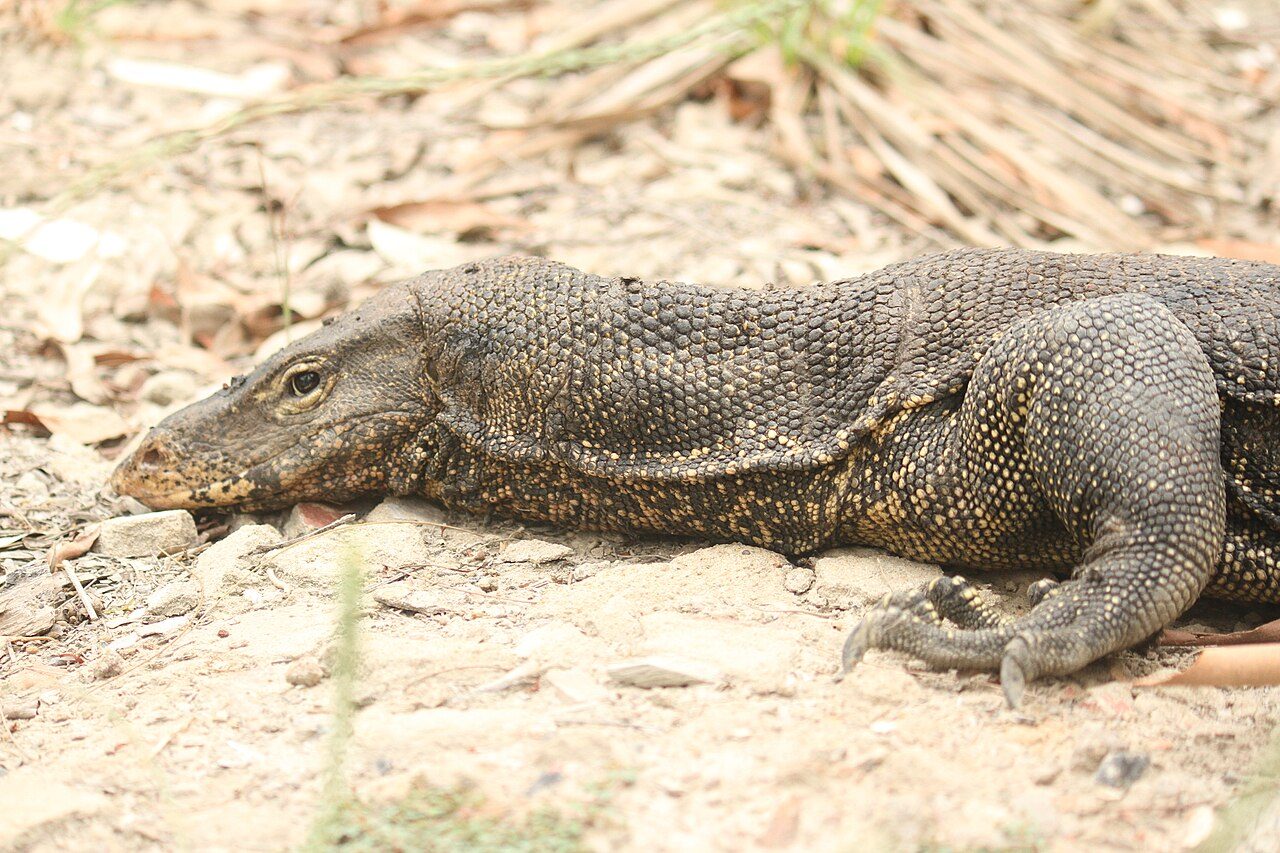
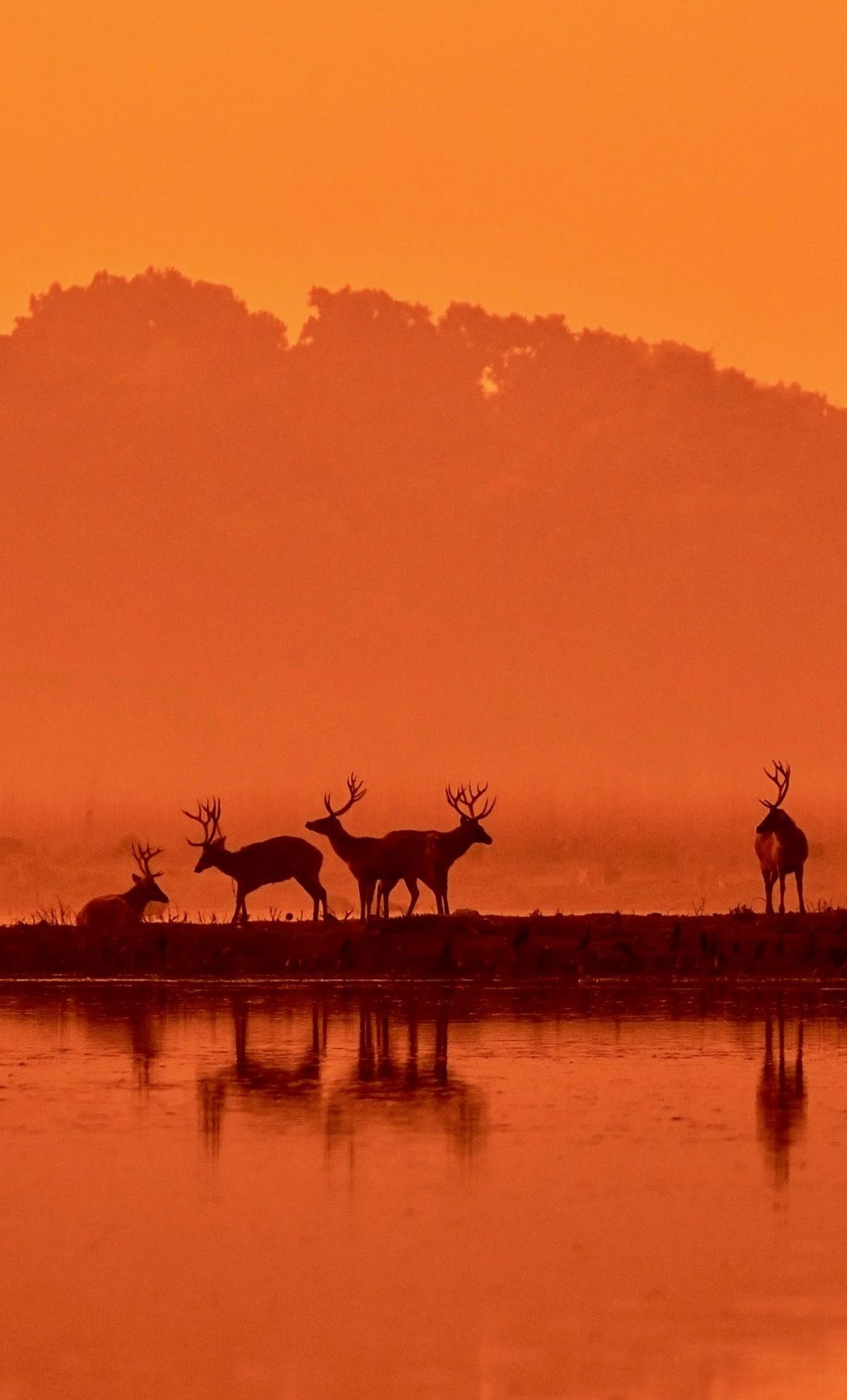
Forced by the terrain itself to move between islands, Sundarbans tigers have become strong, confident swimmers, regularly crossing channels fifty to seventy metres wide, and have adapted their diet to include fish, crab and water monitor lizard alongside the spotted deer and wild boar that make up a more conventional tiger's prey base.
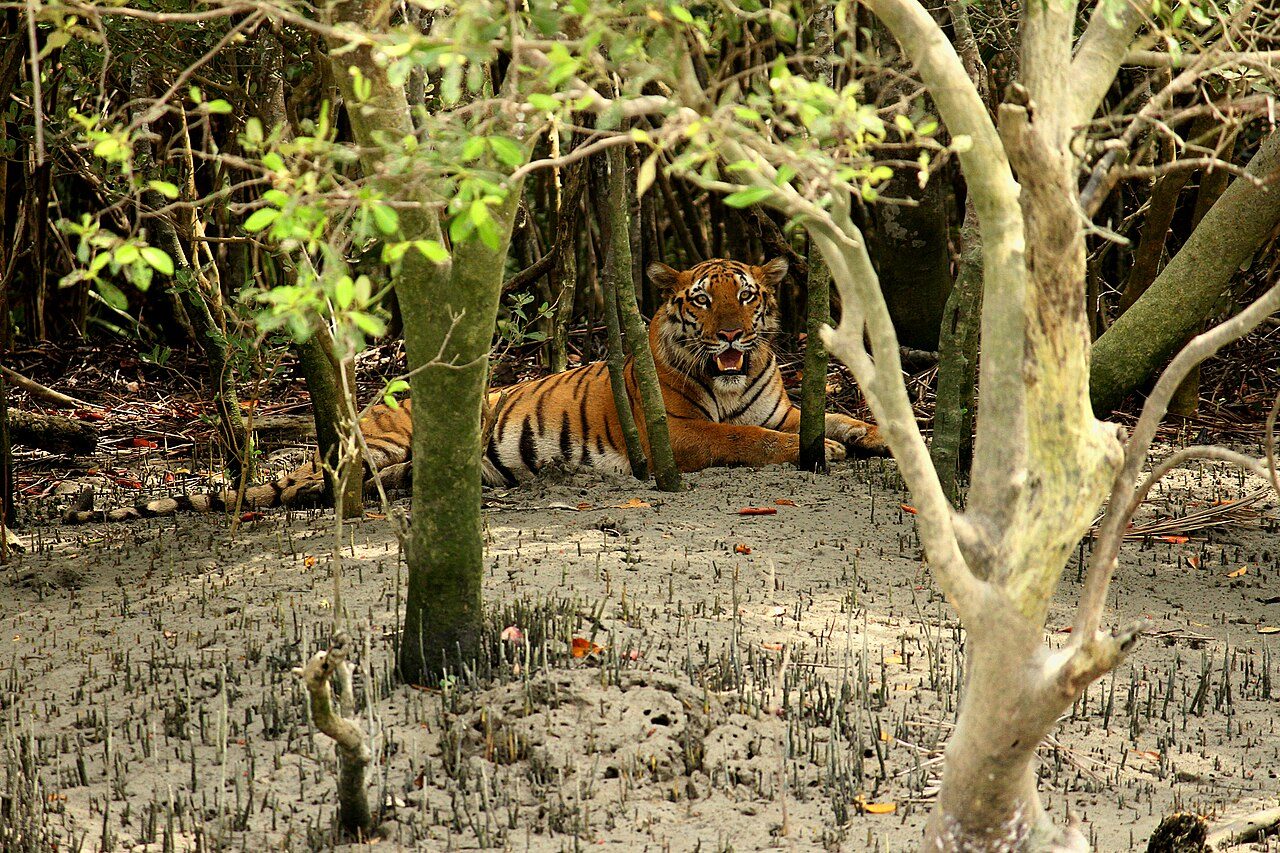
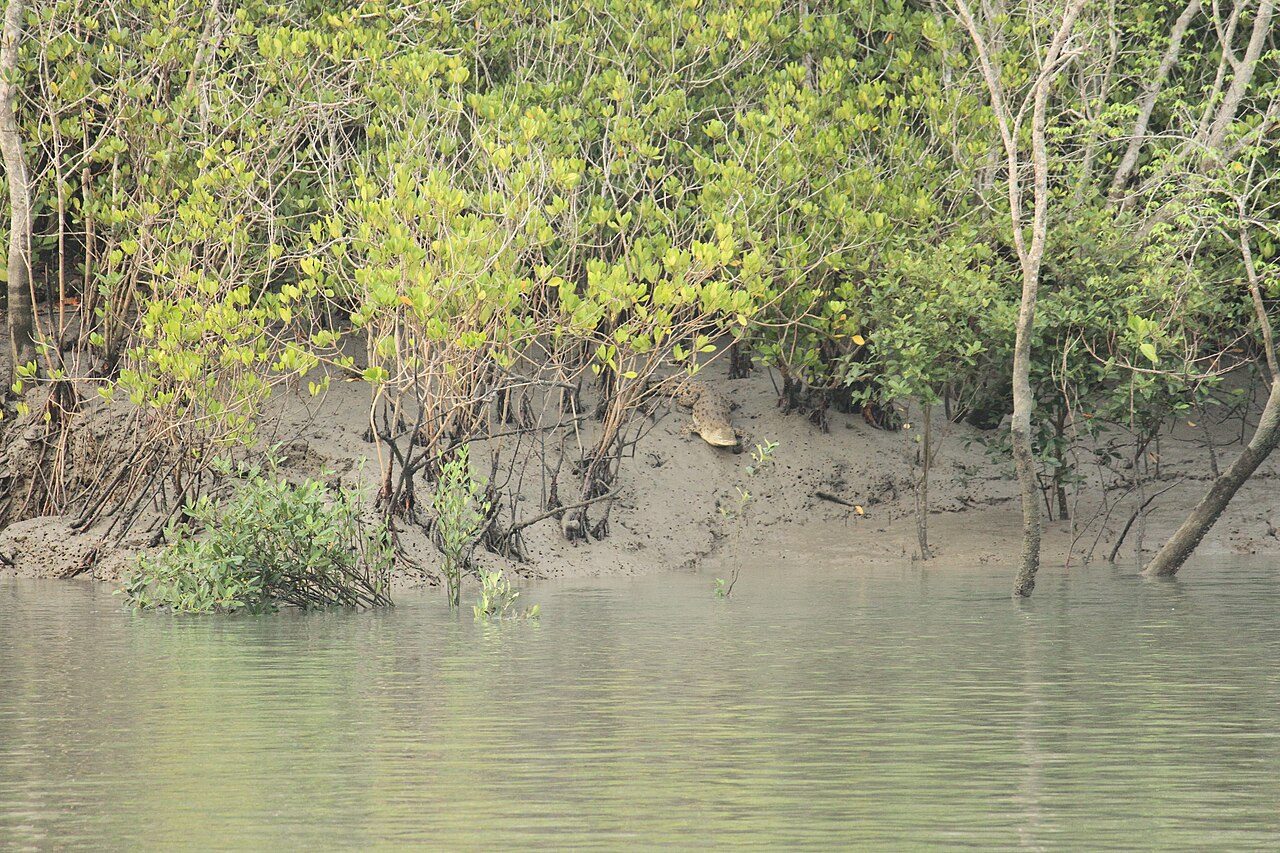
Gangetic & Irrawaddy dolphin · saltwater crocodile

Sharing the tiger's channels

The estuarine waters running through the mangrove support the endangered Gangetic dolphin and the vulnerable Irrawaddy dolphin, both moving through the same tidal channels as the tiger, alongside the estuarine, or saltwater, crocodile — the largest living reptile on Earth — found throughout the delta's creeks and mudbanks.

Fishing cat · otters · horseshoe crab

Understorey, shallows and mudbank

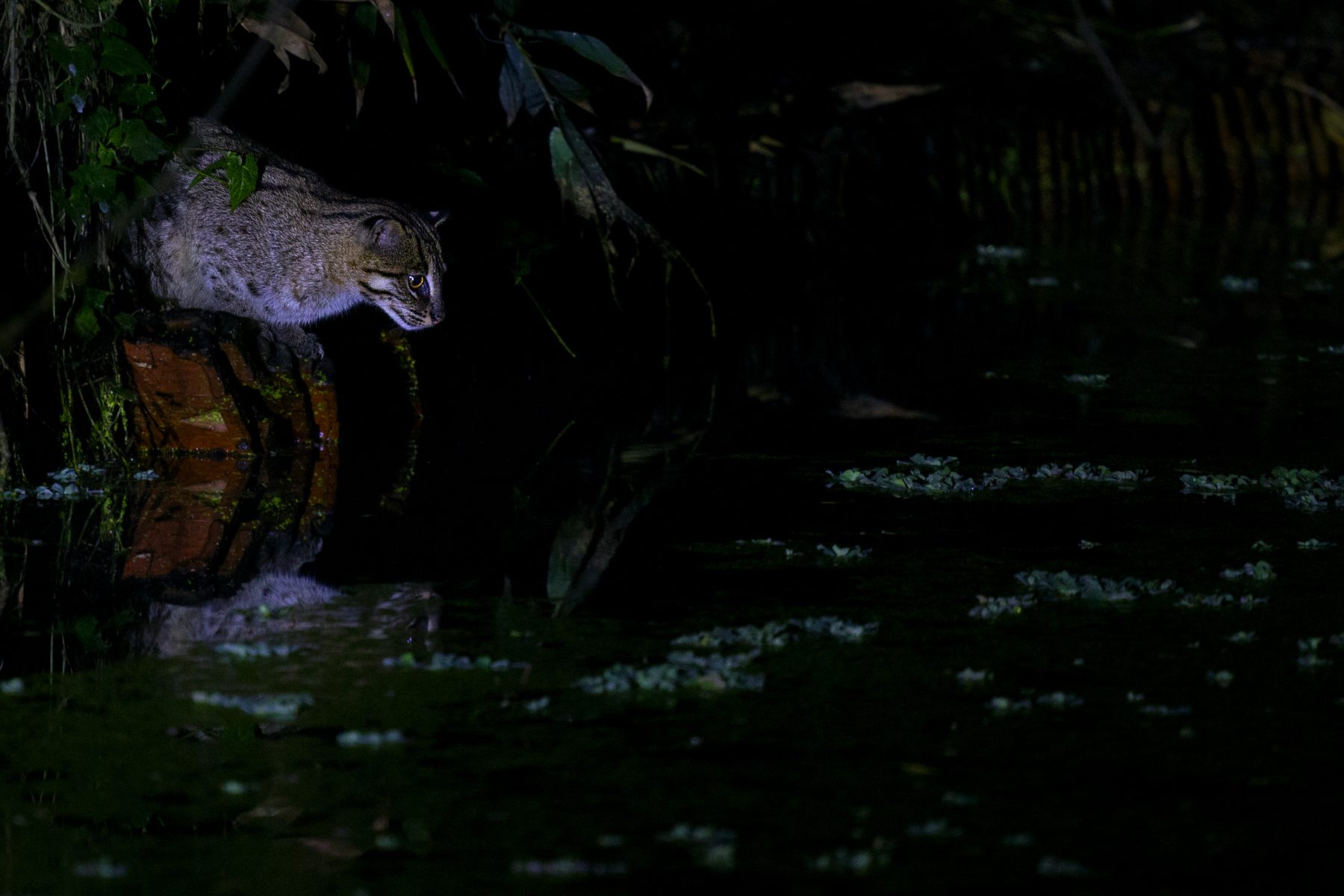
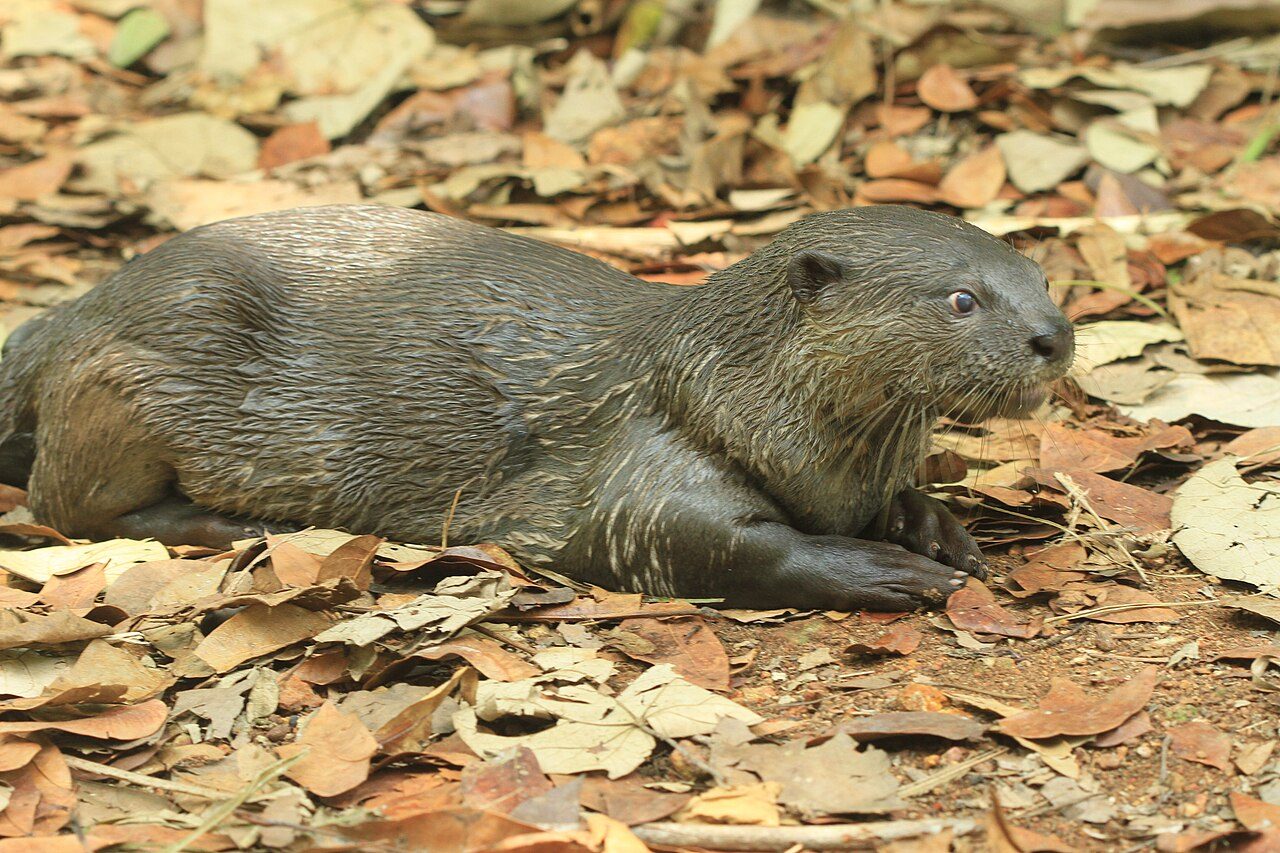
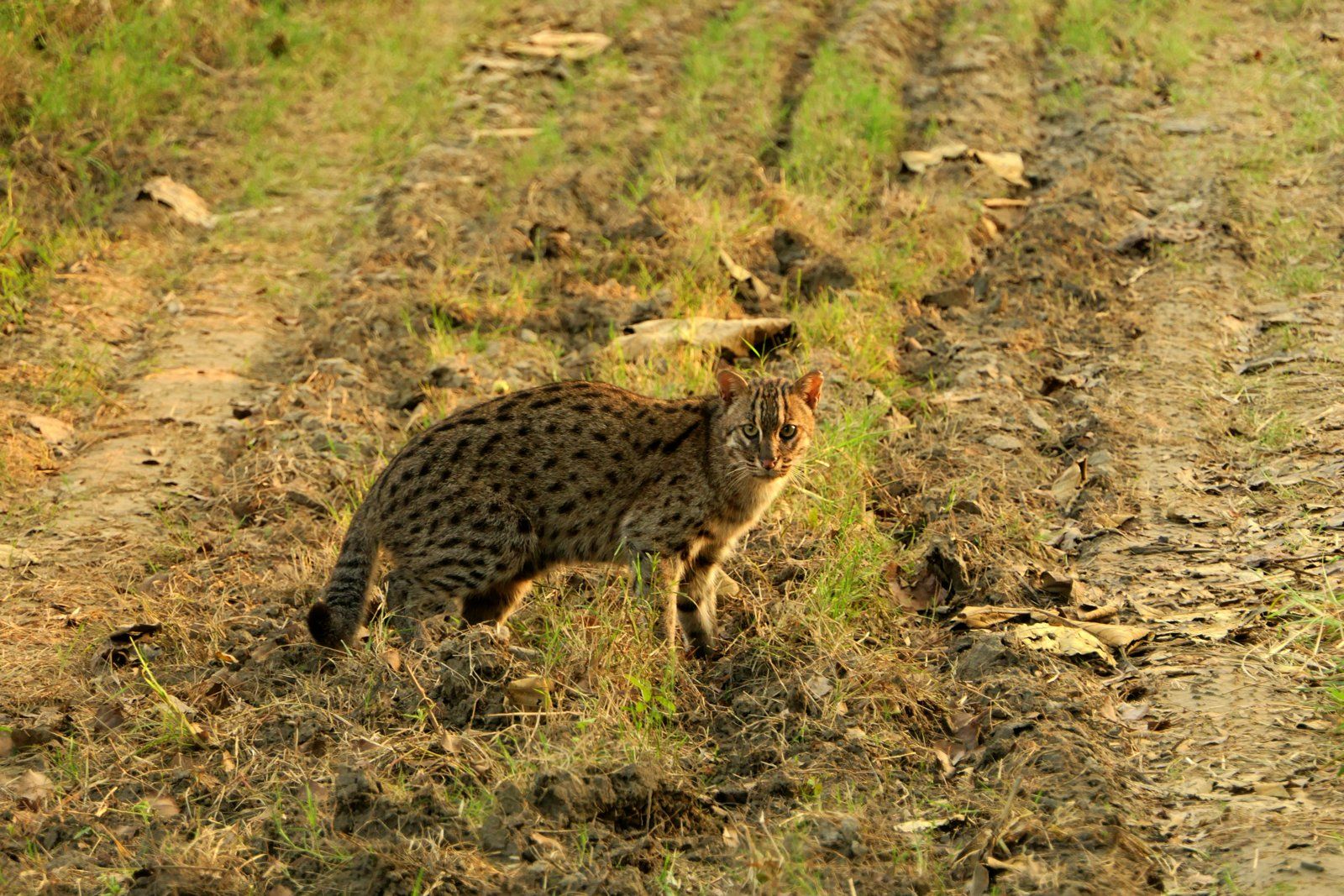
Fishing cat and leopard cat both hunt through the mangrove's dense understorey, while smooth-coated and small-clawed otter work the shallower channels in family groups.

Among the more unusual residents are two species of horseshoe crab, a primitive, armoured arthropod whose lineage predates the dinosaurs, still found along the delta's muddy shallows essentially unchanged after hundreds of millions of years.

In the field

Life between the tides

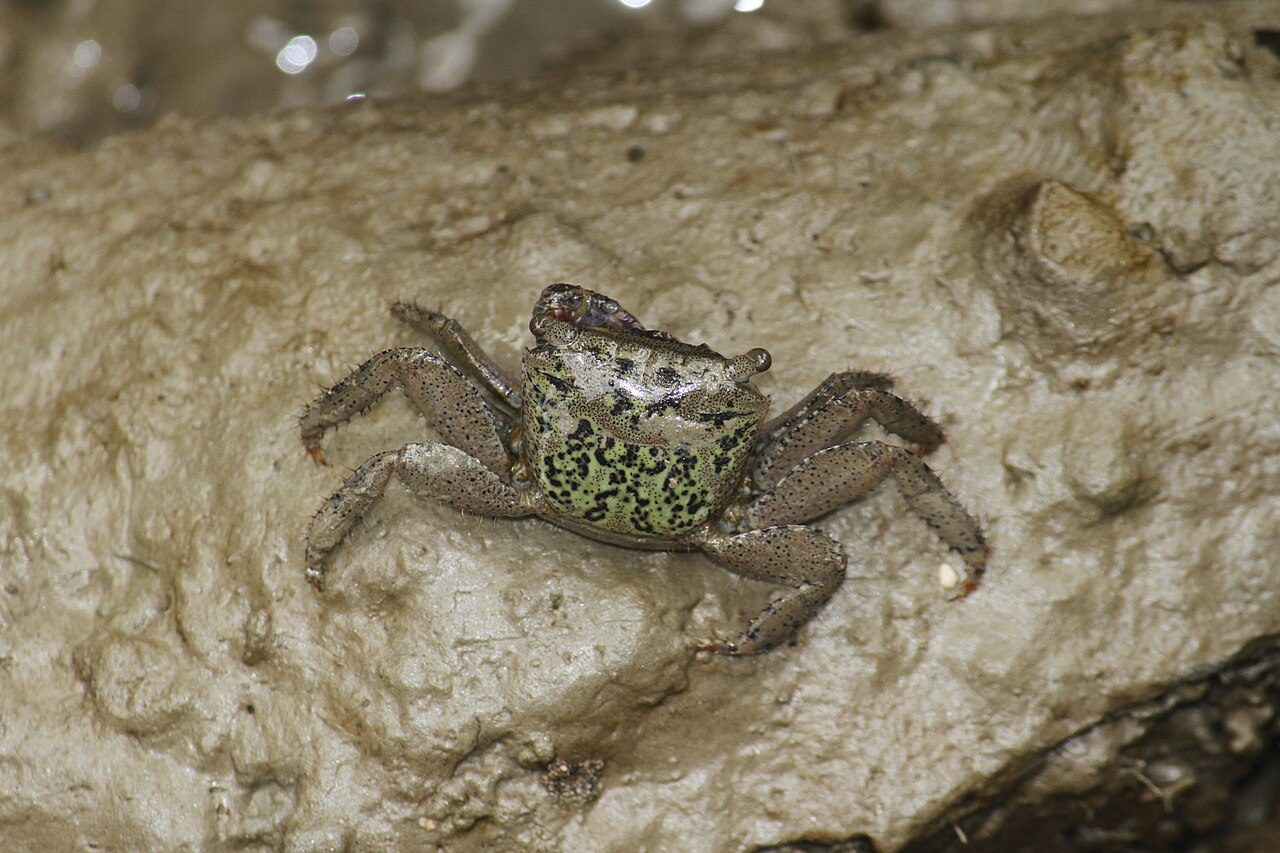
The mangrove holds far more than its tiger: crocodiles on the mudbanks, monitor lizards, crabs working the exposed mud at low tide, and the small cats and otters that hunt the creeks.

Experiences

Ways to experience the Sundarbans

The case for the Sundarbans

What sets the Sundarbans apart

The tiger's only mangrove home

The largest mangrove forest on Earth, and the only one with a resident population of wild tigers.

Tigers that swim

Sundarbans tigers regularly cross channels fifty to seventy metres wide and hunt fish and crab as readily as deer.

The richest mangrove forest

Some 78 species of mangrove and mangrove-associated plants grow across the delta.

Wilderness from a boat

No solid, permanent ground: the forest itself shifts with every tide.

The largest single tiger landscape

The largest population of wild tigers anywhere within one contiguous landscape.

A human dimension

Wildlife and livelihood exist here in close, sometimes difficult proximity, and a journey engages with both.

People and place

Life around the wilderness

This same landscape is the setting for one of India's more sobering human-wildlife stories: communities living in the Sundarbans' buffer zone depend heavily on fishing, honey collection and small-scale agriculture, and those who enter the forest for honey or firewood remain genuinely vulnerable to tiger attack.

Traditional honey collectors have long worn a mask on the back of the head, following a belief that tigers typically attack from behind — a practice that speaks to just how directly local communities have had to adapt their own behaviour to share this landscape with its apex predator.

Fishing and honeyBuffer-zone communities depend heavily on fishing, honey collection and small-scale agriculture.
Alternative fuelInitiatives providing alternative cooking fuel reduce how far people must go into the forest.
No settlement in the coreThe national park's core holds no permanent human settlement; people live and work in the buffer zone around it.
Conservation

Conservation is part of the journey

The Sundarbans is, in a very literal sense, the tiger's last mangrove stronghold — the only forest of this kind anywhere in the world still supporting a viable wild tiger population, which makes its continued protection a matter of preserving an entire category of tiger habitat rather than one population among several similar options.

The landscape faces a genuinely distinct threat profile from inland tiger reserves: rising sea levels and increasing soil salinity, driven by climate change, are gradually reducing the freshwater available to both the mangrove forest and the spotted deer population the tiger depends on, while the same environmental pressure is pushing local communities further into the forest in search of a livelihood, increasing the frequency of tiger encounters.

Conservation efforts here increasingly focus as much on supporting fringe communities — through initiatives providing alternative cooking fuel to reduce forest dependency, for instance — as on the tiger itself, recognising that the two are inseparable in this particular landscape.

How Safari Vista India supports conservation
West Bengal

The Landscapes That Make Up the Sundarbans Journey

Sundarbans
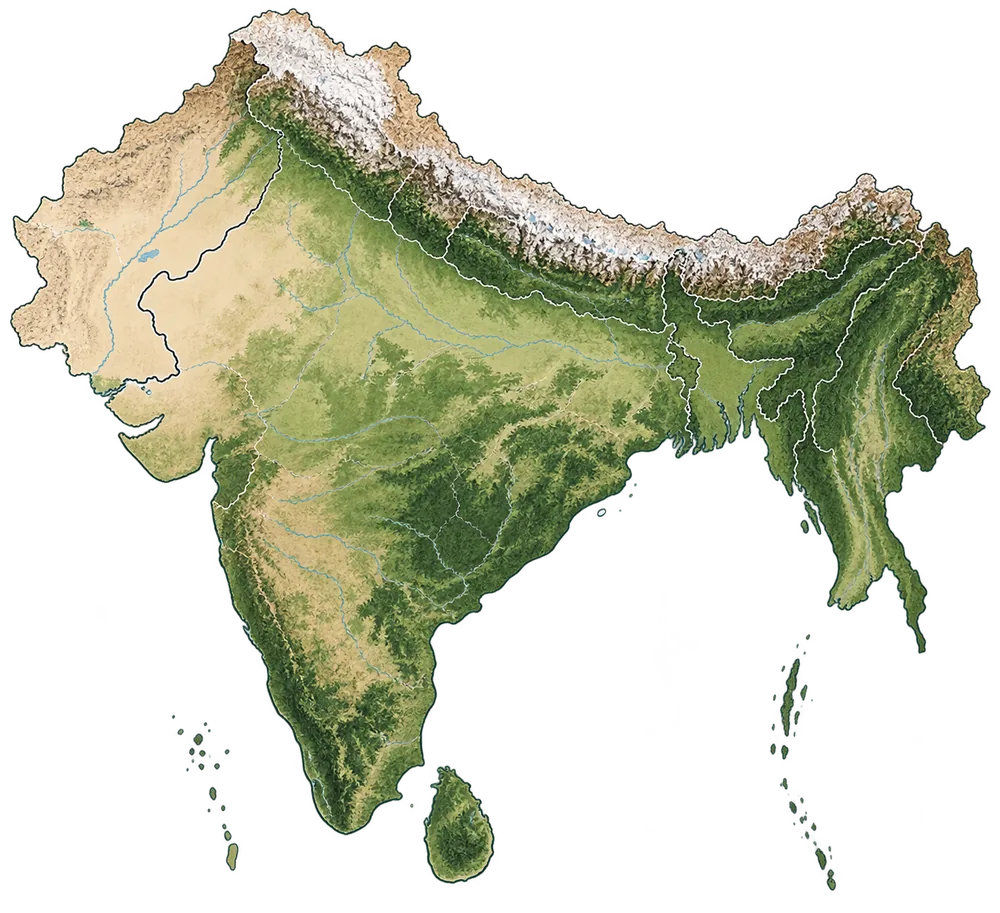
Where the Sundarbans lies in the Indian subcontinent. Indicative, not to scale.
Journey design

The Sundarbans rarely stands alone

Travellers with more time often pair the very different tidal wilderness of the Sundarbans with the Terai Arc, the forest, grassland and river corridor at the foot of the Himalaya.

The Safari Vista India Way

The Vista Standard

A journey through the Sundarbans depends entirely on boat logistics, tidal timing and a genuine understanding of this landscape's unusual human dimension — knowing which creek systems and watchtowers give the best chance of a sighting, and how to engage respectfully with a landscape where wildlife and human livelihood exist in such close, sometimes difficult proximity.

Built the same way as every Safari Vista India journey: one boat, yours alone; a naturalist with deep knowledge of this delta's tides, wildlife and communities alike; no fixed departures; and one person responsible for the full arc of the journey, from the first creek at dawn to a final watchtower at dusk.

One vehicle. Yours alone.

For the full length of the journey, with no shared seats.

A naturalist, not a driver-guide.

Someone who has spent years reading this landscape, and teaches you to read it too.

No fixed departures.

You travel when the season and your own calendar suit.

Specialist ground handling.

Boats, tides and the choice of creek systems and watchtowers arranged around each day's water.

Conservation, included.

Part of how the journey is designed from the outset, not an add-on at checkout.

One point of contact, throughout.

One person from the first conversation to the last morning in the field.

Practical information

Planning a Sundarbans journey

November – February

Winter

Cool, comfortable, dry (12–26°C); calm waters.

Best overall visibility; strong birding; comfortable boat travel.

Best for First-time visitors, birders, photographers.

March – April

Spring

Warming steadily (20–34°C).

Crocodile basking increases; good general wildlife activity.

Best for Travellers prioritising crocodile and reptile sightings.

May – June

Pre-Monsoon

Hot, humid, occasional early storms (28–38°C).

Wildlife activity continues but conditions less comfortable.

Best for Experienced travellers only.

July – October

Monsoon

Heavy rainfall; rough water; cyclone risk.

Limited visibility; boat travel more difficult and occasionally suspended.

For travellers Not recommended.

When to go

Unlike a single administrative closure, the Sundarbans remains technically accessible year-round, but the monsoon's rough water and occasional cyclone activity make the winter and early spring months the practical window for a comfortable, reliable visit.

Time to give the landscape

A boat-based journey through the Sundarbans rewards three to four days at minimum, allowing enough time to move through several different creek systems and watchtower points rather than rushing a single, short loop.

Travellers with a specific interest in the region's human-wildlife dynamics, or wanting to combine wildlife viewing with time in the buffer-zone fishing villages, often extend to five or six days.

Questions

Questions about the Sundarbans

At the mouth of the Ganges lies the largest mangrove forest on Earth and the only one with a resident population of wild tigers. There is no solid, permanent ground: the landscape is a labyrinth of tidal creeks, mudflats and mangrove islands that submerge and re-emerge twice a day, so it is experienced from a boat rather than a jeep. Read more

The Sundarbans holds the largest population of wild tigers within one contiguous landscape, and they behave like no other: strong swimmers that cross wide channels and hunt fish and crab. A sighting is considerably less predictable than in a dry-forest reserve, so a journey moves through several creek systems and watchtower points over three to four days or more. Read more

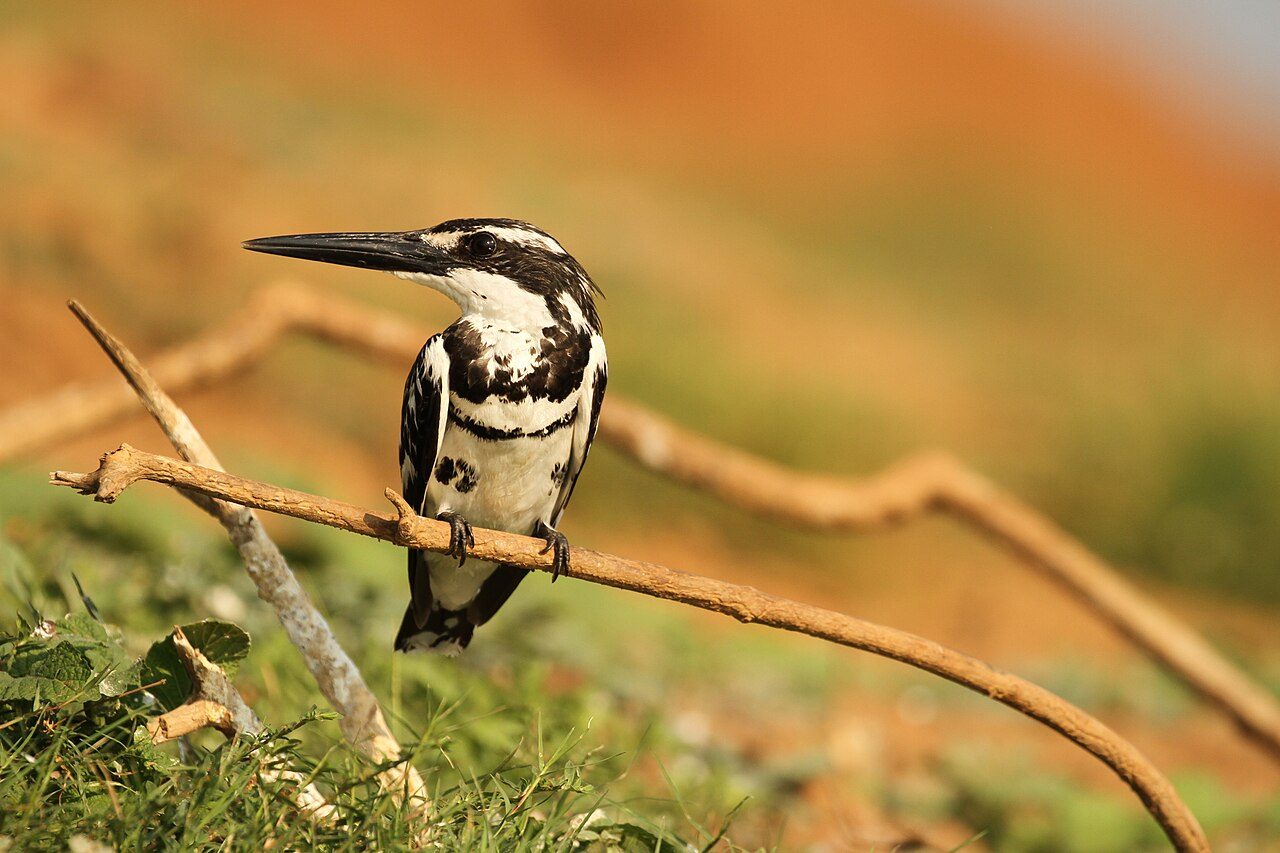
The estuarine channels hold the endangered Gangetic dolphin, the Irrawaddy dolphin and the saltwater crocodile. Fishing cat and leopard cat hunt the mangrove understorey, otters work the shallower channels, and two species of horseshoe crab survive along the muddy shallows. Over 300 bird species are recorded, including eight of India's twelve kingfishers. Read more

Not in the national park's core, which has no permanent settlement. Around it, buffer-zone communities depend on fishing, honey collection and small-scale agriculture, and those who enter the forest remain vulnerable to tiger attack. Honey collectors have long worn a mask on the back of the head. Time in these villages can be part of a five or six day journey. Read more

The Sundarbans is technically accessible year-round, but the monsoon's rough water and occasional cyclones make winter and early spring the practical window for a comfortable, reliable visit. Travel is entirely by boat, so tidal timing shapes each day as much as the season does. Read more

It is the only forest of its kind still supporting a viable wild tiger population, so protecting it preserves a whole category of tiger habitat. Rising sea levels and salinity are reducing freshwater for the mangrove and the deer the tiger depends on, which is why conservation here supports fringe communities as much as the tiger itself. Read more

If this is the India you want to understand — tidal, singular, and the tiger's only mangrove home on Earth — the right next step is a conversation.

Begin Your Journey

Tell us how you want to experience India, and we will design the journey around you.