
Home / The Vista Standard
The Vista Standard
Not a tier. The condition we operate under.
Most luxury travel brochures describe an aspiration. This page describes an obligation — the six things that are true on every Safari Vista India journey, without exception, regardless of which reserve or which season.
Luxury in wildlife travel is often described by what can be added: a better room, a private transfer, a larger vehicle, an upgraded meal.
We see it differently.
The quality of a private wildlife safari in India is determined by the things that should never need to be negotiated in the first place.
Your time should belong to you. Your naturalist should understand the landscape rather than simply drive through it. Your journey should not be built around filling a vehicle or meeting a departure date. And conservation should not appear at the end of the booking process as an optional contribution.
The Vista Standard is not a tier. It is not an upgrade path. It is the minimum standard under which Safari Vista India operates.
If we cannot deliver these conditions, we would rather tell you that a journey is not possible than quietly compromise what we believe a private safari should be.
The six conditions
One vehicle. Yours alone.
A private safari should mean exactly that.
Your vehicle is never shared with another party. Not for one morning. Not because another guest happens to be going in the same direction. Not because the lodge has combined two bookings.
Every drive is yours.
That gives you something more valuable than an empty seat beside you.
It gives you freedom.
You can stop when your naturalist sees something worth understanding. You can remain with a tiger without watching the clock. You can spend longer with a herd of deer, wait for a bird to emerge from the canopy, or simply sit quietly while the forest changes around you.
There is no timetable belonging to somebody else.
For us, this is fundamental to a private wildlife safari in India.
A naturalist, not a driver-guide.
The person beside you can change the entire experience of a safari.
We do not believe that identifying an animal is enough.
A naturalist should be able to explain why that animal is there, what the landscape is telling you, how behaviour changes with the season and what may have happened moments before you arrived.
They should understand tracks, calls, habitat, prey behaviour, vegetation, weather and the subtleties of the reserve they are guiding in.
India's wildlife landscapes are remarkably different from one another. The knowledge required to interpret the Terai is not the same as that required in the dry forests of Central India or the rainforests of the Western Ghats.
A naturalist is there to interpret the wilderness, not simply to find it.
Where possible, your naturalist remains with you throughout the journey, building an understanding of your interests as the days unfold.
No fixed departures.
India is too large, and its wilderness too seasonal, to be experienced properly according to a group departure calendar.
Your journey begins with your dates.
Then we consider the season, the landscapes, the wildlife you want to experience and the amount of time you have.
Nothing is scheduled simply to fill a vehicle.
Nothing is shortened because another departure is waiting.
And nothing is added merely because it appears on a standard itinerary.
This is particularly important when designing a multi-region wildlife journey in India. A journey through the Terai, Central India and the Western Ghats should not be forced into an identical structure for every traveller.
The journey should fit the wilderness, not the other way around.
Ground handling by specialists.
The luxury of a seamless journey is usually invisible.
A permit has been secured before you arrive. A vehicle is waiting when your flight lands. A transfer connects correctly with the next safari. The lodge knows when you are arriving. A change in weather or forest conditions is dealt with before it becomes your problem.
This is the work of specialist ground handling.
India's wildlife reserves each have their own systems, timings, permits, access rules and operational realities. Experience matters.
Our journeys are therefore supported by people who understand the destinations on the ground—not simply someone who has arranged a transfer through a generic travel network.
Good logistics should disappear into the experience.
You should remember the forest, not the machinery required to get you there.
Conservation, included.
We do not believe conservation should be presented as an optional extra after the journey has already been priced.
Wildlife tourism exists because these landscapes still survive.
The forests that hold India's tigers. The grasslands supporting rhinoceros and swamp deer. The wetlands used by migratory birds. The rivers inhabited by gharials and river dolphins. The communities living alongside protected areas.
Every journey therefore carries a conservation contribution within its cost.
It is not a checkbox.
It is not added at checkout.
And it is not presented as a reason to pay more.
The wild should benefit from the journeys built around it.
Our broader conservation philosophy is simple:
The forests do not need more visitors. They need better ones.
That means fewer journeys built around volume, more journeys built around understanding, and a stronger relationship between what travellers experience and the landscapes that make those experiences possible.
One person. Start to finish.
Planning a private safari in India can involve a surprising number of questions.
Which landscape?
Which season?
How long?
Which reserves?
How should the journey move between them?
Where does it make sense to spend more time?
Which experiences are genuinely worth the journey—and which simply look good on an itinerary?
You should not have to explain yourself repeatedly to different people as those decisions are made.
One specialist remains responsible for your journey from the first conversation through to your return home.
They understand why you are travelling, what you want from the experience and what has already been discussed.
One conversation. One point of responsibility. One person who knows your journey.
And after you return, the conversation does not simply end because the booking has been completed.
These are not extras.
The Vista Standard exists because we believe the best wildlife journeys are built on freedom, knowledge, continuity and responsibility.
One vehicle, yours alone.
A naturalist, not a driver-guide.
No fixed departures.
Specialist ground handling.
Conservation, included.
One person, start to finish.
These are not the features you add when you choose a more expensive journey.
They are the conditions under which we are prepared to operate.
Because when you travel across India to spend time in some of its most extraordinary wild places, the details matter.
And the things that matter most should never be optional.
Begin the Conversation →
Questions worth asking any operator
What to ask before you book a private safari anywhere in India.
Ask this directly of any operator. Many advertise "private safaris" that quietly convert to shared vehicles during peak season unless the contract specifies otherwise. Ours doesn't — it's written into every itinerary as a fixed condition, not a preference.
We work with specialist ground partners in each reserve rather than owning vehicles and lodges ourselves — the same model most serious luxury safari brands use globally. What we control directly is the standard those partners must meet and the guest relationship throughout.
Habitat protection, guide training, and forest-community programmes through the Safari Vista Wildlife Foundation, audited annually. Full detail is on the Conservation page, including how it's reported back to you personally.
We'll tell you plainly if a reserve or date range isn't a good fit — including recommending a different journey, or being direct that this isn't the right trip for you at all. That's a deliberate part of how we operate, not an exception.
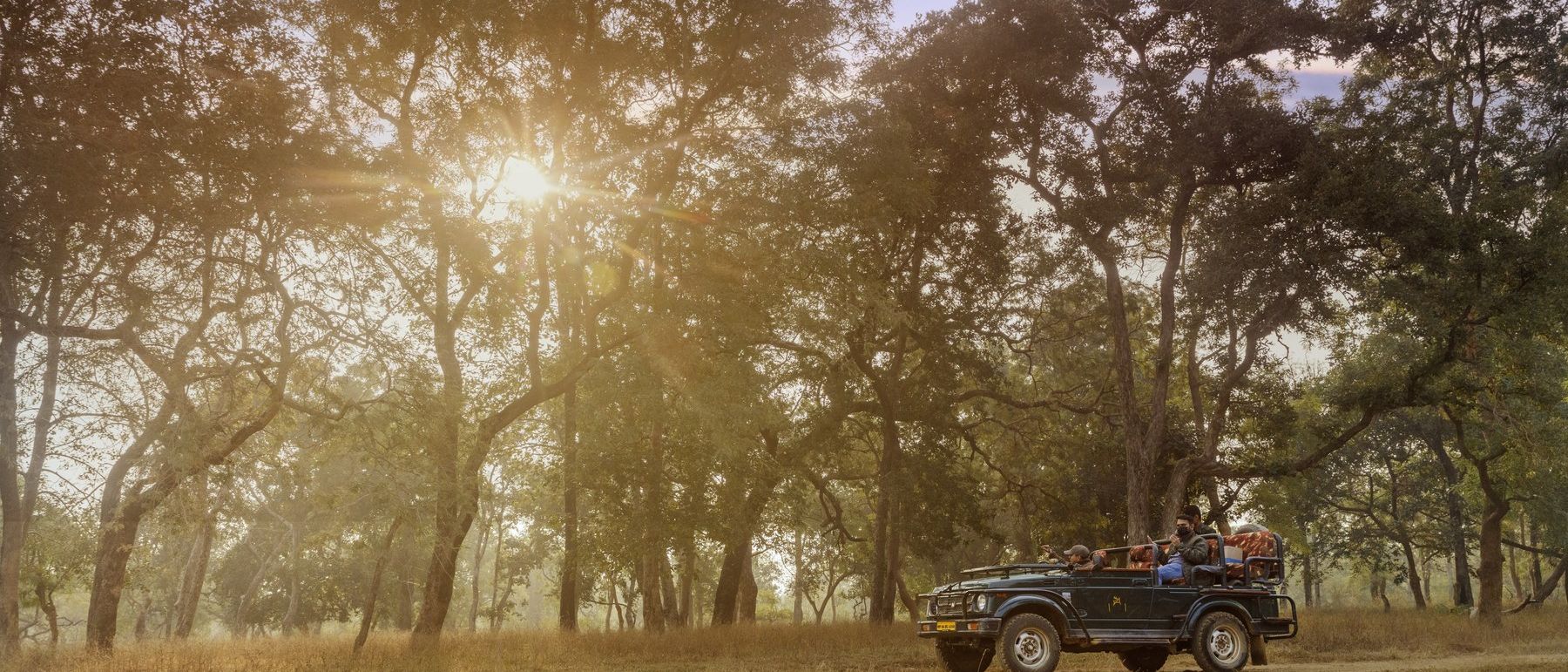 Photo: Bori Safari Lodge