
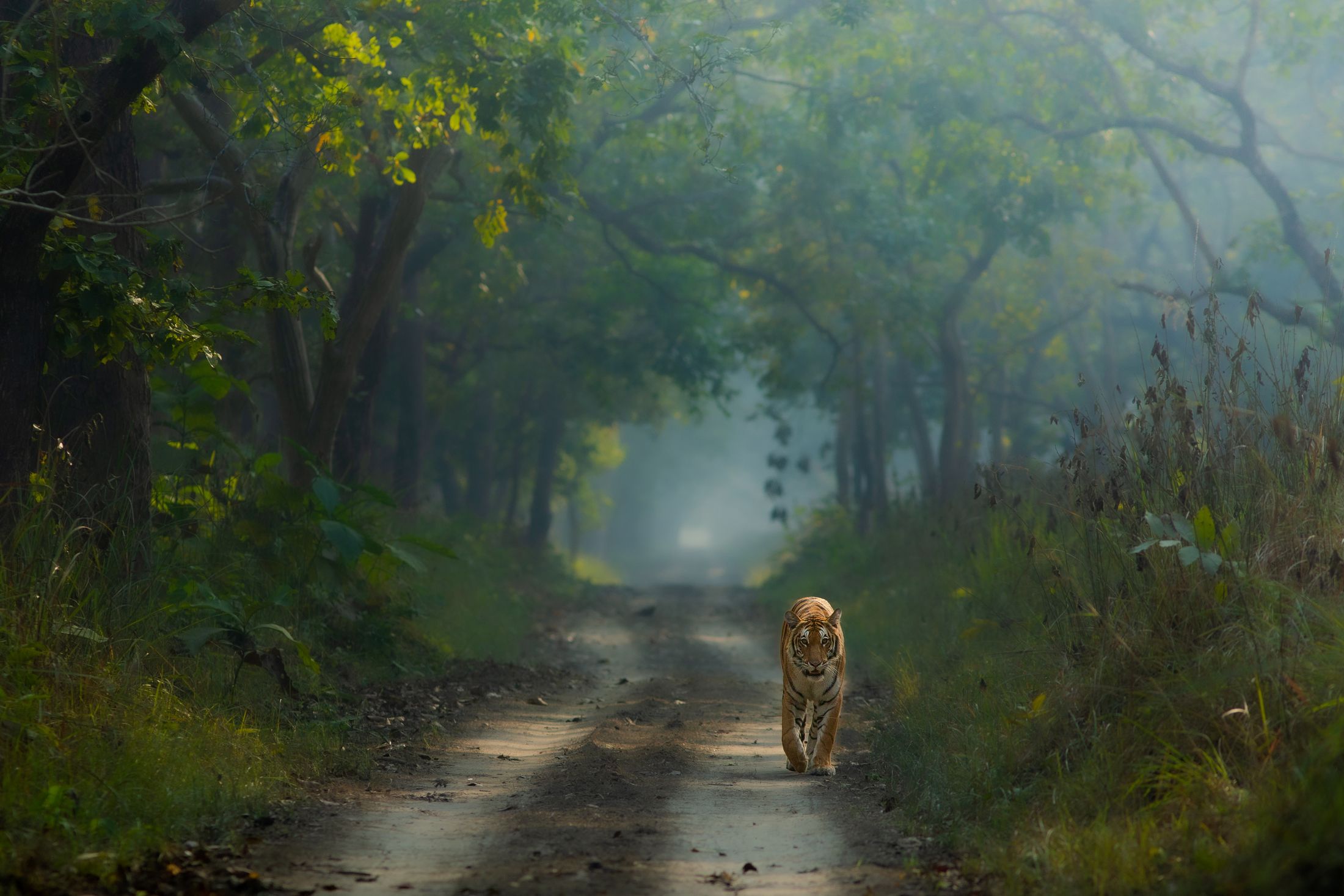
For a first wildlife journey in India, most people are pointed towards Central India. It is the region with the best-known tiger reserves, the most lodges and the longest history of tiger tourism. There is a good reason for that reputation.
But it is not the only way to begin. In the Terai, along India’s border with Nepal, Dudhwa Tiger Reserve offers a very different kind of forest and a very different kind of safari. Choosing between them is less about which is better than about which suits the traveller you are.
Central India is where most people go to see a tiger. Dudhwa is where fewer people go to see a landscape.
Central India: the classic tiger forest
Kanha, Bandhavgarh, Pench, Tadoba and Satpura are dry deciduous and sal forests broken by meadows, rocky hills and seasonal streams. As the dry season advances the forest opens up, and the tiger reserves here have a long track record of rewarding visitors with good sightings.
Infrastructure is well developed, with a wide range of lodges and good connections. The trade-off is popularity: the best-known zones can be busy, particularly in winter and around holidays, and planning early matters.
Dudhwa: the Terai’s grassland and sal
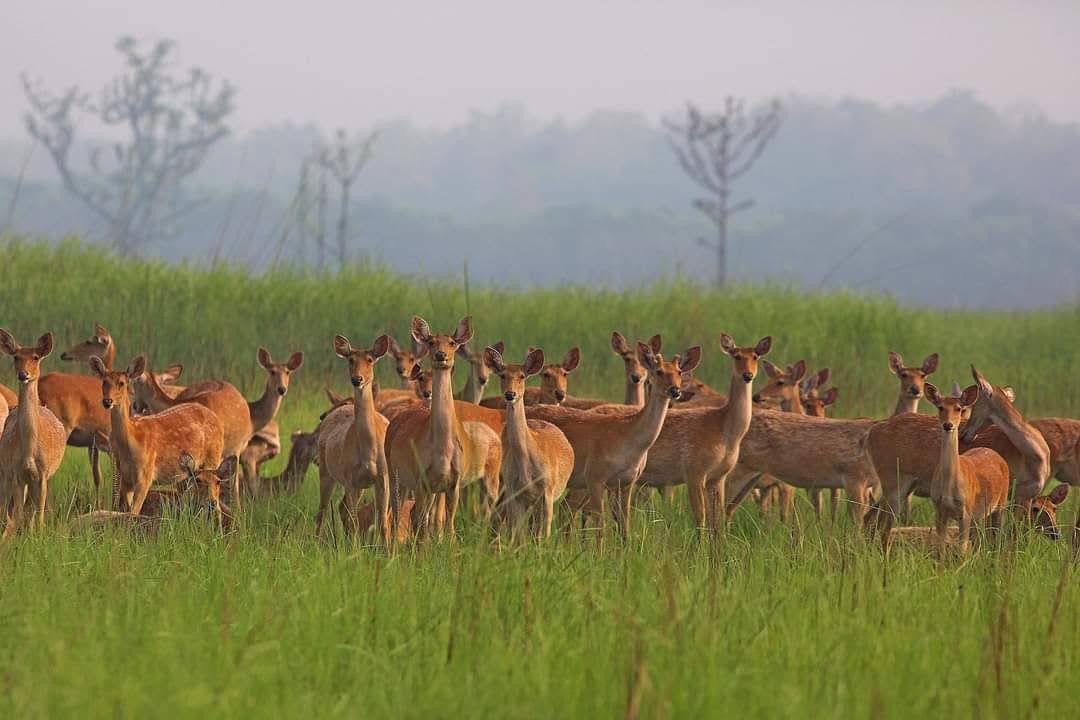
Dudhwa sits in a mosaic of tall grassland, sal forest, wetlands and rivers. It is home to tigers, but also to swamp deer, a reintroduced population of greater one-horned rhinoceros, and a rich variety of birds, particularly in the winter months.
Tall grass and dense sal mean tigers can be harder to see than in the dry forests of Central India. What Dudhwa offers instead is atmosphere and quiet: misty mornings, a landscape few international travellers have heard of, and a safari that feels personal rather than crowded.
Choose Central India if…
Seeing a tiger well is the main reason for the journey. You would like the widest choice of lodges and reserves. You are happy to plan ahead for popular zones and dates.
Choose Dudhwa if…
You are drawn to grassland, wetlands and birds as much as to big cats. You value a quieter forest and fewer vehicles. You want to see swamp deer and rhino in the same landscape as tiger. You are comfortable with a safari where patience is part of the experience.
Or do both
For travellers with ten days or more, the two are complementary rather than competing. A few days in the Terai followed by Central India shows how different India’s tiger landscapes are from one another, and makes each one easier to appreciate.
Both are seasonal, with parks closing for the monsoon, and each region’s dates are set by its own forest department. We confirm the current season and safari arrangements for every journey.
Where to begin
Tell us what you most want from your first India safari, the animals, the pace, the kind of lodge, and how much time you have. We will tell you honestly which landscape fits, and why.
Keep reading
All Journal articles
Seasons4 min read
The best time to see tigers in Central India, month by month
Why April and May outperform the popular winter window, and what you trade for it.
Planning14 min read
India or Africa: an honest comparison for second-time safari travellers
What India genuinely does better, and the three things Africa still wins on.
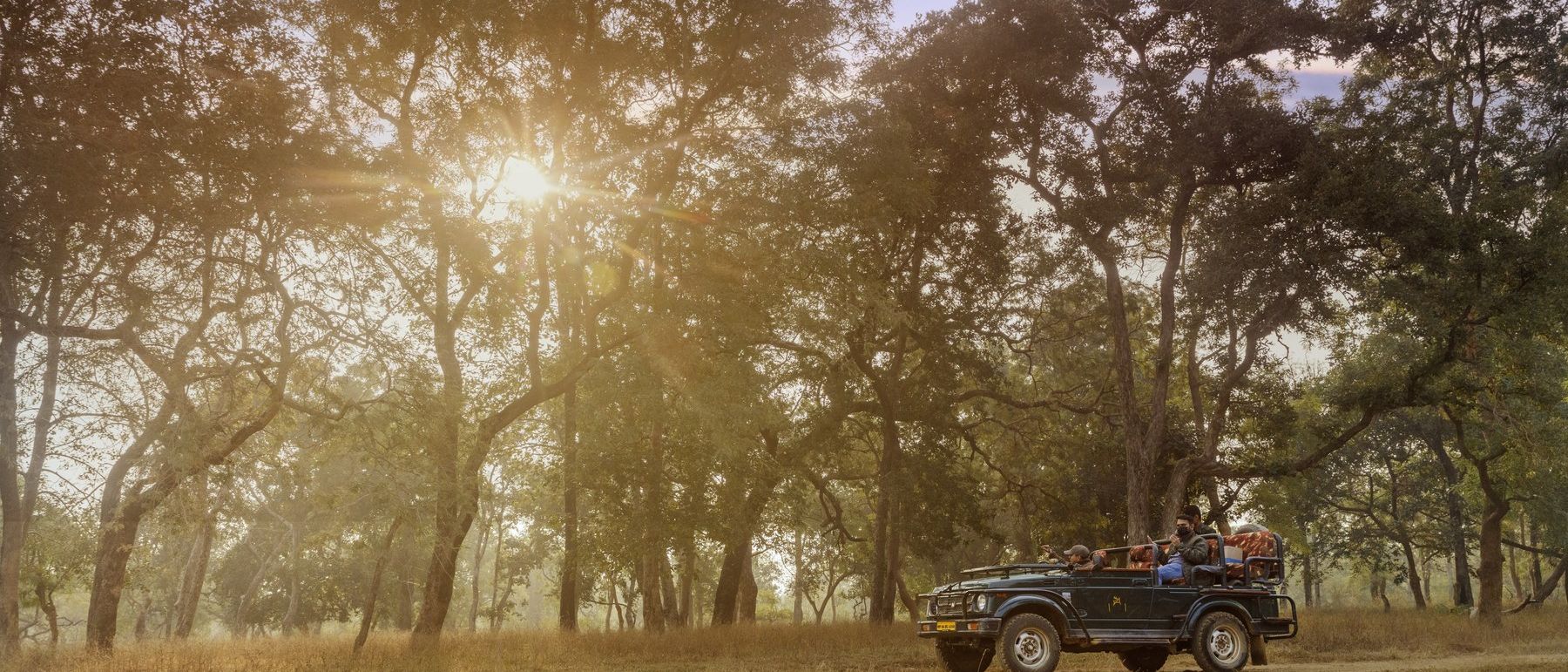 Photo: Bori Safari Lodge
Cost10 min read
What a private luxury safari in India actually costs
A straight breakdown of where the money goes, and why private vehicles change the maths.