
You have done Africa. What comes next?
For many experienced safari travellers, the question eventually changes. The first safari is often about discovery: the anticipation of seeing a lion, elephant, leopard or cheetah in the wild; the excitement of waking before sunrise; the feeling of entering a landscape where the rules of everyday life no longer seem to apply. But after you have travelled through Africa, perhaps more than once, the question becomes more considered. Where should the next safari take you, and what can it offer that you have not already experienced?
For many travellers, India enters the conversation through one animal: the Bengal tiger. But a serious Indian wildlife safari is about considerably more than finding a tiger. India offers a completely different relationship with wilderness, shaped by dense human settlement, ancient forests, rivers, grasslands, extraordinary biodiversity and a conservation model that has evolved within one of the world's most populous countries. The experience can be challenging, intimate and deeply rewarding, but it should not be approached as Africa with tigers.
India is its own safari country, with its own rhythm, its own landscapes and its own way of reading wildlife.
The useful question, therefore, is not whether India is better than Africa. There is no honest universal answer to that. Africa encompasses an enormous range of experiences, from the open plains of the Serengeti and the Mara to the waterways of the Okavango, the deserts of Namibia and the private concessions of Southern Africa. India is equally varied in its own way, from the Terai grasslands beneath the Himalaya to the dry forests of Central India, the rainforests of the Western Ghats and the vast floodplains of the Northeast. The more useful question is what kind of wilderness experience you want next.
The wildlife is familiar in concept, but completely different in character
The Bengal tiger is understandably the great draw for many first-time visitors to India. To spend time following a wild tiger through its territory is one of the world's great wildlife experiences, and India offers the most significant opportunity anywhere to encounter this extraordinary predator in the wild. Yet the tiger is only one part of India's wildlife story. Depending on where you travel, an Indian safari can bring you into landscapes inhabited by one-horned rhinoceros, Asian elephants, sloth bears, leopards, swamp deer, wild buffalo, gharials, river dolphins and an extraordinary diversity of birds and smaller mammals.
Africa offers a different concentration of wildlife experiences. The great herds of the Serengeti and Mara, the elephant populations of Southern Africa, African wild dogs, cheetahs, gorillas, chimpanzees and the remarkable predator-prey interactions of open savannah are experiences that India cannot reproduce. Equally, Africa cannot offer the experience of sitting beneath sal trees waiting for a Bengal tiger to emerge from cover, watching a rhinoceros move through the Terai grasslands or following the tracks of a sloth bear through dry deciduous forest.
The distinction is therefore not about which continent has more wildlife. It is about the character of the encounter. Africa often gives you extraordinary visibility and scale; India frequently asks you to read the landscape more closely.
India asks you to look differently
One of the most noticeable differences for an experienced African safari traveller is the nature of visibility. On the open plains of East or Southern Africa, you can sometimes see an animal from a remarkable distance and spend considerable time watching its behaviour unfold against the landscape. In many Indian reserves, particularly those dominated by forest, the experience is more intimate and less predictable. A tiger can move through dense vegetation and disappear within seconds. A leopard can cross a track and be gone before everyone in the vehicle has even registered it. An animal may be close without being visible at all.
This changes the role of the naturalist. The safari becomes less about scanning a huge horizon and more about understanding clues: the alarm call of a langur, the sudden attention of a herd of chital, fresh pugmarks in the dust, a change in bird activity or the direction in which animals are repeatedly looking. The forest begins to communicate through small details, and the quality of the experience depends greatly on whether someone beside you knows how to interpret them.
For a traveller who has already experienced Africa, this can be one of India's greatest attractions. The thrill is not always in seeing the animal immediately. It is in understanding why it might be there, following the evidence and allowing the sighting to emerge from the landscape rather than expecting the landscape to deliver it on demand.
The scale of wilderness is different
Africa's greatest advantage for many safari travellers is scale. There are landscapes where you can drive for hours across enormous wilderness areas and encounter very little evidence of human habitation. The horizon can seem almost impossibly large, and the sheer space between one wildlife encounter and the next becomes part of the experience.
India offers a different kind of wilderness. Its protected forests are often smaller and more regulated, and they exist within a landscape where villages, agriculture, roads and human activity may be remarkably close to the boundaries of a reserve. This is not an indication that India's wildlife is somehow less wild. It reflects a fundamentally different conservation reality.
The extraordinary achievement of Indian conservation is that significant populations of large predators and herbivores continue to survive within this complex landscape. A tiger in Central India does not exist in isolation from the people and agricultural land surrounding its forest. A rhinoceros in the Terai depends upon grassland that is part of a much larger and increasingly fragmented ecological system. Understanding that relationship adds a dimension to the safari that is difficult to separate from the wildlife itself.
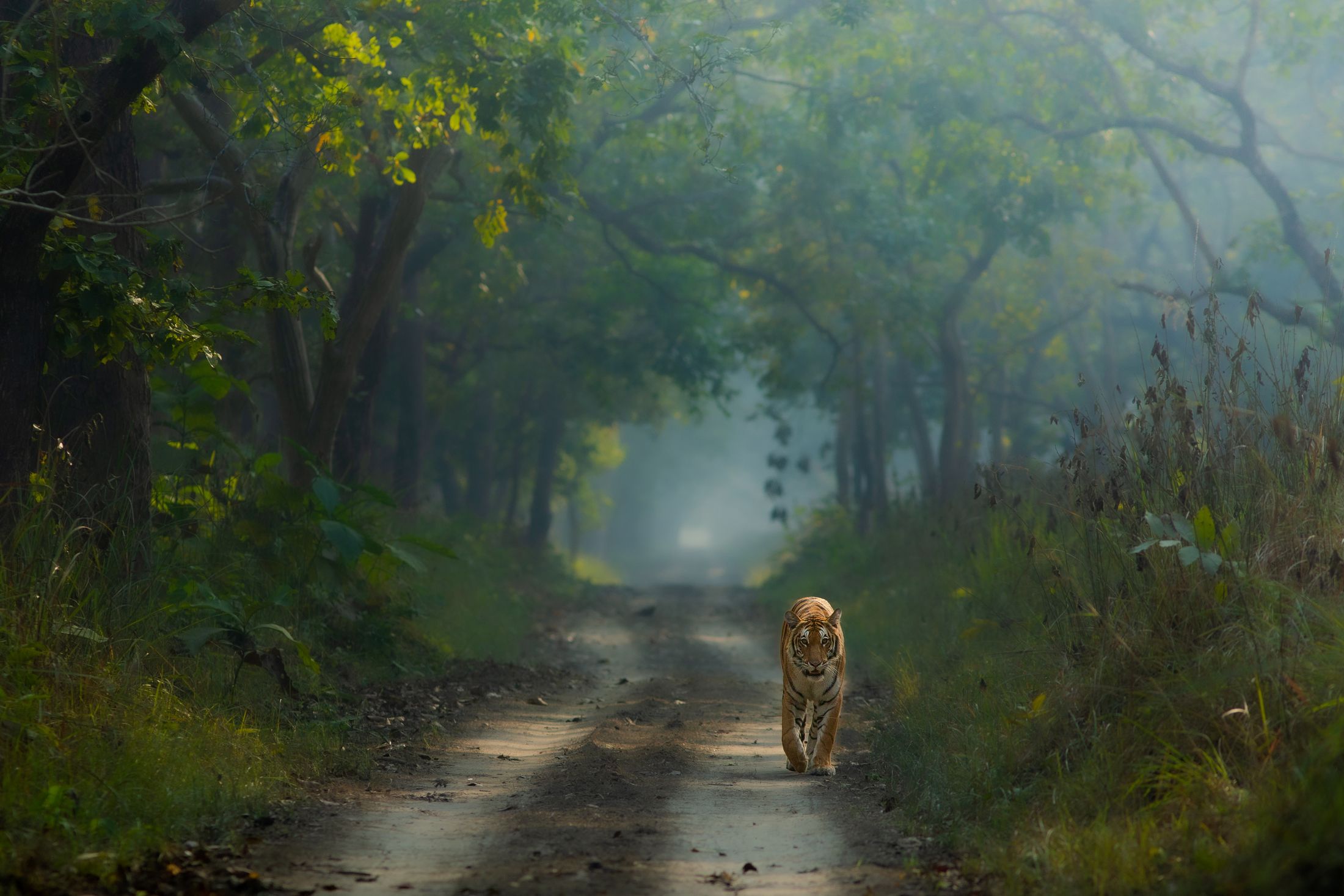
In India, wilderness is rarely completely removed from human civilisation; it exists alongside it.
The safari system itself is different
Travellers accustomed to private African concessions should understand this before booking an Indian safari. India's national parks and tiger reserves generally operate within more structured systems of permits, designated routes, entry timings and vehicle regulations. The degree of flexibility available in a private African concession is therefore not always possible in an Indian reserve.
That does not make the experience inferior; it simply makes preparation more important. Choosing the right reserve, understanding the seasonal conditions, selecting appropriate accommodation, securing the correct permits and arranging the right naturalist can have a significant effect on the quality of the journey. Two itineraries that look similar on paper can feel completely different once you are actually in the field.
This is also why a private safari in India should not be understood simply as a more expensive version of a group safari. The value lies in the ability to control the elements that can be controlled. Your vehicle can remain yours alone, your naturalist can understand your interests, and your wider itinerary can be designed around your pace rather than around the requirements of a fixed departure.
A private vehicle changes the experience
In both Africa and India, having your own vehicle can transform a wildlife journey, but the reason is particularly important in India. When a reserve operates within defined routes and timings, the flexibility you retain within those boundaries becomes valuable. You can spend longer observing behaviour rather than feeling pressure to move because another guest has a different agenda. If your interest is birds, the morning can become a birding experience rather than simply a search for a tiger. If you are fascinated by animal behaviour, you can stay with an encounter longer. If the light becomes extraordinary across a grassland, there is no need to leave simply because someone else's itinerary requires it.
For Safari Vista India, private means private throughout the journey. We do not believe that a vehicle becomes private merely because you have paid for the front seats or because nobody else happened to join that particular drive. The vehicle belongs to your journey, and the time inside it belongs to you.
That freedom is especially important when travelling across several Indian wildlife landscapes, because each reserve has a different character and each traveller has a different reason for being there.
The naturalist matters enormously
A good naturalist can change the way you experience any safari, but the difference can be especially pronounced in India. The forests are often visually complicated, and some of the most interesting information is contained in details that are easy to overlook. A naturalist who understands the reserve can interpret tracks, alarm calls, vegetation, animal behaviour, seasonal changes and the relationships between different species.
The distinction between a driver-guide and a naturalist is therefore more than terminology. A driver can take you towards a reported tiger location. A naturalist should be able to explain the landscape you are moving through, understand what the forest is telling you and help you make sense of what happens even when the headline sighting does not occur.
This is particularly important for experienced safari travellers because the longer you spend in wild places, the less satisfying a simple species checklist becomes. The questions become more interesting. Why is the tiger using this particular area? Why are the deer concentrated here? Why has the bird activity changed? What does this landscape tell us about the season?
The deeper the interpretation, the richer the safari becomes.
India offers extraordinary ecological variety within one country
Another reason India works particularly well as a second safari destination is the range of ecosystems that can be experienced within one country. The Terai in northern India is characterised by sal forests, immense grasslands, wetlands and river systems, supporting tiger, rhinoceros, swamp deer, elephant and an exceptional variety of birds. Central India's dry deciduous forests offer a very different tiger landscape, with bamboo, open meadows, rocky terrain and a strong seasonal rhythm.
Move south into the Western Ghats and the experience changes again. Ancient rainforest, steep mountains and high levels of endemism create an ecosystem in which primates, birds, amphibians and plants become as important as large mammals. Further east, the floodplains and wetlands of Northeast India provide another expression of Indian wildlife, while the Himalaya open the door to species and habitats that have little resemblance to the forests of the plains.
This diversity means that a well-designed wildlife safari in India does not have to be defined by one species. It can become a journey through several ecological worlds, each revealing a different side of the country.
India also offers a different cultural dimension
A safari in Africa can feel like entering a wilderness separated from the rest of the world. In India, the transition is rarely so complete. Wildlife, agriculture, villages, temples, historic landscapes and ancient cultural traditions often exist within the same broader geography.
This can make an Indian journey more complex, but also more rewarding. You are not simply travelling to a wildlife destination and then returning to another version of the world you already know. You are travelling through India, and the wildlife is one part of a much larger cultural and geographic story.
A journey can begin with the architecture and history of one of India's great cities, continue into a tiger landscape, move through rural countryside and finish in another region whose food, language and ecology are entirely different. For an international traveller, this makes the country particularly well suited to a longer private journey.
The wilderness is not separate from India. It is one expression of India.
Where Africa remains difficult to match
An honest comparison has to recognise what Africa does extraordinarily well. If your idea of the perfect safari involves vast open landscapes, enormous herds of plains game, dramatic predator-prey interactions across open country or the spectacle of the great migrations, Africa offers experiences that India cannot reproduce.
The Okavango is not interchangeable with the Terai. The Serengeti is not Central India. A private concession in Botswana operates under a different model from a tiger reserve in Madhya Pradesh. These differences are precisely what make both continents worth experiencing.
For travellers who are seeking the feeling of immense, open wilderness above all else, Africa may continue to provide an experience that is difficult to replicate elsewhere. That should not be disguised in an India comparison. The value of India is not that it wins every category. It is that it offers categories of experience that Africa cannot.
And what India does uniquely well
India's greatest strength is the combination of wildlife, ecological variety, culture and intimacy. There is something uniquely compelling about sitting quietly in a forest knowing that a tiger may be somewhere beyond the vegetation, following the signs of its movement and understanding that the forest around you is supporting an entire web of life.
There is also the extraordinary possibility of encountering species that simply do not exist in Africa. The Bengal tiger is the obvious example, but the greater one-horned rhinoceros, sloth bear, swamp deer, gharial, Asiatic lion, wild buffalo and several distinctive Asian primates and birds all belong to a completely different natural history.
For a traveller who has already experienced Africa, that difference is often the point.
You are not travelling to India to reproduce a safari you have already enjoyed.
You are travelling because you want to discover another way of experiencing the wild.
What about luxury?
Luxury safari in Africa has set a remarkable standard, particularly in private concessions and remote camps where service, guiding, accommodation and wilderness are integrated into a single experience. India has its own luxury wildlife lodges, but the concept of luxury can feel different.
For us, luxury is less about adding decoration to a journey and more about removing friction from it. It is having your own vehicle, a knowledgeable naturalist, carefully managed transfers, the right accommodation in the right location and a journey that can adapt to your interests. It is knowing that somebody has thought about the connections between destinations before you arrive.
India is a country where logistics can become complicated very quickly if they are not properly planned. The luxury therefore lies partly in not having to think about them.
The best luxury is often the part of the journey you never have to notice.
What about cost?
Comparing the cost of an India safari with an African safari is more complicated than comparing nightly rates. Both countries contain a wide range of accommodation and safari models, and the final cost depends on the level of accommodation, season, number of travellers, destinations, internal flights, private transfers, guiding and degree of exclusivity.
A private safari in India can therefore be highly competitive with many African safari experiences, but it should never be sold simply as a cheaper alternative. The two products are not identical. A private concession in Africa, a luxury tiger lodge in Central India and a multi-region Indian wildlife journey each deliver a different combination of access, accommodation, guiding and landscape.
The more useful question is what you are actually buying with your time and money. If you have already experienced Africa, the decision should be based on the kind of wildlife experience you want next rather than on a simple comparison of price per night.
So, is India the right second safari?
India is particularly compelling for travellers who want their next safari to feel genuinely different. It suits those drawn to big cats, Asian wildlife, biodiversity, conservation and the challenge of reading more intimate landscapes. It is equally rewarding for travellers who want their wildlife experience to form part of a broader journey through one of the world's great cultural landscapes.
It may not give you the endless plains of the Serengeti, the great migration or the vast private concessions of Botswana. But it can give you a Bengal tiger moving silently through sal forest, a rhinoceros disappearing into Terai grassland, a sloth bear crossing the track, a gharial lying beside a river or an entirely different ecosystem unfolding around you.
And perhaps more importantly, it can change the way you think about the safari itself.
After Africa, you already know the thrill of seeing wildlife in the wild. India asks you to go a little further—to understand the landscape, the people, the conservation challenges and the extraordinary complexity that allows that wildlife to survive.
The honest conclusion
There is no need to choose a winner between India and Africa. They represent different expressions of the same fundamental privilege: spending time in places where wild animals still determine the rhythm of the day.
Africa can give you extraordinary scale, open landscapes and concentrations of wildlife that are among the great spectacles of the natural world. India can give you intimacy, complexity, extraordinary species diversity and the chance to experience wildlife within a landscape where nature and human civilisation have been intertwined for centuries.
For someone travelling on their first safari, either can be transformative.
For someone who has already travelled extensively in Africa, India offers something particularly valuable: a different question.
Not, Can I see the same animals somewhere else?"
But, What else can a safari teach me about the natural world?"
That is where India becomes interesting.
And that is where we would begin.
Planning your India wildlife safari
There is no single itinerary that defines a safari in India. The right journey depends on the season, the landscapes you want to experience, the species that interest you, the amount of time you have and how you prefer to travel.
Safari Vista India designs private, naturalist-led wildlife journeys across India's major wilderness regions, from the Terai and Central India's tiger landscapes to the Western Ghats, Himalayan foothills and the great wetlands of the Northeast.
We do not begin with a package.
We begin with a conversation.
Keep reading
All Journal articles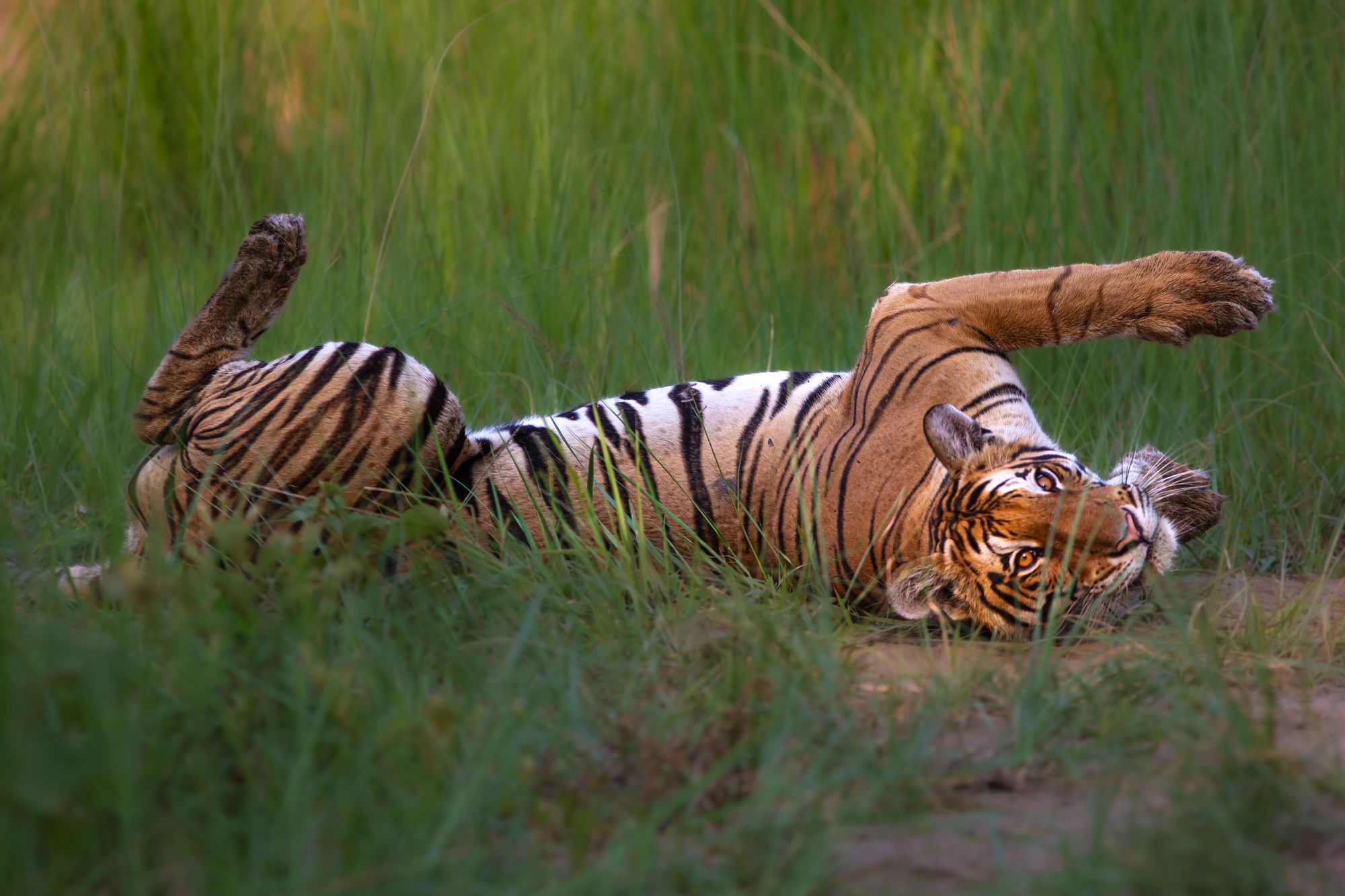
Seasons4 min read
The best time to see tigers in Central India, month by month
Why April and May outperform the popular winter window, and what you trade for it.
Planning2 min read
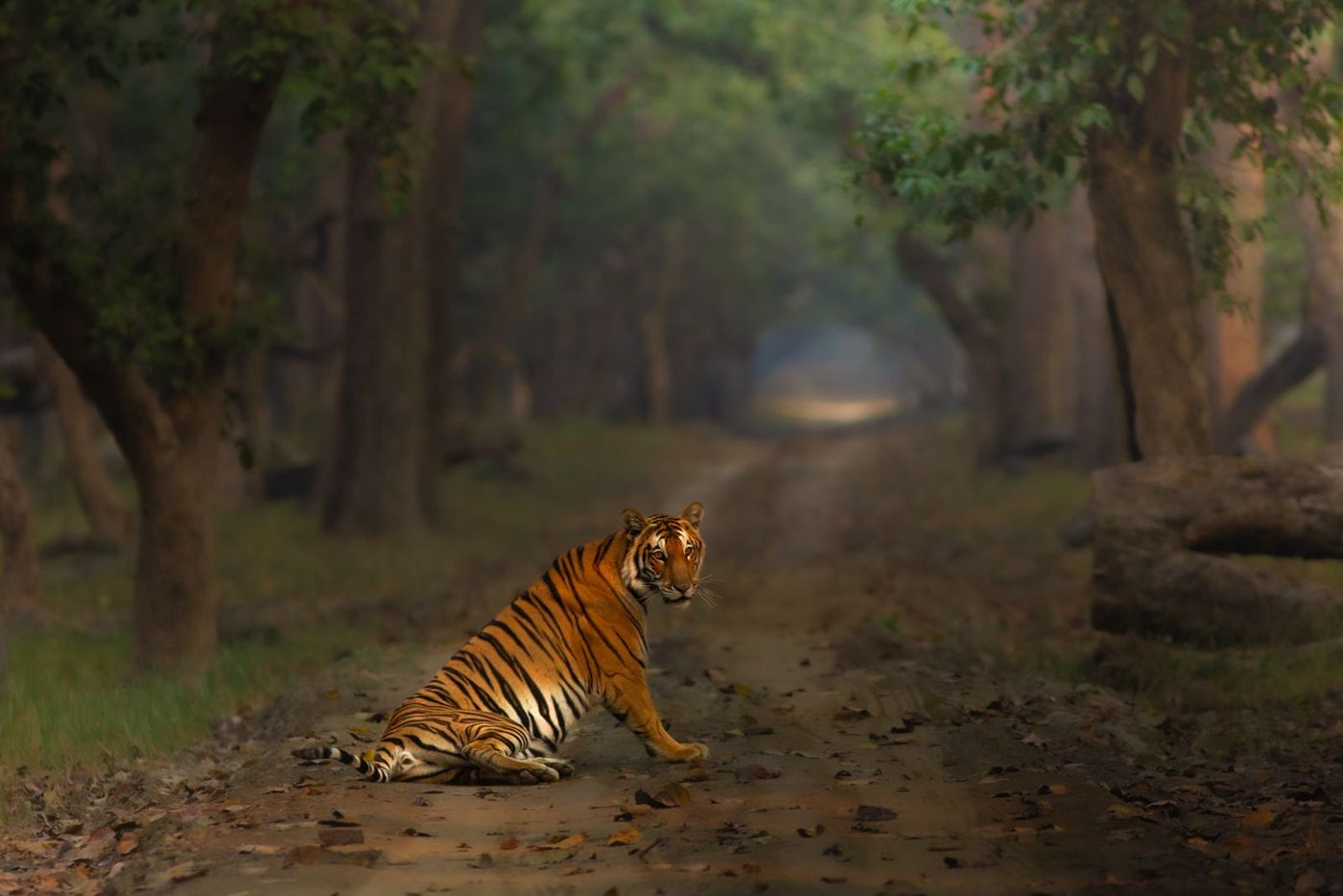
Dudhwa vs. Central India: which should your first India safari be?
Two very different forests, and how to decide which one actually suits you.
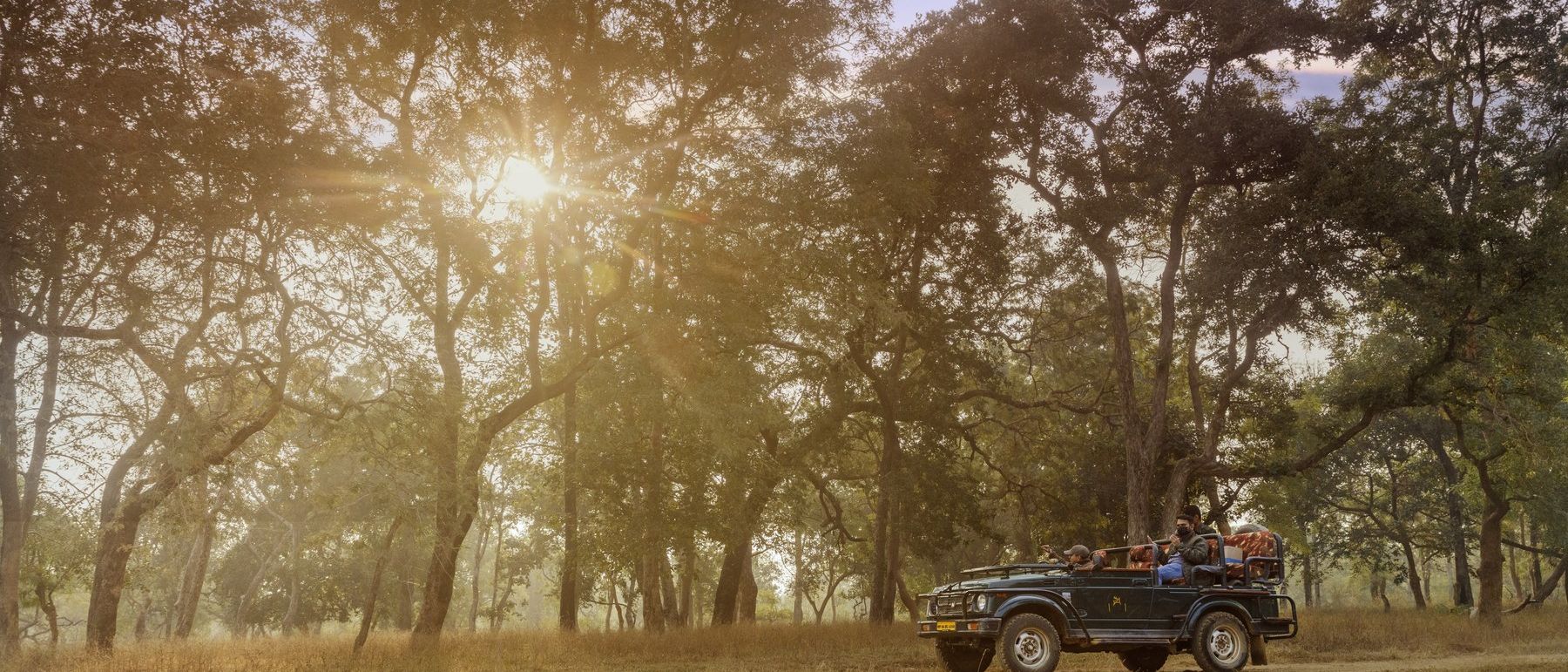 Photo: Bori Safari Lodge
Cost10 min read
What a private luxury safari in India actually costs
A straight breakdown of where the money goes, and why private vehicles change the maths.