
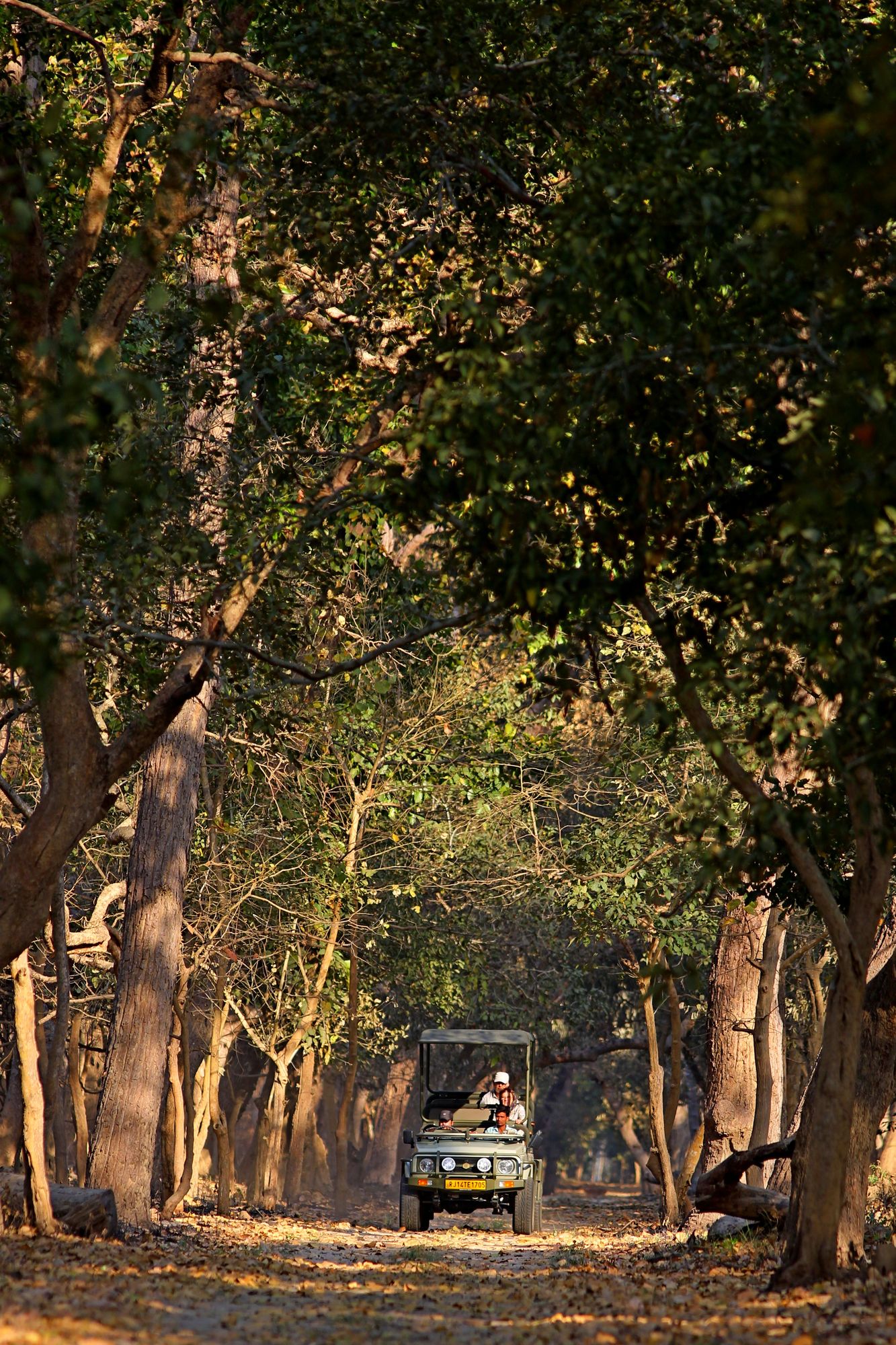
Most safaris in India are sold by the seat. You join a vehicle, often with people you have never met, and the drive becomes a negotiation between everyone’s priorities. It works. It is also a very different experience from having the vehicle to yourself.
On every Safari Vista India journey the vehicle is yours alone. Here is what that changes, and why we treat it as a condition of the journey rather than an upgrade.
A shared drive is built around the group. A private drive is built around what is in front of you.
Time belongs to you
In a shared vehicle, someone always wants to move on. Perhaps they have already seen the animal. Perhaps they want to try another area before the drive ends.
In a private vehicle you can stay. You can wait at a waterhole for an hour if the signs suggest something will come. You can stop for a bird others would drive past. You can sit quietly with a sighting long after the first photographs have been taken.
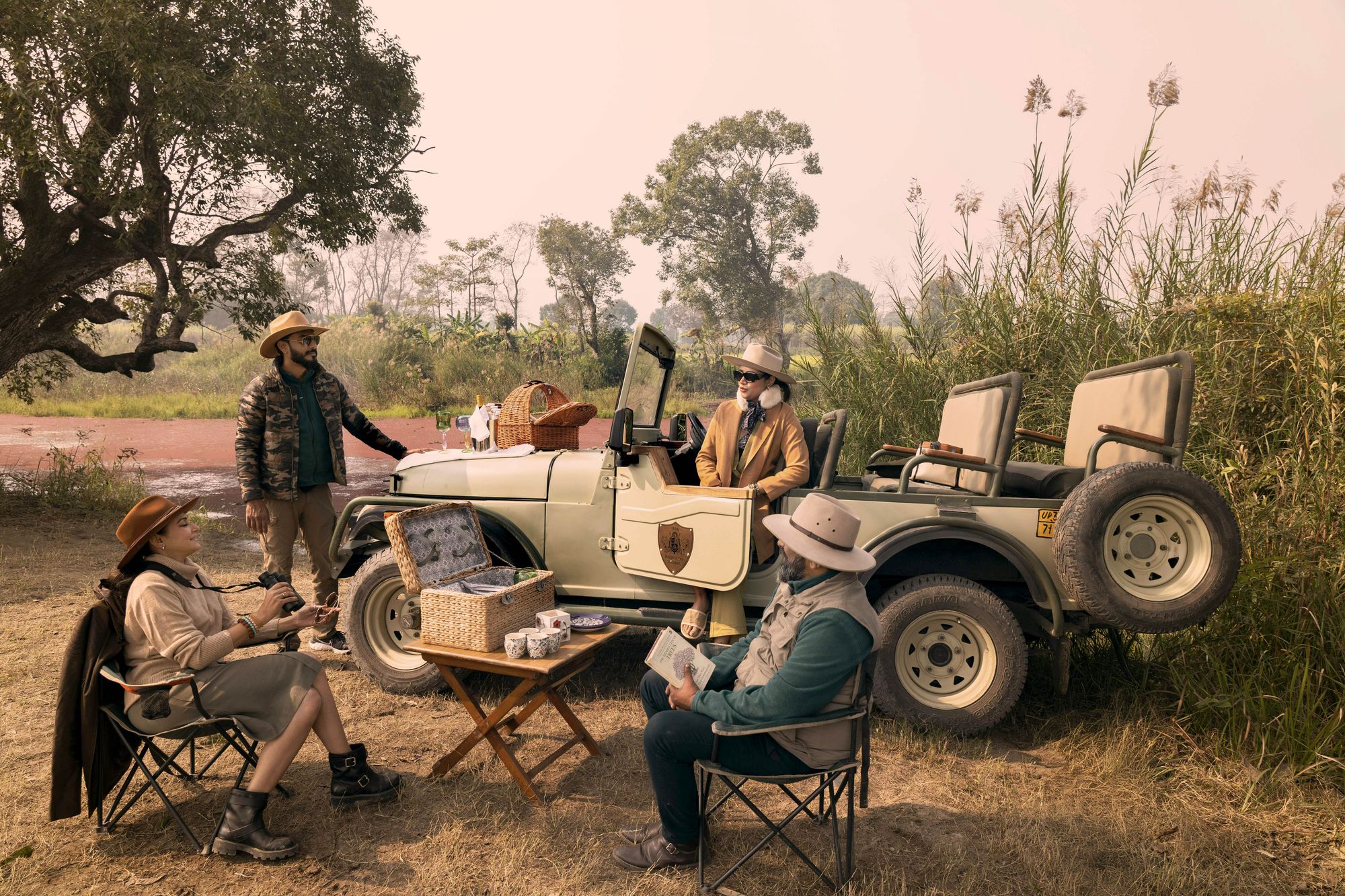
The pace follows the forest
Wildlife rarely keeps to a schedule. Alarm calls, fresh tracks and changes in light all suggest when to slow down and when to move. A private vehicle allows your naturalist to respond to those signals, rather than to the most impatient person on board.
Your naturalist works for you
With other guests in the vehicle, a naturalist’s attention is divided. In a private vehicle the conversation can follow your interests, whether that is tiger behaviour, birds, trees or photography, and can deepen over the days you spend together.
Where possible your naturalist stays with you across the journey, so by the third morning they know what you want to see and how you like to see it.
Photography without compromise
Photographers know the frustration of a vehicle that will not wait for the light, or of a lens blocked by another guest. With the vehicle to yourself you can choose your side, your angle and your moment.
Quieter, and more considerate
Fewer people means less noise and less movement, which matters around wildlife. A private vehicle is not about exclusivity for its own sake; it is about creating the conditions in which the forest is easier to read and less disturbed.
What it costs
A private vehicle is not shared, so its cost is not shared either. For two travellers that increases the cost per person compared with joining a shared drive. We explain exactly how in our guide to what a private luxury safari in India actually costs.
For most of our guests, the answer is simple. The journey is too important to spend it on someone else’s timetable.
Keep reading
All Journal articles
Seasons4 min read
The best time to see tigers in Central India, month by month
Why April and May outperform the popular winter window, and what you trade for it.
Planning14 min read
India or Africa: an honest comparison for second-time safari travellers
What India genuinely does better, and the three things Africa still wins on.
Planning2 min read
Dudhwa vs. Central India: which should your first India safari be?
Two very different forests, and how to decide which one actually suits you.